

Choosing an engagement ring can feel overwhelming when you are faced with dozens of gemstones, diamond shapes, settings, metals, and price points. The easiest way to make the decision is to treat it as a series of smaller choices rather than trying to find the “perfect” ring all at once.
Start with the person who will wear the ring, then consider your budget, center stone, shape, quality, setting, metal, ring size, and the policies of the jeweler. This guide walks through each step so you can make a confident decision without getting lost in jewelry terminology.
Start With What Matters Most: Your Partner’s Style and Lifestyle
Before comparing diamonds or gemstones, think about the person who will actually wear the ring. Pay attention to the jewelry they already own, whether they prefer simple or detailed designs, and whether they usually wear yellow gold, white metals, or mixed metals.
Lifestyle matters too. Someone who works extensively with their hands may prefer a lower-profile setting or additional protection around the center stone. Someone who wants a statement piece may be more interested in a halo, three-stone, or distinctive custom design.
The goal is not to choose the most popular ring. It is to choose a design that feels natural for the person wearing it. A ring should complement their daily routine, personal style, and comfort preferences. At OVEELA Jewelry, considering these personal details can help you narrow down the right combination of gemstone, setting, and metal more confidently.
Set a Budget Before You Start Shopping
There is no universal amount that everyone should spend on an engagement ring. Traditional rules based on a certain number of months' salary are not a reliable way to determine what is right for you.
Instead, decide what you are comfortable spending and determine what matters most within that budget. Your money may go primarily toward the center gemstone, a larger face-up size, a more intricate setting, higher-quality materials, or customization.
For example, one buyer may prefer a larger lab-grown diamond, while another may prioritize a natural sapphire and a more detailed setting. A simpler solitaire can also leave more of the budget available for the center stone.
The important question is not “How much should an engagement ring cost?” but “What do I want my budget to accomplish?” Consider how you want to balance gemstone size, visual quality, design details, metal, and craftsmanship.
Choose the Center Stone: Diamond, Lab-Grown Diamond, Moissanite, or Gemstone?
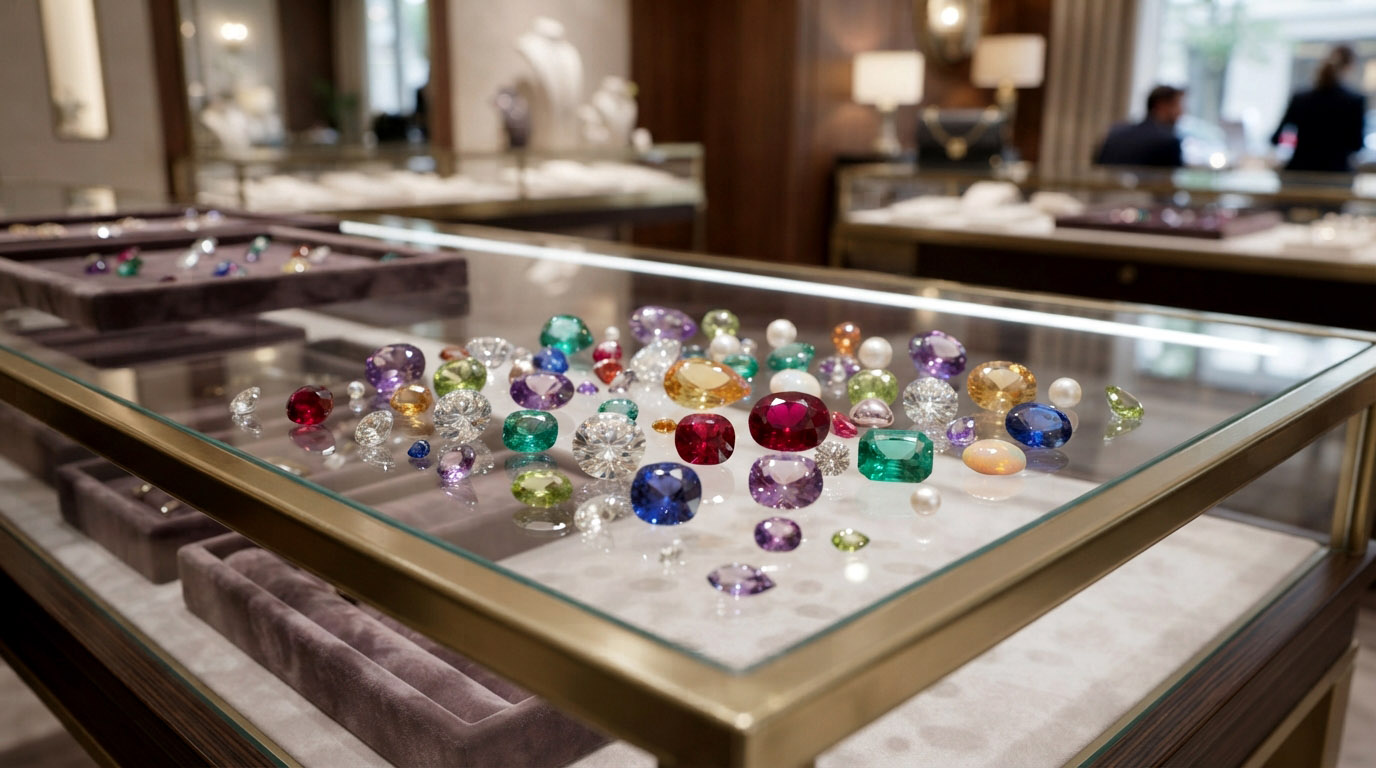
The center stone is usually the visual focus of an engagement ring, but diamond is not the only option.
Natural Diamond
Natural diamonds remain a classic choice for their durability, traditional significance, and familiar grading system. If rarity and the history of a naturally formed gemstone are important to you, a natural diamond may be the right choice.
Lab-Grown Diamond
Lab-grown diamonds have essentially the same chemical composition and physical properties as natural diamonds, but they are created in a laboratory rather than formed naturally underground. They can also be independently graded.
They are worth considering if you want a diamond appearance and durability while allocating more of your budget to size or the ring design.
Moissanite
Moissanite is another diamond alternative, known for its strong brilliance and durability. It can be a good choice for someone who wants noticeable sparkle while exploring a different price point and gemstone identity.
Sapphire, Emerald, Morganite and Other Gemstones
Colored gemstones can make an engagement ring feel more personal. Sapphire is a particularly durable option, while emerald requires more careful consideration because its inclusions and durability characteristics differ from diamond or sapphire.
Other gemstones such as morganite, aquamarine, and tourmaline can create softer or more distinctive color combinations.
The key is to evaluate appearance, durability, care requirements, and personal meaning together rather than assuming that one gemstone is automatically the best choice. OVEELA Jewelry offers a range of gemstone possibilities for couples who want an engagement ring that feels personal rather than predictable.

Choose the Right Shape and Cut
Once you know which center stone you want, consider its shape.
- Roundis a classic choice for maximum brilliance and a familiar appearance.
- Ovaloffers a softer outline and can create an elongated visual effect.
- Emeraldhas long step-cut facets and a more geometric, understated appearance.
- Radiantcombines a rectangular or square outline with brilliant-style faceting for stronger sparkle.
- Cushionhas rounded corners and a softer, often vintage-inspired appearance.
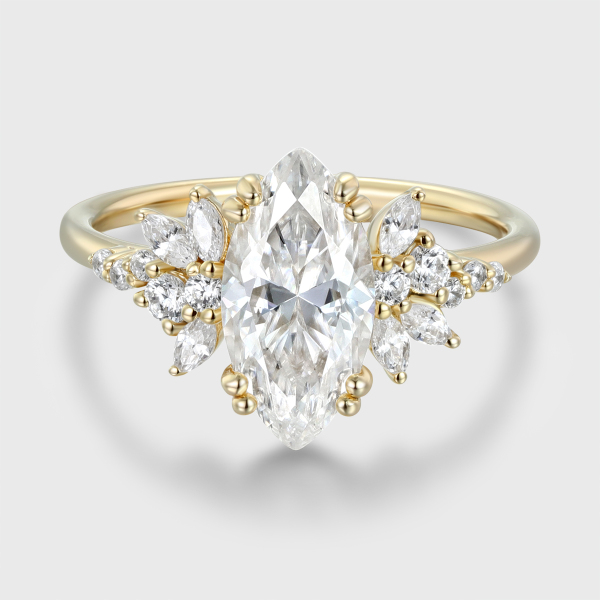
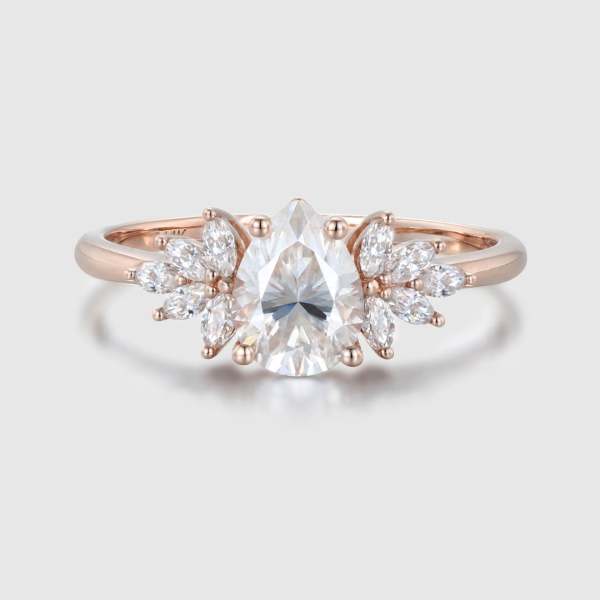
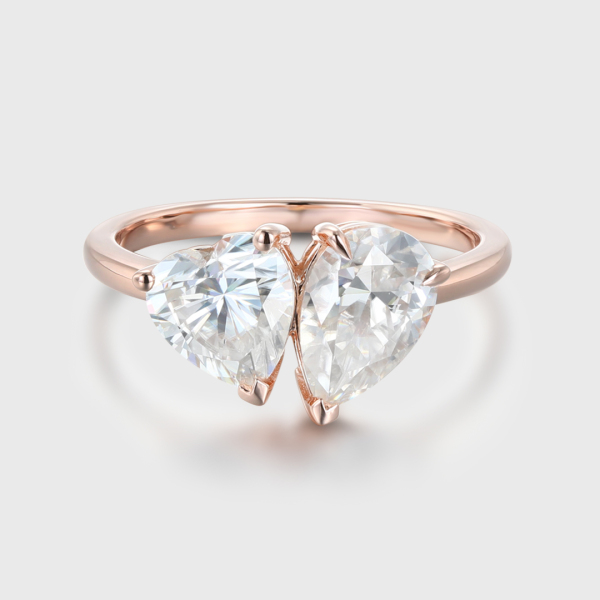
- Pear and marquiseshapes provide more distinctive silhouettes and can visually lengthen the finger.
There is no universally best shape. The right one depends on whether you prefer brilliance, broad reflections, soft curves, geometric lines, vintage character, or something less conventional.
Understand the 4Cs Without Getting Lost in the Details
If you choose a diamond, you will encounter the 4Cs: cut, color, clarity, and carat weight.
Cut affects how a diamond interacts with light and should not be confused with shape.
Color describes how much body color a diamond shows, with the traditional D-to-Z scale used for diamonds.
Clarity describes the presence and visibility of internal inclusions and surface blemishes.
Carat weight measures weight, not visible size. Two diamonds with the same carat weight can have different dimensions and appear different in size.
The most important point for a first-time buyer is that the highest grade in every category is not automatically the best use of your budget. Instead, compare the individual stone and decide which characteristics are most important to you.
For colored gemstones, the evaluation process is different. Color intensity, transparency, durability, cut, and natural characteristics may matter more than applying the diamond 4Cs directly.
Choose a Setting That Fits the Stone and Your Lifestyle
The setting determines how the center stone is held and contributes significantly to the ring's appearance and security.
- A solitairekeeps the design simple and places almost all attention on the center stone.
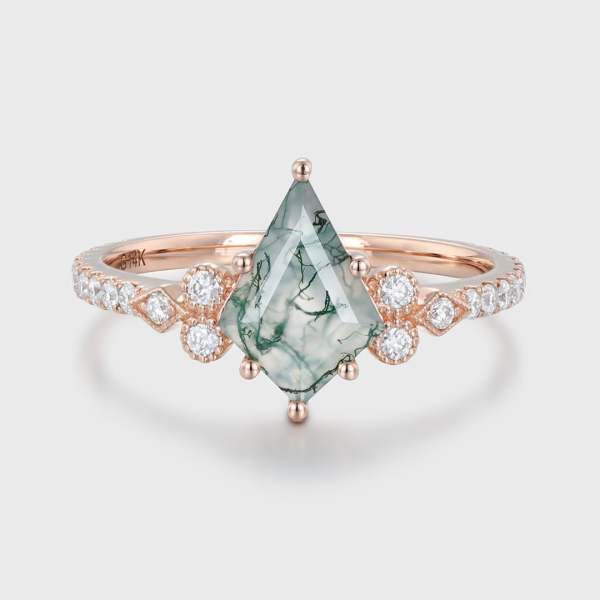
- A vintage settingfeatures intricate details such as milgrain edges, filigree, engraving, or delicate metalwork, creating a romantic design with timeless character.
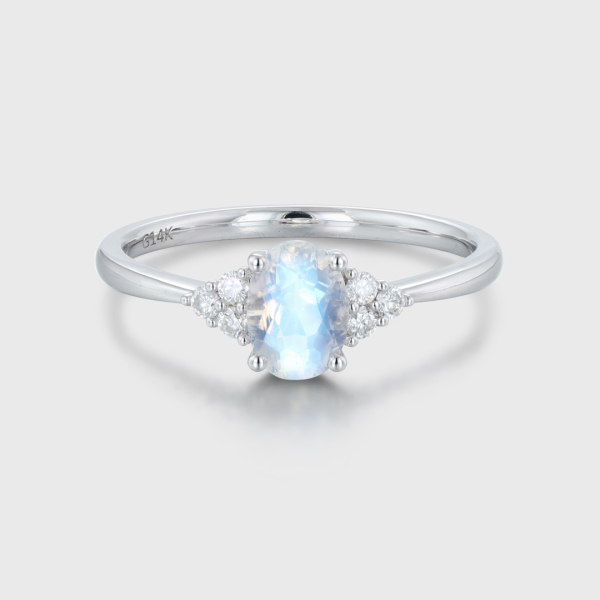
- A three-stone settingcreates a more substantial look and can incorporate different combinations of side stones.
- A nature-inspired settingincorporates organic details such as leaves, vines, flowers, or flowing botanical forms to create a romantic and distinctive look.
- A bezel settingsurrounds the edge of the center stone with metal and can provide additional protection.
Prong settings expose more of the center stone, while bezel settings cover more of its perimeter. The right choice depends on the gemstone, design, lifestyle, and desired appearance.
Choose the Right Metal
The most common choices include yellow gold, white gold, rose gold, and platinum.
- Yellow goldcreates a warm, traditional appearance and can complement many colored gemstones.
- White goldprovides a neutral look that works particularly well with white diamonds and cool-toned gemstones.
- Rose goldadds a warmer pink tone and can create a softer contrast with the center stone.
- Platinumis a naturally white precious metal and is often chosen for its density, durability, and long-term use in fine jewelry.
Rather than choosing based only on trends, look at the jewelry the wearer already owns. Matching the engagement ring to existing pieces can make the new ring easier to wear every day.
Get the Ring Size and Wedding-Band Fit Right
Ring size is easy to overlook when most of the attention is on the center stone.
If possible, use a ring the wearer already owns as a reference or have the finger professionally measured. If the engagement is a surprise, ask a trusted friend or family member for help rather than making a completely independent guess.
Also consider the future wedding band before finalizing the engagement-ring setting. A large center stone or low-profile setting may affect whether a straight wedding band can sit flush against it. A curved or contoured band may sometimes provide a better fit.
This is an especially important consideration for custom engagement rings because the engagement ring and wedding band can be designed together from the beginning.
When Should You Choose a Custom Engagement Ring?
A standard engagement ring may be enough if you already know the style you want. Customization becomes more valuable when your preferences do not fit neatly into an existing design.
You might consider customization if you want:
- A specific gemstone or unusual color
- A particular stone shape or proportion
- A different metal combination
- An east-west or alternative orientation
- Nature-inspired details
- Special side stones
- A specific wedding-band fit
- Engraving or personal details
Customization can also be useful when you want to combine several preferences into one design rather than compromising between existing styles.
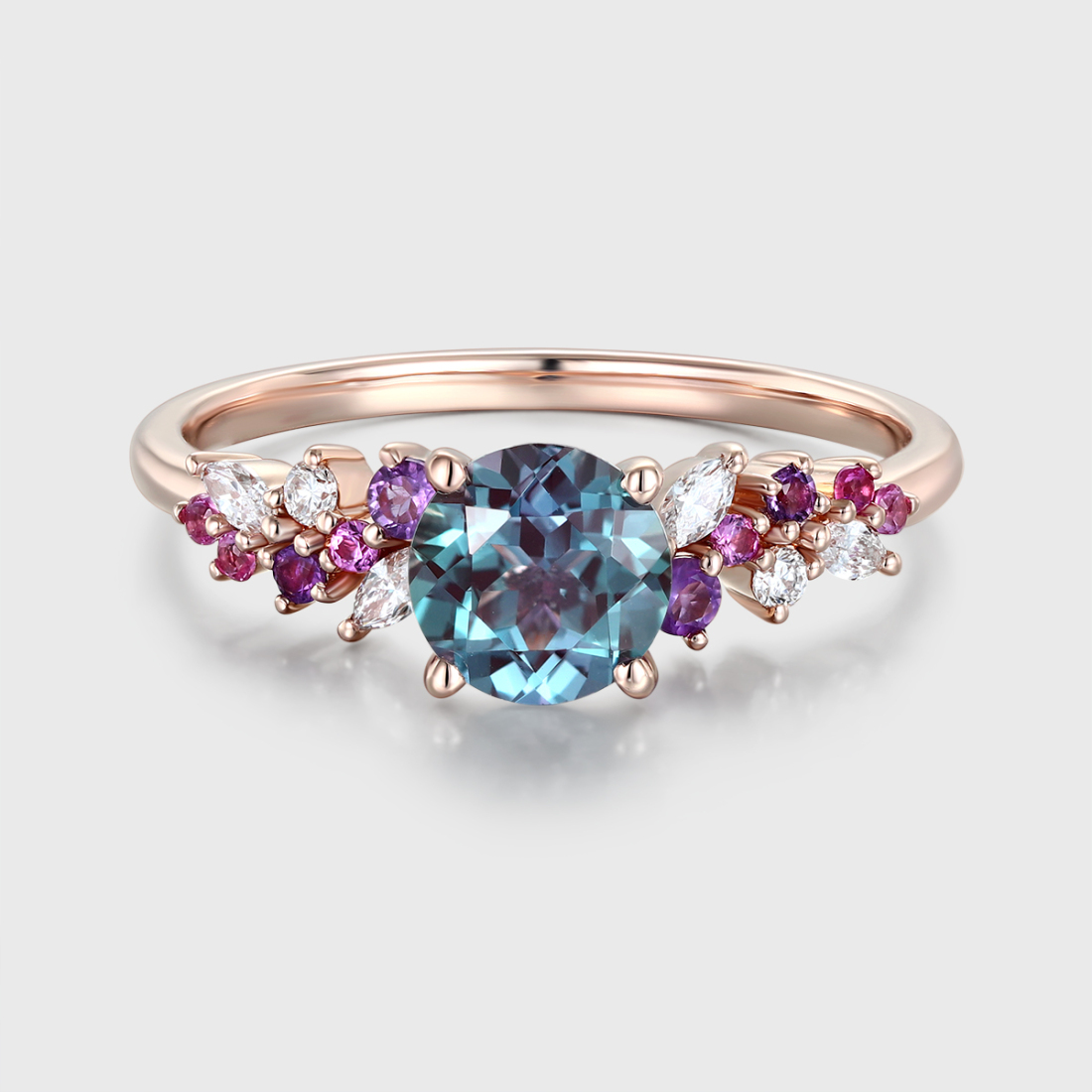
For OVEELA Jewelry, this is especially relevant because the collection includes different gemstones, cuts, metals, and customizable engagement-ring designs. Instead of choosing a ring first and adapting to it, you can begin with the elements that matter most to you and build the design around them.

Final Thoughts
Choosing an engagement ring does not have to mean learning every jewelry term before you begin. Start with the person who will wear it, establish a realistic budget, choose the center stone and shape, then work through quality, setting, metal, size, and purchasing details.
The best engagement ring is not necessarily the largest, most expensive, or most popular design. It is the one that balances personal style, everyday wearability, gemstone choice, craftsmanship, and budget in a way that feels right for the person receiving it.