
Your OVEELA lab diamond ring was built to last. Same chemical composition as a mined diamond. Same 10 Mohs hardness. Same fire, same brilliance, same permanence. But brilliance does not maintain itself. Daily wear means daily exposure to hand lotion, soap film, cooking oils, and the quiet grime of ordinary life. Over time, that buildup dims what was once dazzling.
The good news? Cleaning your lab diamond ring at home takes five minutes, costs almost nothing, and keeps your OVEELA ring looking like the day you unboxed it.
The OVEELA 5-Minute Cleaning Method
This is the method we recommend to every OVEELA customer. It is the same method professional jewelers use for routine maintenance — just simplified for your bathroom sink.
What You Need
- A small bowl
- Warm water (not hot)
- A few drops of mild, unscented dish soap
- A soft-bristled toothbrush (baby toothbrush works best)
- A lint-free microfiber cloth
The Steps
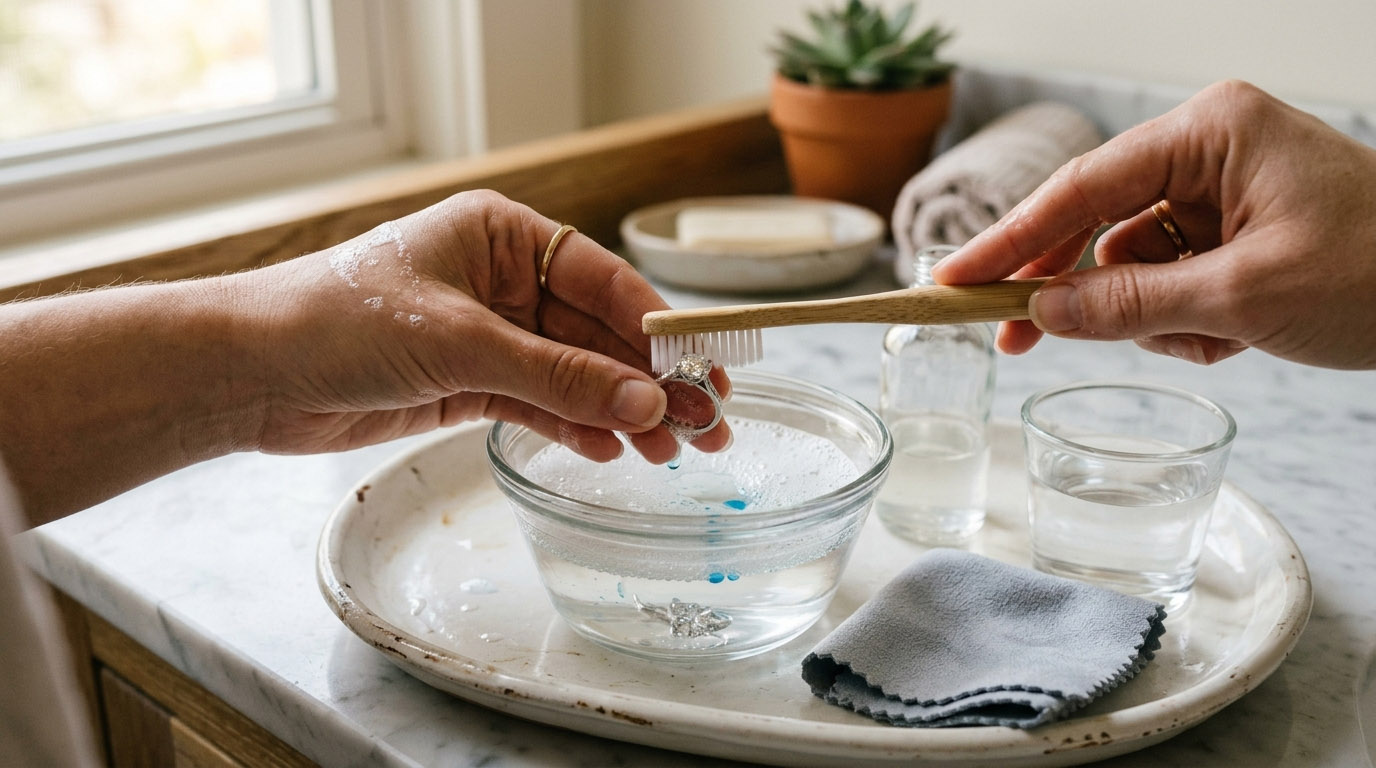
- Soak (2–3 minutes)Fill the bowl with warm water. Add 2–3 drops of dish soap. Drop your ring in and let it rest. This loosens surface oils and grime without any scrubbing.
- Brush (1 minute)Gently brush the top of the stone, the sides, and especially underneath the setting— that is where most buildup hides. Use light pressure. The bristles do the work; you do not need to force it.
- Rinse (30 seconds)Run warm water over the ring. Plug the drain first.Every jeweler has a story about a ring that went down the sink during cleaning.
- Dry (1 minute)Pat dry with a lint-free cloth. Let it air dry fully before wearing or storing. Trapped moisture can accelerate tarnishing on gold settings over time.
That is it. Five minutes. Zero special equipment. Your ring is back to brilliant.
What to Never Use on Your OVEELA Lab Diamond Ring
Lab diamonds themselves are nearly indestructible. But your setting — the 14K gold prongs and band that hold the stone — is not. Protect the whole ring by avoiding these:
|
Never Use |
Why It Damages Your Ring |
|
Bleach, ammonia, chlorine |
Corrodes 14K gold, weakens prongs, dulls metal finish |
|
Toothpaste |
Abrasive particles scratch gold and can loosen stones |
|
Baking soda scrubs |
Too harsh for gold settings, creates micro-scratches |
|
Paper towels or tissues |
Leave lint and micro-scratches on metal |
|
Ultrasonic cleaners (at home) |
Can shake loose stones if prongs are already weakened |
|
Steam cleaners (at home) |
High heat and pressure can stress settings |
The rule is simple: if you would not put it on your skin, do not put it on your ring.
How Often Should You Clean Your OVEELA Ring?
|
Wear Frequency |
Cleaning Schedule |
Why |
|
Daily wear |
Once a week |
Oils from skin, lotion, and soap build up fast |
|
Occasional wear |
Before and after each wear |
Storage dust and air exposure dull the surface |
|
After swimming |
Immediately after |
Chlorine and saltwater damage gold over time |
|
After cooking |
Same day |
Oils and food residue stick to settings |
A weekly five-minute cleaning prevents the deep grime that requires professional intervention. It is the difference between maintenance and restoration.
When to Take Your Ring Off (And When to Leave It On)
Cleaning is important. But prevention matters more.
Remove your OVEELA ring before:
- Showering or washing hands with harsh soap
- Applying lotion, sunscreen, or perfume
- Swimming (chlorine and saltwater)
- Working out or lifting weights
- Cleaning with household chemicals
- Gardening or any hands-in-dirt activity
- Cooking with raw meat or heavy oils
Leave it on for:
- Normal office work
- Social events (just wipe it down after)
- Sleeping (if you are comfortable — but a bedside dish is safer)
At OVEELA, we include a complimentary ring dish with every engagement ring purchase. Use it. The 30 seconds it takes to remove and store your ring saves hours of deep cleaning later.
How to Store Your OVEELA Ring When You Are Not Wearing It
Storage is where most people slip up. A ring tossed into a jewelry box with other pieces is a ring that gets scratched.
OVEELA Storage Rules:
- Separate compartments.Never store your lab diamond ring next to softer gemstones (turquoise, moss agate, pearl) or even other diamonds. Diamonds scratch everything, including other diamonds.
- Use a soft jewelry pouch when traveling.If you're packing your ring for a honeymoon, business trip, or weekend getaway, place it in a soft, individual jewelry pouch or a dedicated travel jewelry case to help prevent scratches and impact.
- Avoid bathroom storage.Humidity accelerates tarnishing on gold. Store in a bedroom drawer instead.
- Keep the original box.The OVEELA presentation box is designed for long-term storage — soft interior, secure closure, built to protect.
Lab Diamond vs. Natural Diamond: Does Cleaning Differ?
No. Lab diamonds and natural diamonds are chemically, physically, and optically identical. They clean the same way, respond to the same products, and require the same maintenance schedule.
The only difference is peace of mind. With an OVEELA lab diamond, you know exactly where your stone came from. No mining. No conflict. Just brilliance — and a cleaning routine that keeps it that way.
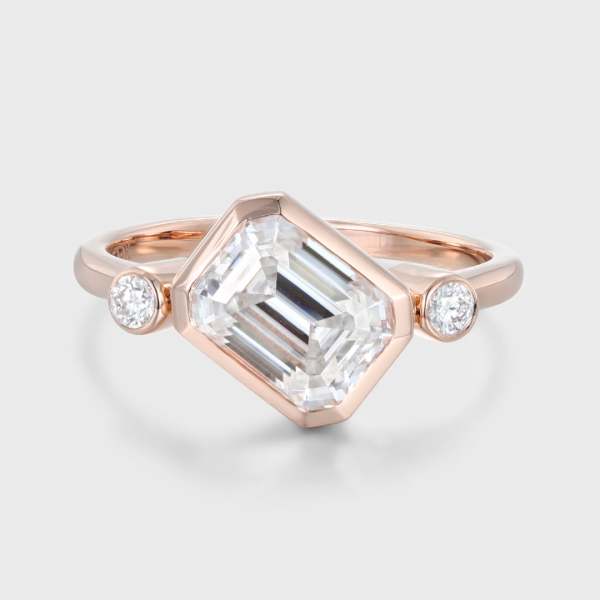
Quick Reference: The OVEELA Care Cheat Sheet
Save this. Print it. Tape it to your bathroom mirror.
|
Do |
Don't |
|
Clean weekly with mild soap and warm water |
Use bleach, ammonia, or harsh chemicals |
|
Brush gently with a soft toothbrush |
Scrub with abrasive materials |
|
Dry with a lint-free microfiber cloth |
Use paper towels or tissues |
|
Store separately in a soft pouch |
Toss it in a box with other jewelry |
|
Remove before swimming, cooking, or cleaning |
Wear it in chlorinated pools or saltwater |
|
Get professional cleaning once a year |
Wait until damage is visible |
Final Thought
Your OVEELA lab diamond ring was designed to be worn, loved, and lived in. It does not need to be babied. It does not need to be locked away. It just needs five minutes of attention once a week — and the right products when you need them. Because a ring that stays brilliant is a ring that stays meaningful.
Frequently Asked Questions
You can, but we do not recommend it. A 3:1 water-to-Windex solution works in a pinch, but mild dish soap is safer for your 14K gold setting and just as effective.
Gently tap the ring near your ear. If you hear a rattling sound, a stone is loose. Also check visually: prongs should evenly touch the stone with no gaps. If you are unsure, bring it to OVEELA for a free inspection.
No. Lab diamonds are permanently brilliant. If your ring looks dull, it is surface buildup — not the stone. Clean it. The sparkle returns.
We do not recommend it. While lab diamonds themselves are safe in ultrasonic cleaners, the vibrations can loosen stones if prongs are already weakened. Leave ultrasonics to professionals.
Yes. Every OVEELA engagement ring comes with a craftsmanship warranty. Loose stones, bent prongs, or setting issues are covered. Contact us for details.
OVEELA offers shipping protection on all orders for $0.98. For loss after delivery, we recommend insuring your ring through your homeowner's or renter's insurance. We provide appraisal documentation upon request.