
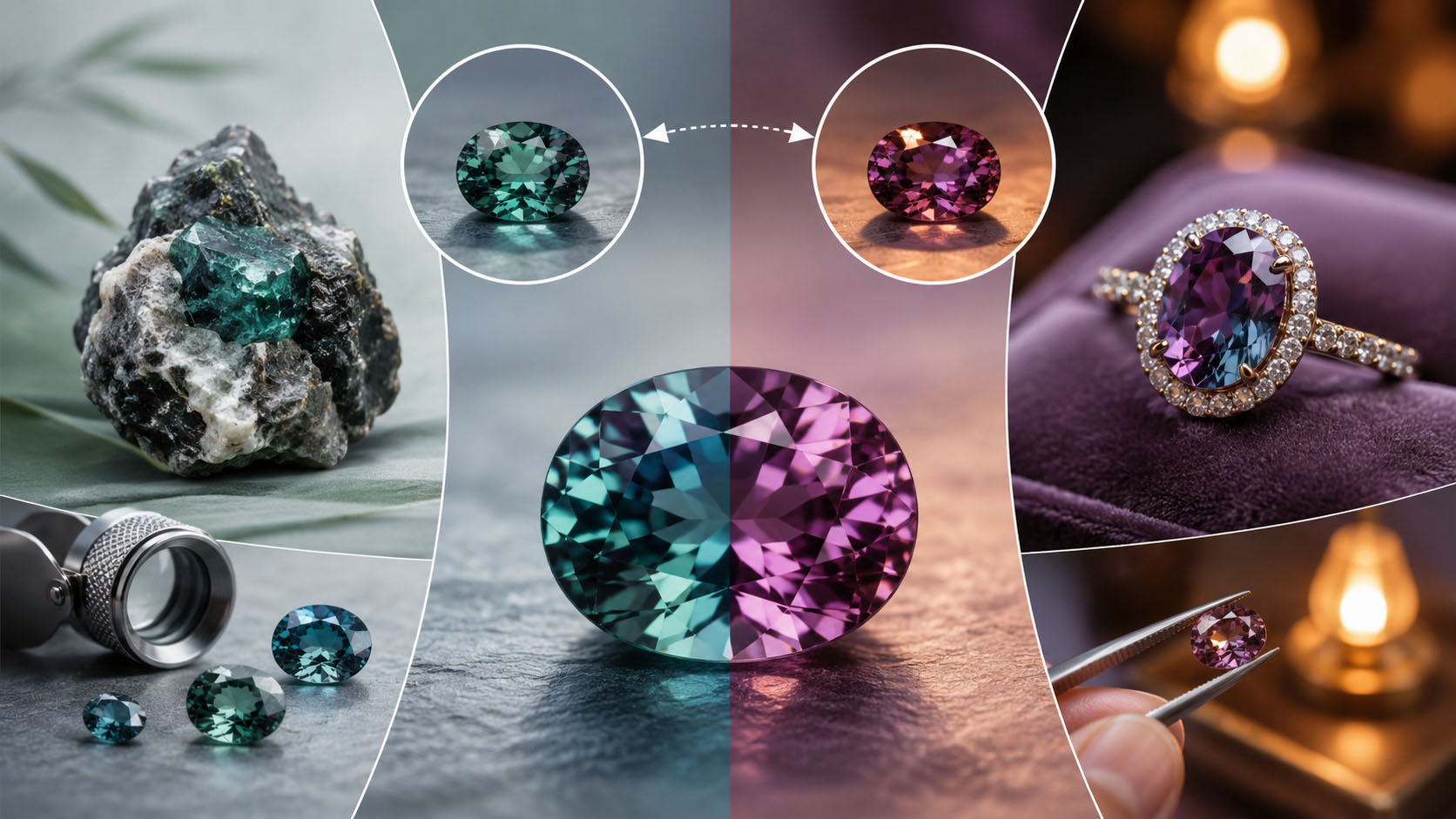
Imagine looking down at your ring in the morning and seeing a rich green gemstone that feels calm and understated. Later that evening, under warm restaurant lighting, the same stone appears purple-red—almost like an entirely different gem. Few gemstones create this kind of experience.
That is why alexandrite has fascinated collectors, gemologists, and jewelry lovers for nearly two centuries. It isn't simply rare. It isn't simply beautiful. What makes alexandrite special is that it never looks exactly the same twice. For many people, that quality feels surprisingly personal. While diamonds are often chosen for their consistency, alexandrite is admired for its ability to change. It shifts with its environment, revealing different colors under different light sources while remaining the same stone at its core.
In a world where more couples are searching for engagement rings that feel meaningful rather than traditional, alexandrite has become one of the most intriguing alternatives available.
This guide covers everything you need to know about alexandrite, including its color-changing effect, rarity, durability, symbolism, and whether it's the right choice for your jewelry.
What Is Alexandrite?
Alexandrite is a rare variety of chrysoberyl best known for its remarkable ability to change color. Under natural daylight, it often appears green, teal, or blue-green. Under warm indoor lighting, it can shift to shades of purple, raspberry, burgundy, or reddish violet. This dramatic transformation is so distinctive that gemologists often refer to it simply as the "alexandrite effect."
The gemstone was first discovered in Russia's Ural Mountains during the 1830s and was named after the future Russian Emperor Alexander II. Because the finest early stones displayed both green and red—the military colors of Imperial Russia—alexandrite quickly became associated with prestige and rarity. Today, it remains one of the most sought-after colored gemstones in fine jewelry.
Why Does Alexandrite Change Color?
Most gemstones display a relatively stable color regardless of lighting conditions. Alexandrite behaves differently because of its unique crystal chemistry. The stone absorbs certain wavelengths of light while reflecting others. Since daylight and indoor lighting contain different color balances, alexandrite appears to change color as the dominant light source changes.
In simple terms:
- Daylight emphasizes green and blue tones.
- Warm indoor lighting emphasizes red and purple tones.
The stronger this shift, the more valuable the gemstone is generally considered. This phenomenon is exceptionally rare in nature, which is one reason alexandrite has earned its reputation as one of the world's most extraordinary gemstones.
What Colors Can Alexandrite Be?
Although people often describe alexandrite as changing from green to red, the reality is more nuanced.
|
Lighting Condition |
Typical Appearance |
|
Bright Daylight |
Green, Teal, Blue-Green |
|
Overcast Daylight |
Greenish Blue |
|
LED Lighting |
Purple, Violet |
|
Warm Indoor Light |
Reddish Purple |
|
Candlelight |
Raspberry Red to Burgundy |
Every alexandrite is slightly different. Some stones lean more blue-green, while others display stronger purple or red tones. This individuality is part of what makes each stone feel unique.
The Emotional Appeal of Alexandrite: More Than a Color Change
Many gemstone articles describe alexandrite as symbolizing "change" or "transformation."
While that's technically true, it doesn't fully explain why people connect with the stone on such a personal level. What makes alexandrite meaningful is that its color shift feels natural rather than dramatic. It adapts to different environments without losing its identity.
For some couples, that mirrors the reality of a long-term relationship. People grow. Circumstances change. Careers evolve. Families expand. Life rarely stays the same. Yet the strongest relationships maintain a sense of continuity through those changes.
Alexandrite often resonates with couples because it reflects that idea visually. The gemstone may look different throughout the day, but it remains the same stone underneath. That symbolism feels especially relevant to modern relationships, where adaptability and growth are often valued just as much as permanence.
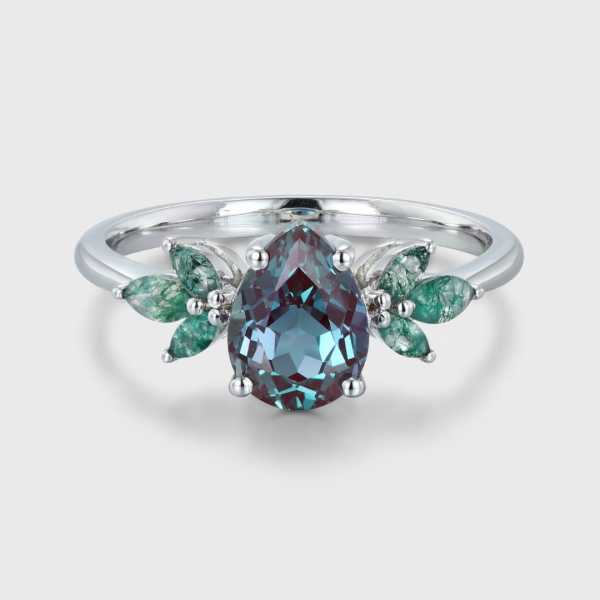
Pear Shaped Alexandrite and Moss Agate Cluster Engagement Ring
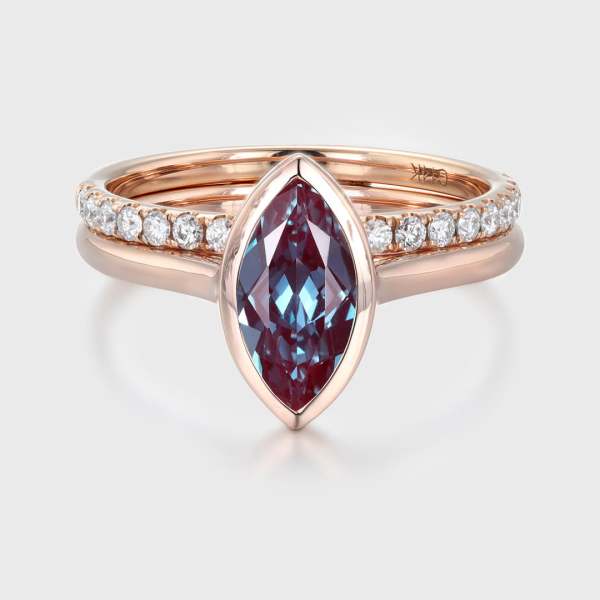
Solitaire Bezel Marquise Cut Lab Grown Alexandrite Bridal Ring Set
Is Alexandrite Rare?
Yes—especially in its natural form. Natural alexandrite with strong color change, attractive clarity, and vivid saturation is considered exceptionally rare.
The original Russian deposits that made alexandrite famous have largely been exhausted. Although deposits have since been discovered in Brazil, Sri Lanka, Tanzania, India, and Madagascar, fine-quality material remains limited.
Several factors contribute to its rarity:
- Strong color change is uncommon.
- Large stones are difficult to find.
- Fine clarity is rare.
- Demand often exceeds supply.
Because of this, high-quality natural alexandrite can command prices comparable to—or even exceeding—many diamonds.
Natural vs Lab-Created Alexandrite
For most modern jewelry buyers, lab-created alexandrite has become an increasingly attractive option. A lab-created alexandrite possesses the same chemical composition, crystal structure, and durability as a natural alexandrite. The difference lies in origin rather than physical performance.
|
Feature |
Natural Alexandrite |
Lab-Created Alexandrite |
|
Chemical Composition |
Same |
Same |
|
Color Change |
Yes |
Yes |
|
Durability |
Same |
Same |
|
Availability |
Extremely Limited |
Readily Available |
|
Price |
Significantly Higher |
More Accessible |
This accessibility allows more people to enjoy larger center stones, custom designs, and distinctive settings without the cost associated with rare natural material.
Is Alexandrite Durable Enough for Everyday Wear?
Alexandrite ranks approximately 8.5 on the Mohs hardness scale, making it one of the more durable colored gemstones used in jewelry.
|
Gemstone |
Mohs Hardness |
|
Diamond |
10 |
|
Sapphire |
9 |
|
Alexandrite |
8.5 |
|
Morganite |
7.5–8 |
|
Opal |
5–6.5 |
For engagement rings and everyday jewelry, this level of hardness is generally considered excellent. With proper care, alexandrite can remain beautiful for decades and is well suited to daily wear.
Who Might Not Love Alexandrite?
Not every gemstone is the right fit for every person. If you prefer a gemstone that looks exactly the same in every environment, alexandrite may not be your ideal choice. Similarly, if your priority is maximum brilliance and sparkle, a diamond or moissanite may better match your expectations. Alexandrite's appeal comes primarily from its changing color rather than intense fire or brightness.
Natural alexandrite can also be prohibitively expensive for some budgets, particularly in larger sizes. These aren't flaws—they simply reflect what makes alexandrite unique.
The people who fall in love with alexandrite usually aren't searching for the brightest stone in the room. They're searching for a gemstone with character, individuality, and a story that evolves with every change of light.
Why Alexandrite Has Become Popular for Engagement Rings
As engagement ring preferences continue to evolve, more couples are choosing gemstones that feel personal rather than traditional.
Alexandrite offers several qualities that support that shift:
- Distinctive color-changing beauty
- Excellent everyday durability
- Strong symbolic meaning
- Availability in both natural and lab-created forms
- Compatibility with vintage, nature-inspired, and modern designs
It feels familiar enough to remain timeless, yet uncommon enough to feel uniquely yours.
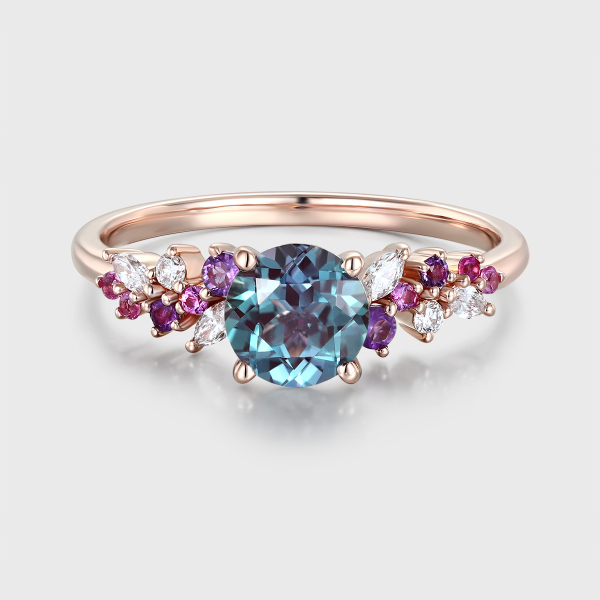
Round Cut Lab Alexandrite and Colored Gemstone Engagement Ring Vintage 14K Rose Gold
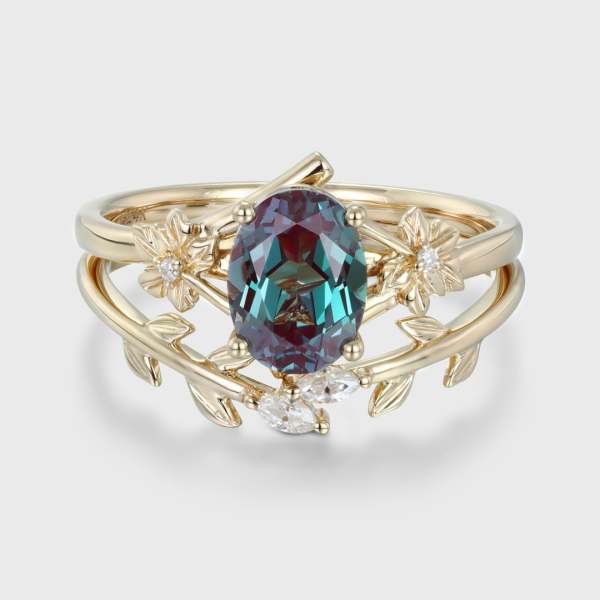
Nature Inspired Flower Leaf Oval Cut Lab Grown Alexandrite Engagement Ring Set
Alexandrite Jewelry at OVEELA Jewelry
At OVEELA Jewelry, we specialize in alternative engagement rings that tell a more personal story than traditional designs.
Our alexandrite collection focuses on handcrafted settings that highlight the gemstone's natural color-changing character rather than overpower it. Many of our most-loved designs pair alexandrite with nature-inspired details, vintage silhouettes, and carefully balanced proportions that allow the stone to remain the focal point.
Because every customer connects with alexandrite differently, we also offer customization options for center stone size, accent stones, metal type, and ring design. Whether you're drawn to alexandrite for its symbolism, its rarity, or simply the way it transforms in changing light, our goal is to create jewelry that feels meaningful long after the moment it is received.
Frequently Asked Questions
Yes. Alexandrite is a genuine and highly valued variety of chrysoberyl known for its rare color-changing effect.
Its crystal structure selectively absorbs and reflects different wavelengths of light, causing it to appear different under daylight and warm indoor lighting.
High-quality natural alexandrite is significantly rarer than diamond and is considered one of the rarest gemstones used in jewelry.
Yes. Lab-created alexandrite shares the same chemical and physical properties as natural alexandrite. The primary difference is origin.
Yes. With a Mohs hardness of approximately 8.5, alexandrite is suitable for engagement rings and everyday jewelry.
Its ability to display dramatically different colors under different lighting conditions is one of the rarest and most fascinating optical effects found in nature.