
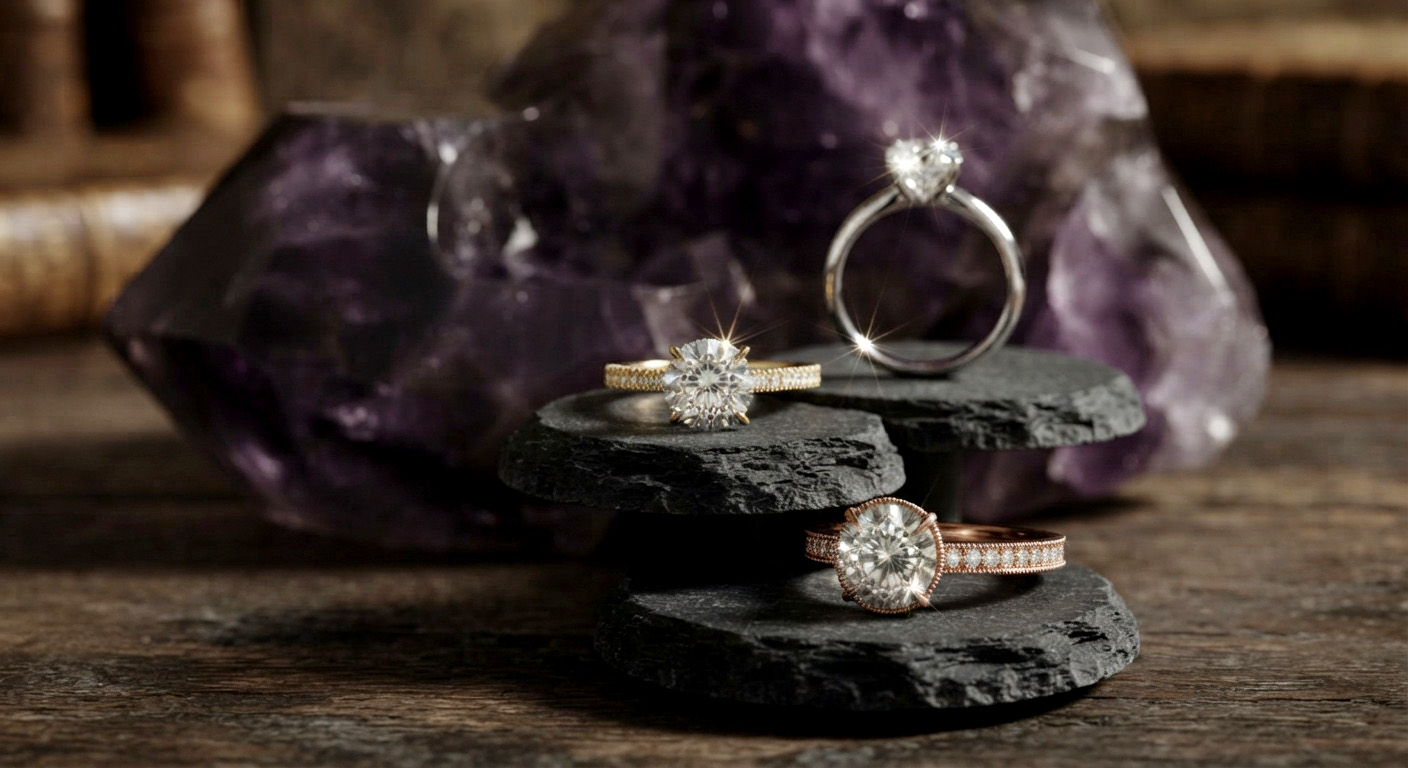
Natural diamonds are no longer the only choice for an engagement ring. Lab-grown diamonds and moissanite have become popular alternatives, giving shoppers more ways to balance the look they want with the budget they have.
The biggest question is not simply which stone looks best. It's what you want from your ring. Do you want a naturally formed diamond with its traditional identity? A lab-grown diamond that gives you the characteristics of diamond with more budget flexibility? Or a moissanite with strong sparkle, noticeable rainbow fire, and a larger look for less?
This guide breaks down the key differences between natural diamond, lab-grown diamond, and moissanite to help you find the one that fits your ring—and your priorities.
What Are Natural Diamonds, Moissanite, and Lab-Grown Diamonds?
Before comparing price, sparkle, or durability, it helps to understand one fundamental difference: natural diamonds and lab-grown diamonds are both diamonds, while moissanite is a different gemstone.
A natural diamond is a crystalline form of carbon that forms naturally deep within the Earth over geological periods of time. Its natural origin is an important part of its appeal and is one reason many buyers choose it for an engagement ring.
A lab-grown diamond is also a diamond, not a diamond imitation. It is created in a controlled laboratory environment using methods such as HPHT or CVD. Because it is made of the same material as natural diamond, it has essentially the same chemical composition and fundamental physical and optical properties. The key difference is where and how it forms.
Moissanite, on the other hand, is made of silicon carbide rather than carbon. Natural moissanite is extremely rare, so the moissanite used in jewelry today is generally lab-created. It can look similar to diamond, but its different composition gives it its own optical characteristics—including stronger dispersion and more noticeable rainbow fire.
For an engagement ring, this distinction matters because you're not simply choosing between three versions of the same stone. You're choosing between a naturally formed diamond, a laboratory-grown diamond, and a separate gemstone with a different visual character.
Diamond vs. Moissanite vs. Lab-Grown Diamond: Key Differences
|
Feature |
Natural Diamond |
Lab-Grown Diamond |
Moissanite |
|
Material |
Carbon |
Carbon |
Silicon carbide |
|
Origin |
Naturally formed |
Laboratory-grown |
Generally lab-created |
|
Mohs hardness |
10 |
10 |
About 9.25 |
|
Optical character |
Classic diamond brilliance and fire |
Similar to natural diamond |
Strong brilliance with more noticeable rainbow fire |
|
Is it a diamond? |
Yes |
Yes |
No |
|
Diamond grading |
Yes |
Depends on grading laboratory |
Not the same diamond grading framework |
|
Typical price position |
Highest |
Lower than comparable natural diamond |
Generally lowest |
The most important differences are therefore not simply about how the stones look. They also involve what the stone is, how it handles light, how it is evaluated, and how much of your budget it requires.
Appearance: Sparkle, Brilliance, and Fire
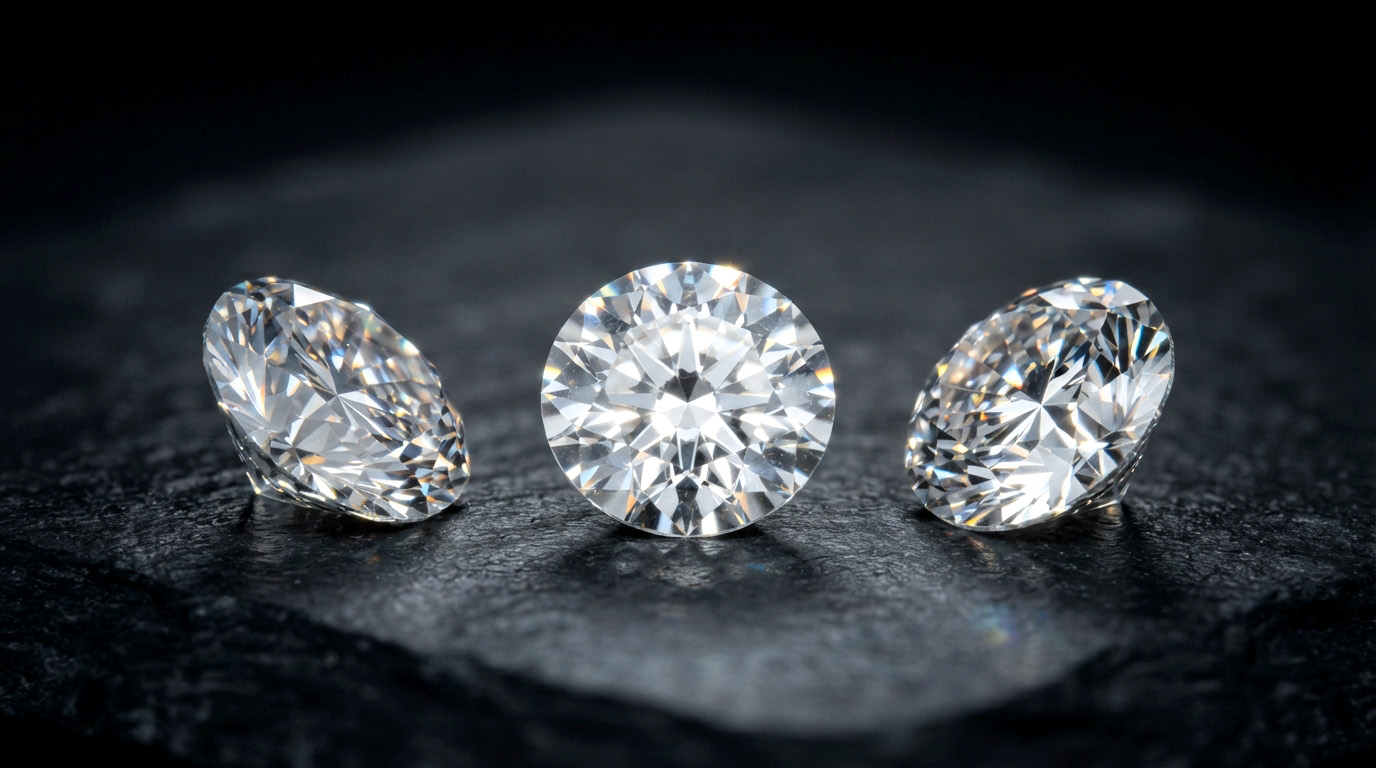
Appearance is often where the difference between diamond and moissanite becomes most noticeable.
Natural diamonds are known for their combination of brilliance, fire, and scintillation. Their faceting determines how efficiently they return light, while the stone's proportions, cut quality, and shape also influence its overall appearance.
Lab-grown diamonds have essentially the same optical properties as natural diamonds because they are made of the same material. A well-cut lab-grown diamond can therefore produce the familiar white brilliance and flashes of color associated with diamond.
Moissanite has a different type of sparkle. Its dispersion is higher than diamond's, which means it can produce more noticeable rainbow-colored fire when it interacts with light. This is one of the most recognizable visual differences between moissanite and diamond.
That does not necessarily make one better than the other. Some people prefer the more colorful, lively flashes of moissanite, while others prefer the classic brilliance of diamond.
If you're specifically considering moissanite, our Moissanite Engagement Rings: Complete Buying Guide explains how cut, color, clarity, size, setting, and metal affect the finished ring.
Hardness and Everyday Durability
For an engagement ring, durability matters because the center stone is usually worn every day and exposed to frequent contact with the outside world.
Natural and lab-grown diamonds both rank 10 on the Mohs scale, making them the hardest gemstones commonly used in jewelry and highly resistant to scratching. Moissanite ranks approximately 9.25, so it is slightly softer but still considered a very durable choice for everyday wear.
Hardness, however, is not the only factor that determines how well a ring holds up over time. The setting, prongs, metal, and overall construction also play an important role, as do the activities you regularly do while wearing the ring.
For most engagement-ring wearers, all three can provide excellent durability. The more meaningful difference is whether you prefer the hardness and traditional properties of diamond or the durability and value offered by moissanite.
Color, 4Cs, and Grading
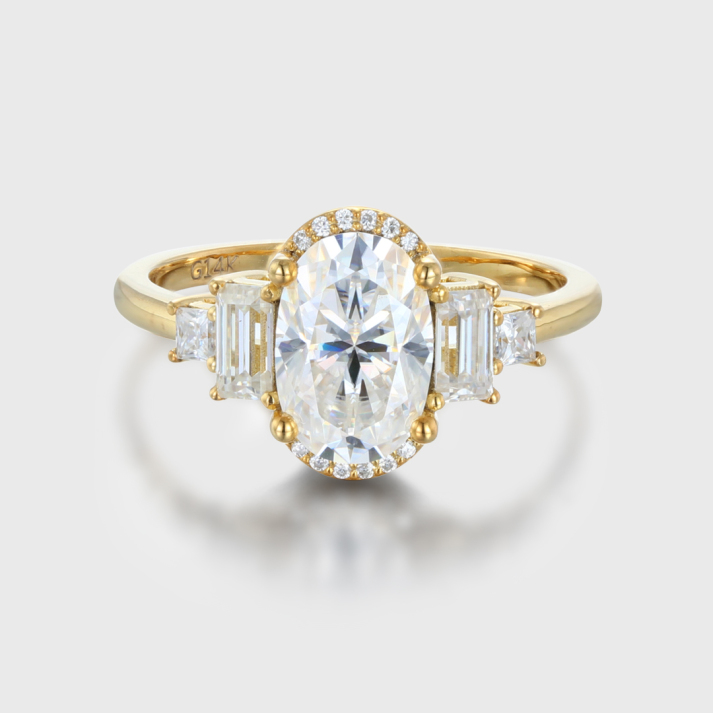
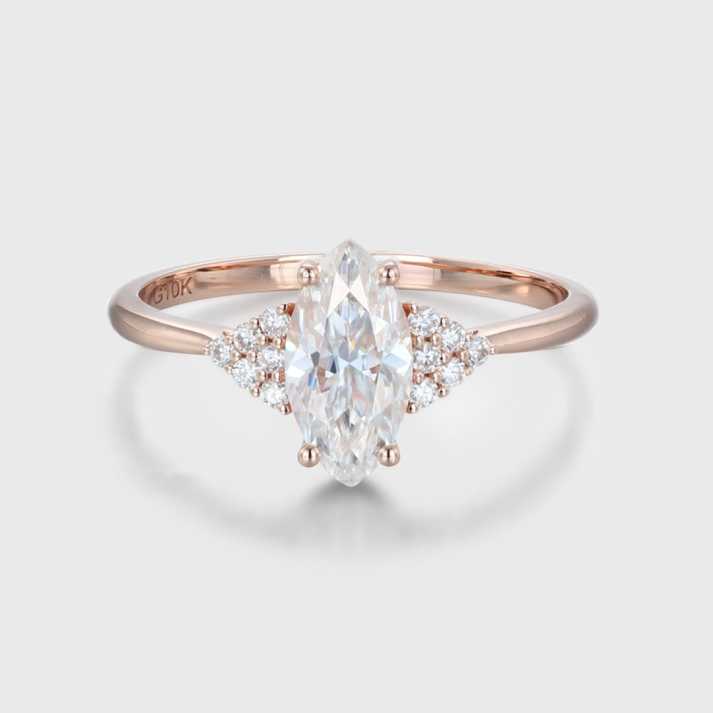
The way you compare quality depends on the stone you choose. The 4Cs are designed for diamonds, while moissanite is evaluated somewhat differently.
For natural diamonds, the traditional 4Cs—cut, color, clarity, and carat weight—are used to describe and compare diamond quality. GIA's natural diamond grading reports include these characteristics along with additional information about the stone.
Lab-grown diamonds are also diamonds, but grading practices can vary between laboratories. For example, IGI provides laboratory-grown diamond reports with diamond quality information, while GIA's current laboratory-grown diamond services use a different overall quality-assessment approach for qualifying stones.
For moissanite, the diamond 4Cs should not be treated as an identical grading system. When comparing moissanite, pay attention to the stone's cut, color, clarity, millimeter dimensions, and overall appearance. Moissanite is commonly discussed by its physical dimensions rather than treating carat weight as a direct equivalent to diamond.
If you want a more detailed explanation of lab-grown diamond quality, certification, and the 4Cs, see OVEELA's Complete Guide to Lab-Grown Diamond Rings.
Price and Budget
For many buyers, the biggest difference between these three stones is how much of the ring budget goes toward the center stone.
In general, the price relationship is:
Natural Diamond → Lab-Grown Diamond → Moissanite
Natural diamonds typically have the highest prices. Lab-grown diamonds are generally less expensive than comparable natural diamonds, while moissanite is typically the most affordable of the three.
That price difference can change what you prioritize in the rest of the ring. With a natural diamond, more of the budget may go toward the center stone. A lab-grown diamond can leave more room for a larger stone or a more elaborate setting, while moissanite can provide even more flexibility for size, design, metal, or accent stones.
Keep in mind that there is no simple price comparison based on carat weight alone. Diamond pricing depends on factors such as cut, color, clarity, carat weight, and shape, while the final ring price also reflects the metal, setting, craftsmanship, and customization.
So instead of asking only which stone is cheapest, consider what you want your overall engagement-ring budget to achieve.
Which One Is Right for You?
There is no single choice that works for everyone. The right stone depends on what you want from your engagement ring.
Choose a Natural Diamond If You Value Natural Origin
A natural diamond may be the right choice if the fact that the stone formed naturally in the Earth is an important part of your decision.
You may also prefer a natural diamond if you value the traditional identity and symbolism associated with a mined diamond and are comfortable allocating more of your budget to the center stone.
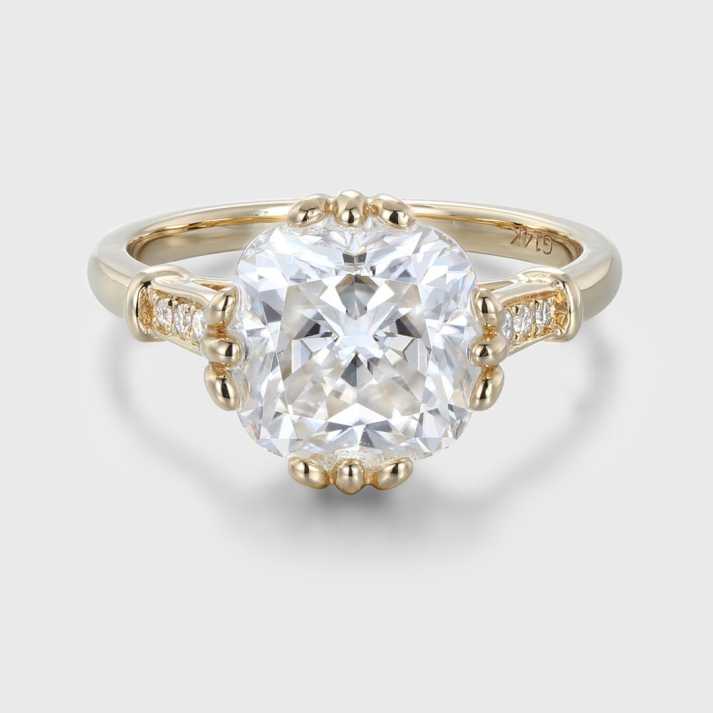
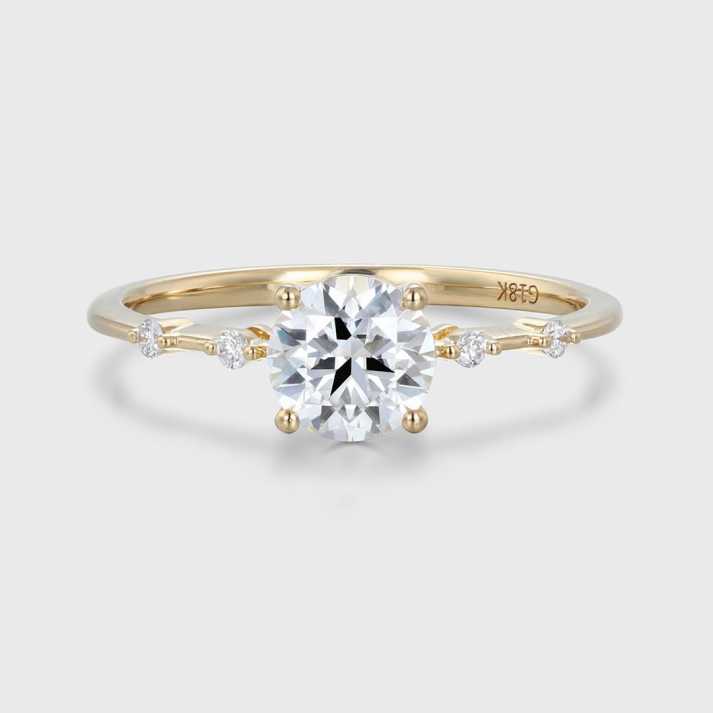
Choose a Lab-Grown Diamond If You Want a Real Diamond at a Lower Cost
A lab-grown diamond may be a good fit if you want a genuine diamond while keeping the center-stone cost lower than a comparable natural diamond.
Because lab-grown diamonds are diamonds, they offer the same fundamental material characteristics as natural diamonds. They can also be evaluated and documented by gemological laboratories, although grading systems can differ between laboratories.
This option may appeal to shoppers who want to put more of their overall ring budget toward diamond size, the setting, metal, or design.
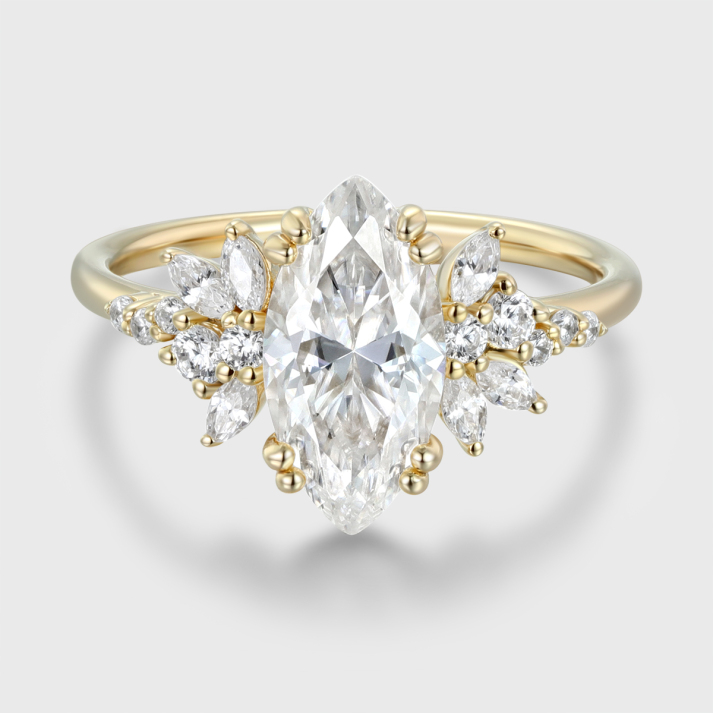
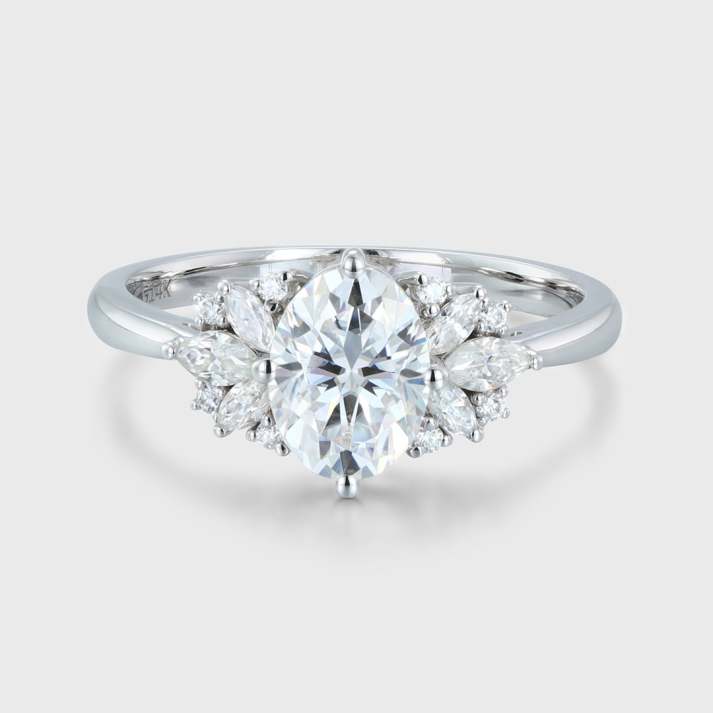
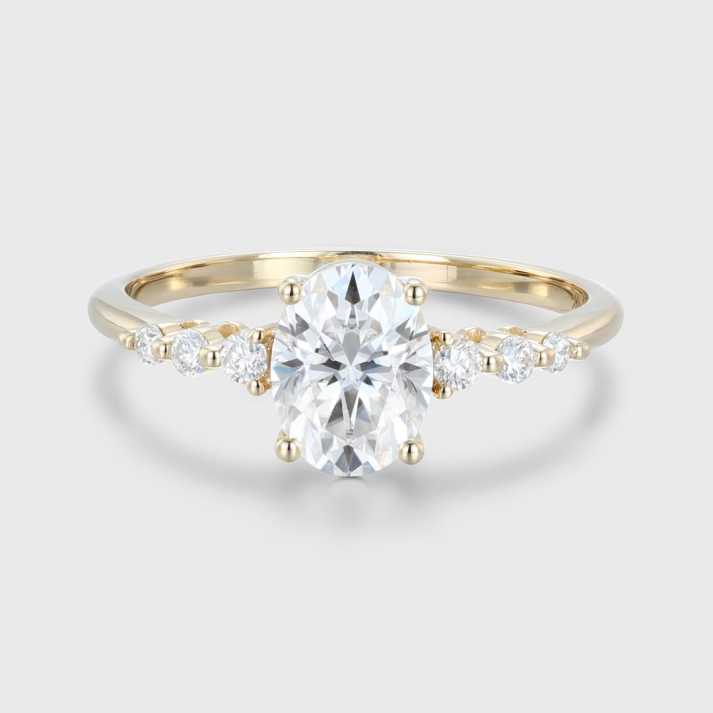
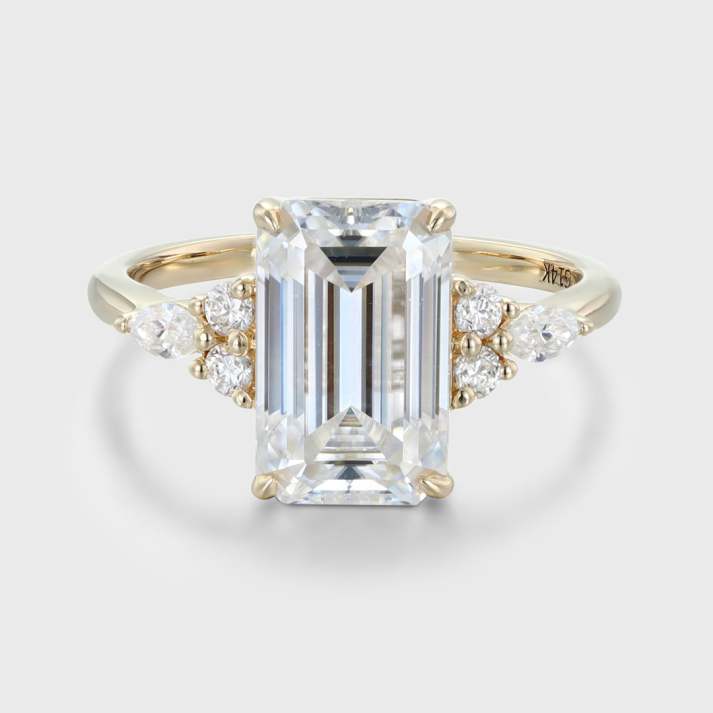
Choose Moissanite If You Prioritize Size, Fire, and Value
Moissanite may be the right choice if you do not need the center stone to be diamond and instead prioritize strong sparkle, noticeable rainbow fire, larger visual size, and affordability.
Its higher dispersion gives it a distinctive appearance that some shoppers specifically prefer over the more traditional look of diamond. It is also hard enough for everyday engagement-ring wear.
If you're still deciding what type of engagement ring fits your priorities, OVEELA's How to Choose an Engagement Ring: A Complete Guide for First-Time Buyers covers center stones, shapes, settings, metals, budget, and customization.
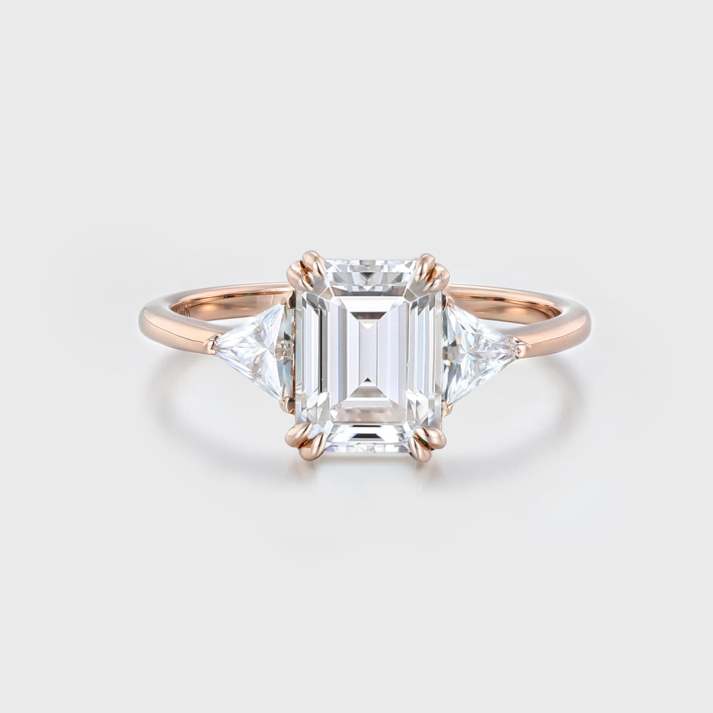
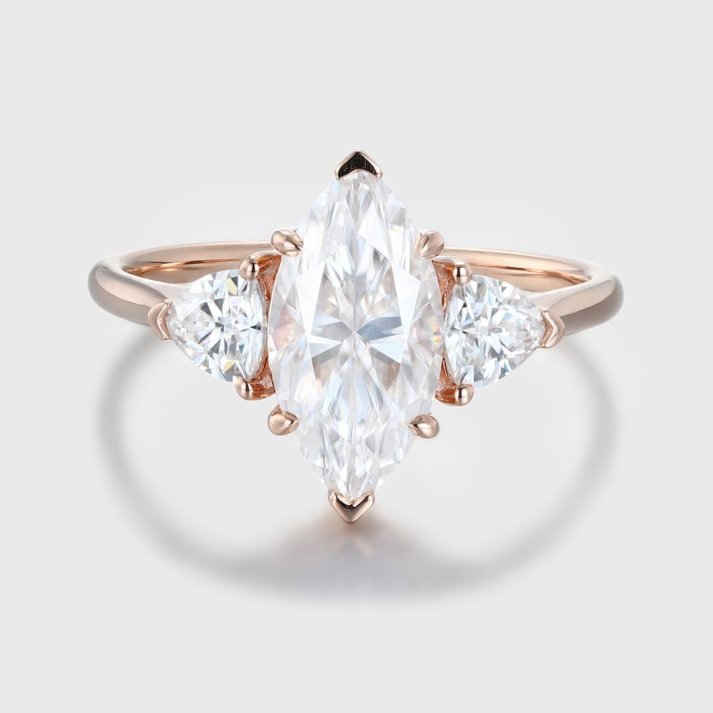
Frequently Asked Questions About Diamond, Moissanite, and Lab-Grown Diamond
No. Moissanite is a separate gemstone made of silicon carbide. It can resemble diamond but has different chemical, physical, and optical properties.
Yes. A lab-grown diamond is a real diamond. It has essentially the same chemical composition and fundamental physical and optical properties as natural diamond; its primary difference is its laboratory origin.
Diamond is harder. Natural and lab-grown diamonds rank 10 on the Mohs scale, while moissanite is approximately 9.25. Both are durable choices for everyday jewelry.
Yes. Moissanite has higher dispersion than diamond, which can produce more noticeable rainbow-colored flashes. This gives moissanite a distinctly colorful type of sparkle.
Generally, yes. Moissanite is typically less expensive than a comparable lab-grown diamond, although the actual price depends on the stone's size, cut, color, quality, and the overall ring design.
There is no single best option for every buyer. Natural diamond may suit someone who values natural origin and traditional diamond identity. Lab-grown diamond may suit someone who wants a real diamond while allocating more of the budget elsewhere. Moissanite may suit someone who prioritizes strong sparkle, rainbow fire, size, and affordability.
The best choice is the one that matches the qualities you care about most in your engagement ring.