
Pink diamonds have long been admired for their romantic color and rare beauty. For years, they were seen as a luxury reserved for only a few. Today, pink lab-grown diamonds are making that look more accessible, giving more couples the chance to consider a ring that feels distinctive, elegant, and deeply personal.
If you're researching pink lab diamond engagement rings ahead of time, this guide is for you.
Because pink lab diamonds are still a relatively new and niche category for many shoppers, it helps to understand the basics before you start comparing styles, settings, and price points. The right ring should reflect your taste, suit your lifestyle, and feel timeless enough to wear every day.
Whether you're planning for the future, gathering inspiration, or simply learning what makes a pink diamond ring special, this guide will walk you through the most important things to know before you buy.
Why Pink Lab Diamond Engagement Rings Are Becoming More Popular
Modern couples are looking for rings that feel more personal than traditional. Instead of choosing a style simply because it's expected, many people want a ring that tells a story. Pink diamonds naturally symbolize romance, affection, tenderness, and individuality, which makes them especially appealing for engagement rings.
Lab-grown pink diamonds also appeal to shoppers who want a more accessible alternative to natural pink diamonds. They offer the same diamond structure and brilliance, while opening the door to more design possibilities and a wider range of budgets.
Another reason interest is growing is visual impact. Pink diamonds stand out immediately. They feel softer than colorless diamonds, more expressive than classic white stones, and often more memorable because they are less commonly seen.
For many future brides, a pink diamond isn't just a trend. It's a way to choose something that feels meaningful from the start.
Step 1: Choose the Pink Diamond Color You Love
With pink diamonds, color is the main event. Unlike colorless diamonds, where shoppers often focus on cut and clarity first, pink diamonds are all about the shade. Even small differences in color can completely change the mood of the ring.
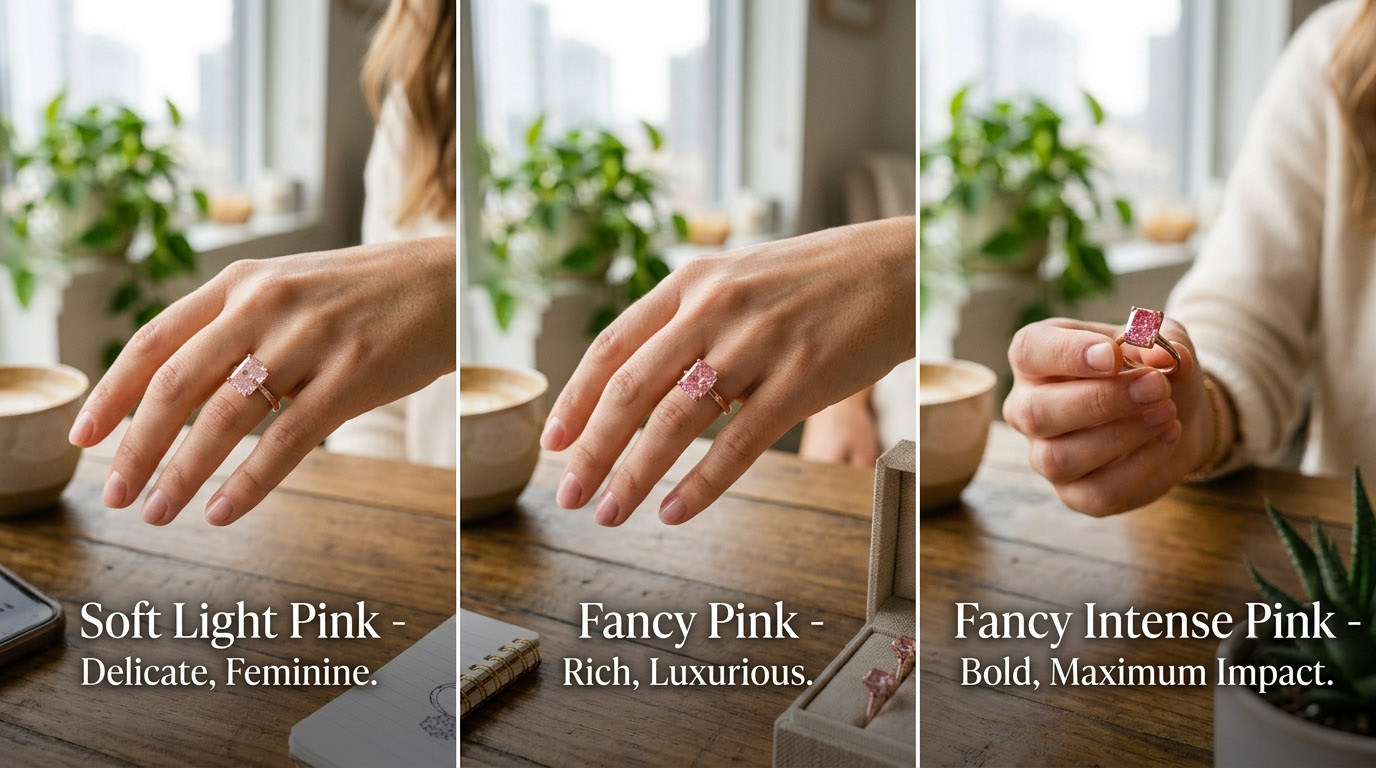
Pink lab diamonds are typically available in several tones:
Soft Light Pink
Light pink diamonds have a delicate, airy appearance. They feel romantic without being overpowering, which makes them a beautiful choice for someone who wants a subtle and feminine look.
Fancy Pink
Fancy Pink offers a richer, more noticeable color. This shade often feels classic and balanced, with enough saturation to stand out while still looking elegant.
Fancy Intense Pink
For those wanting maximum impact, Fancy Intense Pink offers bold color that instantly catches attention. These stones create unforgettable statement engagement rings. When choosing between shades, don't focus on which color is considered "better." Instead, ask yourself which shade feels most like you.
Step 2: Select the Best Diamond Shape
The shape dramatically changes how a pink diamond looks.
Oval
Oval diamonds are one of the most popular choices for engagement rings because they create a graceful, elongated look.
They also tend to show pink color beautifully, making them a strong choice for shoppers who want elegance and brilliance in one design.
Perfect for:
- Elegant style
- Modern brides
- Nature-inspired settings
Pear
Pear-shaped diamonds feel romantic, artistic, and slightly unexpected. Their teardrop silhouette pairs especially well with floral, vintage, and botanical-inspired designs.
Perfect for:
- Romantic personalities
- Vintage lovers
- Unique engagement rings
Cushion
Soft corners give cushion-cut diamonds an antique feel while enhancing the warmth of pink hues.
Ideal for vintage-style jewelry.
Radiant
Radiant cuts combine sparkle with a more structured shape. If you want a diamond that feels bright, lively, and contemporary, this is an excellent option.
Round
Round diamonds are timeless and classic. Although they are less commonly chosen for pink diamonds than oval or pear shapes, they offer exceptional sparkle and a familiar silhouette that never feels dated.
Step 3: Pick the Right Metal
The metal you choose influences how your pink diamond appears.
Rose Gold
Rose gold naturally complements pink tones, creating a romantic and cohesive look. It is one of the most flattering choices for pink diamonds because it enhances the warmth of the stone.
Best for:
- Warm skin tones
- Vintage-inspired designs
- Romantic aesthetics
White Gold
White gold creates contrast, which can make the pink diamond appear brighter and more vivid. It gives the ring a clean, modern look and works well if you want the center stone to stand out.
Yellow Gold
Yellow gold adds warmth and a classic feel. It pairs especially well with lighter pink diamonds and can give the ring a timeless, heirloom-inspired appearance.
Platinum
Platinum is known for its durability and refined finish. It offers a neutral backdrop that lets the pink diamond remain the focus, making it a strong choice for everyday wear and long-term use.
Step 4: Choose a Setting That Matches Your Lifestyle
The setting influences not only appearance but also comfort and durability.
Solitaire
Simple. Elegant. Timeless. A solitaire setting keeps the focus on the pink diamond and works well for shoppers who prefer a clean, classic look.
Hidden Halo
Hidden halos add extra sparkle without changing the top view of the ring too much.
They are a great option if you want a little more brilliance while keeping the design refined.
Three-Stone
A three-stone ring symbolizes a couple's past, present, and future. It is meaningful, balanced, and visually substantial without feeling overly ornate.
Nature-Inspired Settings
Leaf motifs, vines, and organic details create a softer, more romantic appearance that complements pink diamonds beautifully.
For brides looking for something different from traditional engagement rings, nature-inspired settings offer individuality while remaining timeless.
Step 5: Think About Everyday Wear
An engagement ring should look beautiful, but it also needs to work in real life.
Fortunately, lab-grown diamonds have the same hardness as mined diamonds, which makes them highly durable for daily wear. Still, the setting and overall design matter just as much as the stone itself.
When choosing your ring, think about:
- Your profession
- Your daily activities
- Whether you work with your hands often
- How much maintenance you're comfortable with
- Whether you prefer a low-profile or elevated setting
If you lead an active lifestyle, a lower-profile setting may offer extra protection and peace of mind. It is also worth considering the band width and prong style, since these details can affect both comfort and durability over time.
Step 6: Decide What Fits Your Budget
One of the biggest advantages of pink lab-grown diamonds is flexibility. Instead of paying primarily for rarity, you can focus more of your budget on the details that matter most to you, such as size, color, clarity, and craftsmanship.
Depending on your priorities, you may be able to choose:
- A larger center stone
- Better color saturation
- Higher clarity
- A more detailed setting
while staying within a budget that would be much harder to achieve with a natural pink diamond.
If you're comparing options, don't forget to ask for a grading report or certification from a reputable lab. A report can help confirm the stone's characteristics and give you more confidence in what you're buying.
Don't Forget the Wedding Band
Your engagement ring is only one part of the full bridal look. Before you choose a ring, think about how it will pair with a wedding band later on. Some settings sit flush with a band, while others may need a curved or contoured design.
Popular options include:
- Curved wedding bands
- Pavé bands
- Nature-inspired leaf bands
- Diamond enhancers
- Vintage stacking bands
Planning both pieces together can help create a more balanced and cohesive set.
Why More Couples Are Choosing Pink Lab Diamond Rings
Today's engagement rings are becoming less about tradition and more about personal expression. Pink lab diamonds combine beauty, symbolism, and versatility, making them appealing to couples who want something distinctive without giving up durability or elegance.
For many people, the appeal is not just the color itself. It is the feeling that the ring reflects their personality, their story, and their style.
That is what makes pink lab diamond engagement rings so compelling.
A Note from OVEELA
At OVEELA, we believe the best jewelry starts with thoughtful design and meaningful details.
This guide is part of our inspiration library for couples who are exploring future ring ideas and learning what to look for before they buy. If pink lab diamond engagement rings are on your wishlist, bookmark this page and come back whenever you're ready to compare styles, settings, and design ideas.
We will continue sharing guides like this to help you shop with confidence and find a ring that feels true to your story.
Frequently Asked Questions
Yes. Pink lab grown diamonds have the same chemical composition, crystal structure, hardness, and brilliance as mined diamonds. The only difference is their origin.
Absolutely. Like natural diamonds, they rank 10 on the Mohs hardness scale, making them suitable for daily wear.
Rose gold creates a soft, romantic look, while white gold and platinum provide contrast that makes the pink color appear brighter. The best choice depends on your personal style.
Yes. Because they can be produced in a laboratory rather than mined, lab grown pink diamonds are significantly more affordable while offering the same beauty and durability.
Oval and pear cuts are among the most popular because they showcase pink color beautifully while creating an elegant, elongated appearance.