
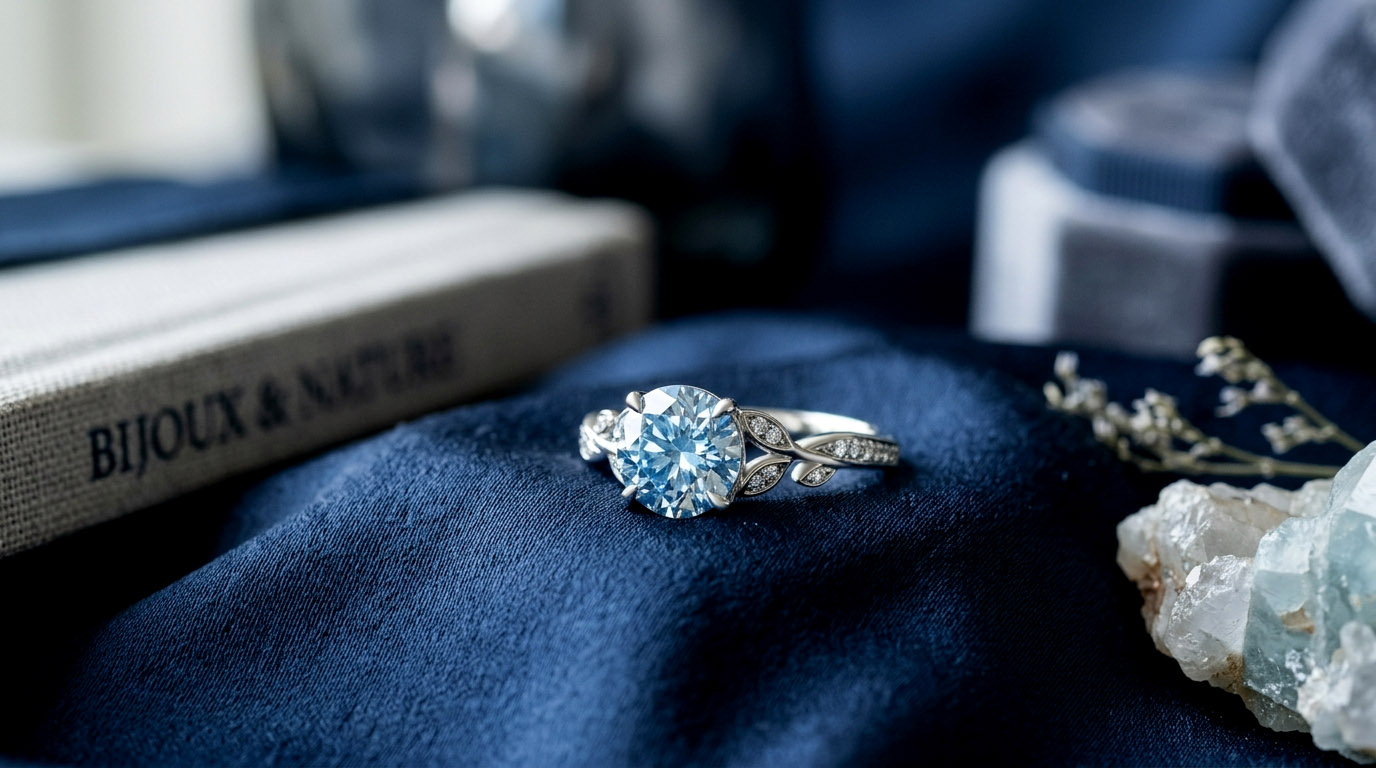
A lab grown blue diamond ring combines the beauty of a rare colored gemstone with modern diamond technology. These diamonds have the same chemical composition, crystal structure, and physical properties as mined diamonds, while their blue color creates a distinctive alternative to traditional white diamond engagement rings.
For engagement ring buyers looking for a luxury piece with a unique appearance, lab grown blue diamonds offer an opportunity to choose a bold and elegant design while considering factors such as color intensity, cut quality, certification, and personal style.
What Are Lab Grown Blue Diamonds?
Lab grown blue diamonds are genuine diamonds created in controlled laboratory environments using advanced technology that replicates the natural diamond formation process. Unlike diamond simulants, such as cubic zirconia or glass, lab grown diamonds are real diamonds. They contain carbon atoms arranged in the same crystal structure as natural diamonds.
Blue lab grown diamonds receive their color through controlled processes involving trace elements or growth conditions during formation. The result is a diamond with a beautiful blue appearance suitable for engagement rings, earrings, and other fine jewelry.
In terms of durability, lab grown blue diamonds score 10 on the Mohs hardness scale, making them equally suitable for daily wear. This is one of the key reasons they are increasingly chosen for engagement rings rather than being limited to fashion jewelry.
Why Choose a Lab Grown Blue Diamond Ring?
Blue diamonds have long been associated with elegance, rarity, and individuality. A lab grown blue diamond ring appeals to buyers who want something different from the traditional colorless diamond.
Beyond aesthetics, modern buyers are also influenced by lifestyle, sustainability awareness, and design freedom. Lab grown diamonds allow more flexibility in selecting size and color without the extreme price constraints of rare natural colored diamonds.
Key reasons buyers consider blue lab grown diamonds include:
1. Unique Appearance
A blue diamond engagement ring immediately stands out. The color can range from soft pastel blue to deep, dramatic shades depending on the diamond’s characteristics.
Unlike white diamonds, where brilliance is the main focus, blue diamonds introduce an emotional visual tone. The color itself becomes part of the storytelling of the ring, often symbolizing calmness, depth, loyalty, and emotional stability.
2. Modern Luxury Appeal
Colored diamond rings are often chosen by couples who want a personalized symbol of commitment rather than a conventional design.
In modern jewelry trends, individuality is becoming more important than tradition. A blue diamond ring reflects a sense of identity and intentional design choice, especially for buyers who prefer contemporary luxury over classic minimalism.
3. Design Flexibility
Blue diamonds pair beautifully with different metals and settings, including:
- Platinum
- White gold
- Yellow gold
- Rose gold
Each metal creates a different visual effect. For example, platinum enhances a cool, icy luxury feel, while yellow gold creates a strong contrast that makes the blue color appear richer and more vivid. Rose gold, on the other hand, softens the overall look and adds a romantic tone.
4. Alternative Diamond Choice
Many buyers explore lab grown diamonds because they are interested in newer diamond options and want to compare them with traditional mined diamonds.
In addition, lab grown blue diamonds allow buyers to access larger carat sizes or more intense color grades at a more approachable price point. This makes it possible to prioritize design and visual impact rather than compromise due to rarity pricing.
How Lab Grown Blue Diamonds Get Their Color
The blue color of a diamond is created through changes at the atomic level. In natural diamonds, blue coloring is commonly associated with the presence of boron. Lab grown diamonds can also develop blue coloration through controlled growth conditions or additional processes that influence how light interacts with the crystal structure.
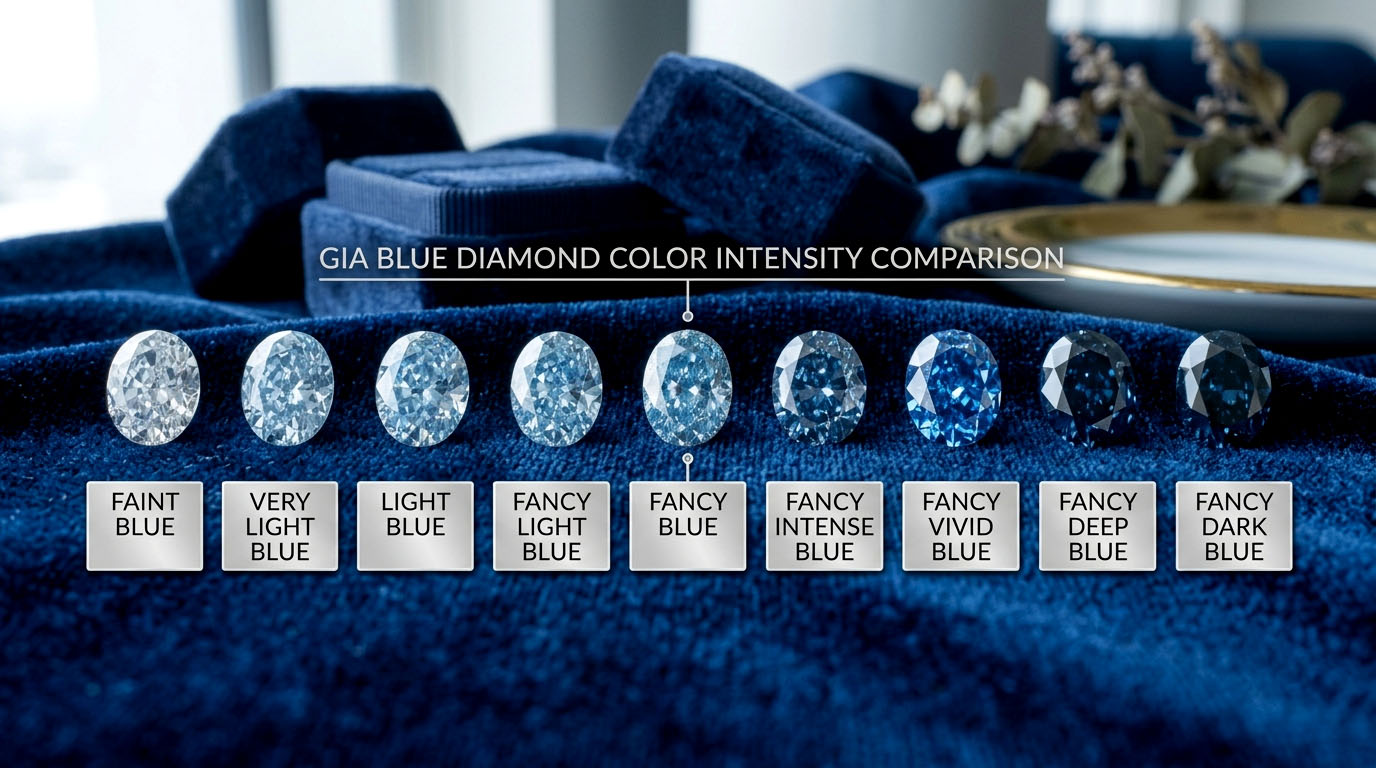
The intensity of blue can vary significantly depending on how the diamond is formed and treated:
- Light blue:Soft, elegant, and understated
- Fancy blue:More noticeable color presence with balanced saturation
- Deep blue:Dramatic, rich, and highly luxurious appearance
Lighting conditions also play a major role in how a blue diamond is perceived. Under daylight, the color may appear brighter and more vivid, while under warm indoor lighting, it may look deeper and more saturated.
When selecting a blue diamond ring, color preference is highly personal. Some buyers prefer a subtle hint of blue for everyday elegance, while others want a bold statement gemstone that immediately draws attention.
The 4Cs of Choosing a Lab Grown Blue Diamond
The traditional diamond evaluation system focuses on four major factors:
- Color
- Cut
- Clarity
- Carat weight
For blue diamonds, color often becomes the most important visual factor, but all four elements still work together to determine overall beauty and value.
Color: The Most Important Factor
With blue diamonds, the quality of the color can significantly influence the overall beauty of the ring.
Unlike white diamonds, where absence of color is ideal, colored diamonds are judged by how attractive and balanced their color appears.
Consider:
Hue
Hue refers to the primary color. Blue diamonds may have pure blue tones or secondary undertones such as gray or green. A purer blue is generally more desirable for a luxury appearance.
Tone
Tone describes how light or dark the diamond appears. A very light tone may look delicate but less intense, while a darker tone can feel more dramatic and powerful.
Saturation
Saturation measures the intensity of the color. Higher saturation usually results in a more vivid and premium-looking blue diamond.
When shopping for a luxury blue diamond engagement ring, it is important to compare stones under similar lighting conditions. Even small differences in saturation can significantly change the overall impression of the ring.
Cut: Maximizing Brilliance
Cut determines how effectively a diamond reflects light. A well-cut blue diamond can appear brighter and more vibrant, allowing the color to shine beautifully without looking dull or overly dark.
Because colored diamonds rely heavily on both color and light performance, cut quality becomes especially important. A poorly cut diamond may lose brilliance and make the color appear flat.
Popular diamond cuts for blue engagement rings include:
|
Cut |
Style |
Visual Effect |
|
Round |
Classic sparkle |
Maximum brilliance and symmetry |
|
Oval |
Elegant and elongated |
Finger-lengthening effect |
|
Cushion |
Romantic vintage appearance |
Soft glow with strong color presence |
|
Emerald |
Sophisticated and modern |
Hall-of-mirrors clarity effect |
|
Pear |
Unique and artistic |
Distinctive teardrop silhouette |
The ideal cut depends on your preferred style and how you want the blue color to be displayed. For example, cushion cuts often enhance color saturation, while round cuts maximize sparkle.
Clarity and Transparency
Clarity refers to internal characteristics and surface imperfections.
Because colored diamonds naturally draw attention through their color, many buyers prioritize strong color over achieving the highest possible clarity grade. However, clarity still affects how clean and refined the diamond appears.
A good quality blue diamond should:
- Appear clean to the naked eye
- Maintain good transparency
- Avoid visible inclusions in the center area
Inclusions near the edges are often less noticeable, especially when the diamond is set in a ring.
Carat Weight and Size
Carat refers to diamond weight, not visual size alone.
A larger blue diamond may create a stronger statement, but the right size depends on:
- Budget
- Ring design
- Finger size
- Personal preference
It is also important to understand that color intensity can appear different depending on carat size. In some cases, larger stones may show color more clearly, while smaller stones may appear lighter.
A well-designed setting can make a smaller diamond appear larger and more impressive by using techniques such as halo accents or thin band designs.
Best Ring Settings for Blue Lab Grown Diamonds
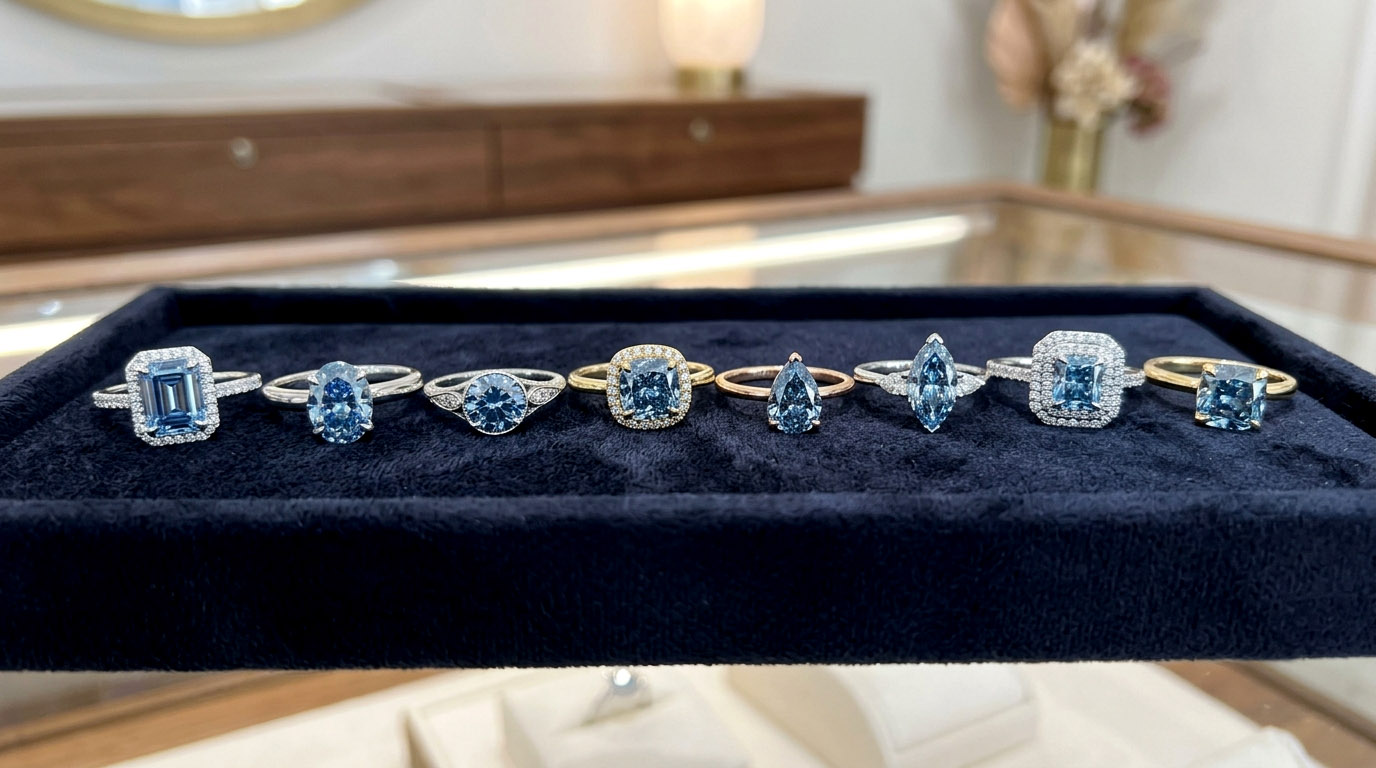
The setting plays a major role in the final appearance of your engagement ring. It influences not only style but also how the diamond’s color and brilliance are perceived.
Solitaire Setting
A solitaire setting allows the blue diamond to become the center of attention.
Best for:
- Minimalist luxury
- Classic engagement styles
- Highlighting diamond color without distraction
This is the most timeless option and works especially well for high-quality blue diamonds with strong color.
Halo Setting
A halo of smaller diamonds can enhance the appearance of a blue center stone.
Best for:
- Extra sparkle and brilliance
- Making the center stone appear larger
- Glamorous and high-impact designs
The contrast between white accent diamonds and a blue center stone often intensifies the perceived color.
Three-Stone Setting
A blue diamond paired with side stones creates a meaningful and balanced look.
Best for:
- Symbolic engagement rings (past, present, future)
- Custom storytelling designs
- Balanced visual composition
Side stones can be either white diamonds or colored gemstones depending on the desired aesthetic.
Vintage-Inspired Settings
Intricate details can complement the unique personality of a blue diamond.
Best for:
- Romantic and antique-inspired styles
- Milgrain detailing and engraving
- Artistic craftsmanship focus
Vintage settings often enhance the emotional depth of colored diamonds.
Lab Grown Blue Diamonds vs Natural Blue Diamonds
|
Feature |
Lab Grown Blue Diamonds |
Natural Blue Diamonds |
|
Origin |
Created in laboratories |
Formed naturally underground |
|
Composition |
Real diamond carbon structure |
Real diamond carbon structure |
|
Appearance |
Can have beautiful blue color |
Known for natural rarity |
|
Availability |
Generally more accessible |
Extremely rare |
|
Buying consideration |
Technology and design choice |
Natural rarity and history |
The right choice depends on your priorities, including design preferences, budget considerations, emotional value, and interest in natural rarity versus modern innovation.
Luxury Styling Ideas for Blue Diamond Engagement Rings
A blue diamond can create several luxury aesthetics depending on how it is styled.
Classic Elegance
Pair a blue diamond with platinum and a simple setting. This highlights purity, balance, and timeless sophistication.
Modern Statement
Choose a larger oval or cushion-cut blue diamond with minimal details. This creates a bold, fashion-forward appearance.
Romantic Vintage
Add decorative elements such as milgrain edges, floral motifs, or halo designs. This enhances emotional depth and artistic charm.
Contemporary Luxury
Combine a blue center stone with geometric settings and clean architectural lines. This style emphasizes modern design language and exclusivity.
Conclusion
Choosing a lab grown blue diamond ring is about balancing beauty, quality, and personal expression. The most important factors are selecting an appealing blue color, a high-quality cut, a suitable setting, and reliable certification.
For engagement ring buyers seeking a luxury design with a distinctive personality, a blue lab grown diamond offers a memorable alternative that combines modern innovation with timeless diamond beauty.
Frequently Asked Questions About Lab Grown Blue Diamonds
Yes. Lab grown blue diamonds are real diamonds with the same basic chemical composition and crystal structure as natural diamonds.
Yes. Their sparkle depends mainly on cut quality and diamond characteristics rather than whether the diamond was grown in a laboratory or mined.
Yes. They are suitable for engagement rings because diamonds are among the hardest known natural materials and are commonly used in jewelry.
Choose based on your preferred appearance. Some buyers prefer subtle light blues, while others prefer intense deep blue shades.
A blue diamond is ideal for buyers who want a unique and personalized ring. A white diamond may better suit those seeking a traditional engagement style.