
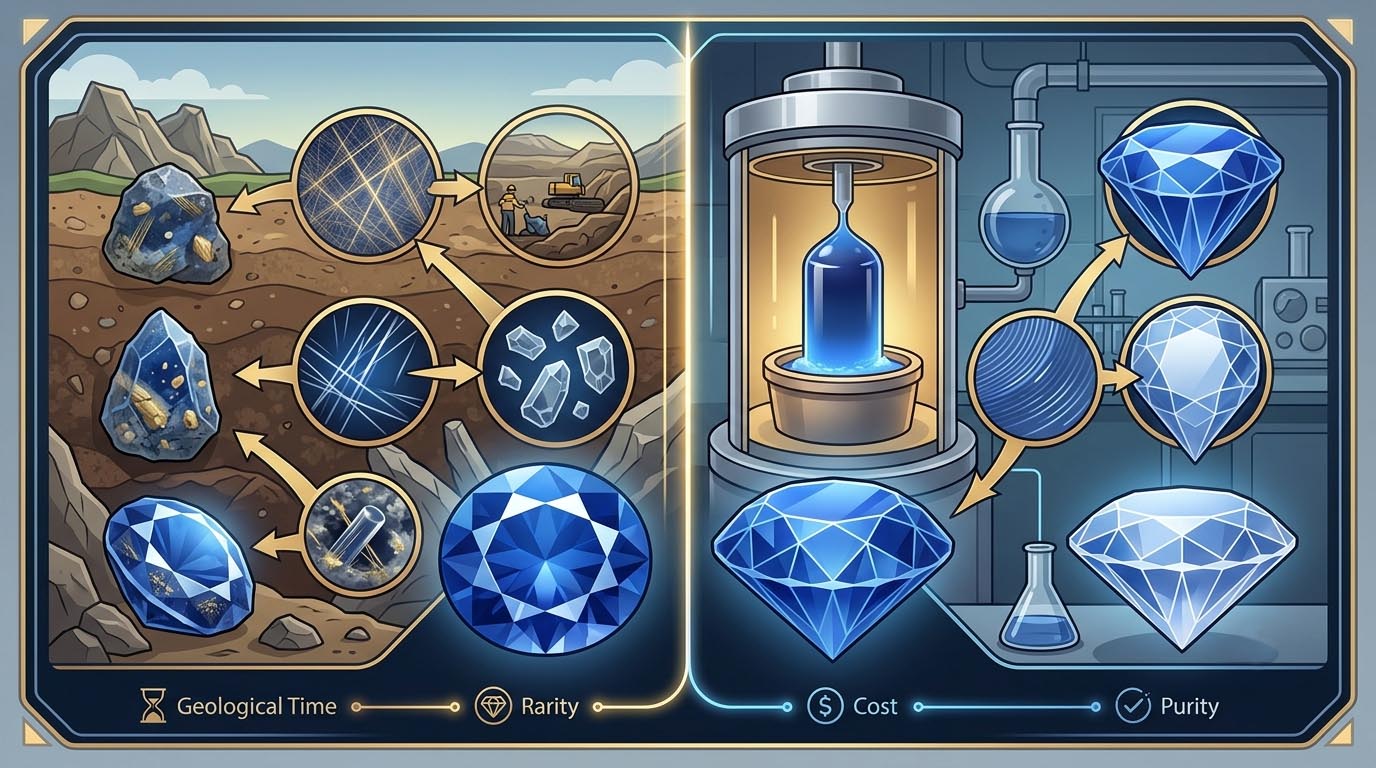
Blue sapphires have symbolized loyalty, wisdom, and timeless elegance for centuries. Today, however, shoppers have more than one option. Alongside natural sapphires, lab-grown sapphires have become a popular choice, offering the same striking appearance at a much lower price.
That leads to one of the most common questions buyers ask: Is a lab sapphire a real sapphire? And if it looks the same, why is it so much less expensive?
The short answer is that both natural and lab-grown sapphires are real sapphires. They share the same chemical composition, crystal structure, and hardness. The biggest differences come down to how they're formed, how rare they are, how they're valued, and which type of buyer they're best suited for.
This guide explains the differences that actually matter—without the myths or marketing hype—so you can confidently decide which sapphire is right for you.
Natural Sapphire vs. Lab Sapphire: The Quick Answer
If you're short on time, here's the simplest comparison:
|
Feature |
Natural Sapphire |
Lab-Grown Sapphire |
|
Formation |
Created naturally within the Earth over millions of years |
Created in a controlled laboratory over several weeks |
|
Chemical Composition |
Aluminum oxide (corundum) |
Aluminum oxide (corundum) |
|
Hardness |
Mohs 9 |
Mohs 9 |
|
Appearance |
Every stone is naturally unique |
Usually cleaner and more consistent |
|
Price |
Higher |
Significantly lower |
|
Rarity |
Naturally limited |
Can be produced as needed |
From a durability standpoint, they're virtually identical. The real differences lie in origin, rarity, and price.
Is Lab Sapphire a Real Sapphire?
Yes. One of the biggest misconceptions is that lab sapphires are "fake." They're not. A lab-grown sapphire is chemically, physically, and optically the same mineral as a natural sapphire. Both are varieties of corundum, and both have the same crystal structure.
The only difference is where the crystal grows.
- Natural sapphireforms underground through geological processes over millions of years.
- Lab sapphiregrows in a laboratory under carefully controlled conditions that recreate the same crystal growth process in a matter of weeks.
This is completely different from imitation stones like colored glass or cubic zirconia, which only resemble sapphire in appearance.
Appearance: Can You Tell Them Apart?
For most people, the answer is no. Even experienced jewelry shoppers often cannot distinguish a natural sapphire from a lab-grown sapphire simply by looking at it.
Both stones can display:
- Rich royal blue color
- Excellent transparency
- Strong brilliance
- Attractive polish
The biggest visual difference isn't something most people notice immediately.
Natural Sapphires Usually Have More Character
Because they formed in nature, natural sapphires often contain:
- Tiny mineral inclusions
- Color zoning
- Internal growth patterns
These features are not flaws. In fact, they're often considered evidence that the stone is naturally formed. No two natural sapphires are exactly alike.
Lab Sapphires Are Typically Cleaner
Because laboratory conditions are carefully controlled, lab sapphires usually have:
- Fewer inclusions
- More even color distribution
- Higher visual clarity
Some buyers appreciate this cleaner appearance, while others enjoy the individuality found in natural stones. Neither is objectively "better"—it's simply a matter of personal preference.
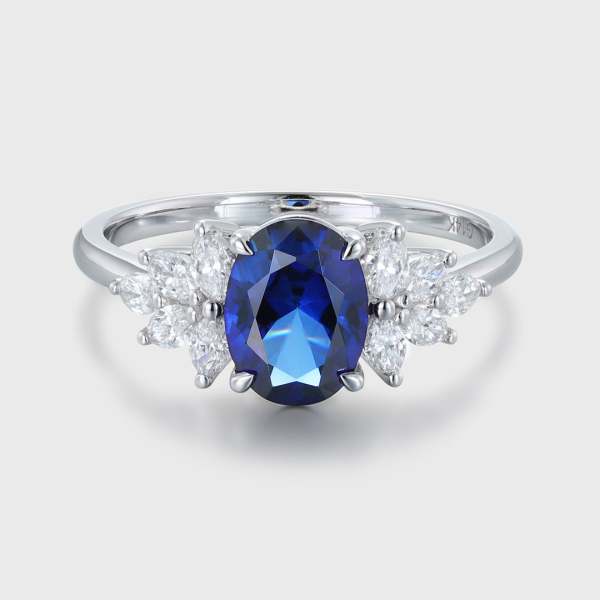
Oval Cut Sapphire and Diamond White Gold Engagement Ring
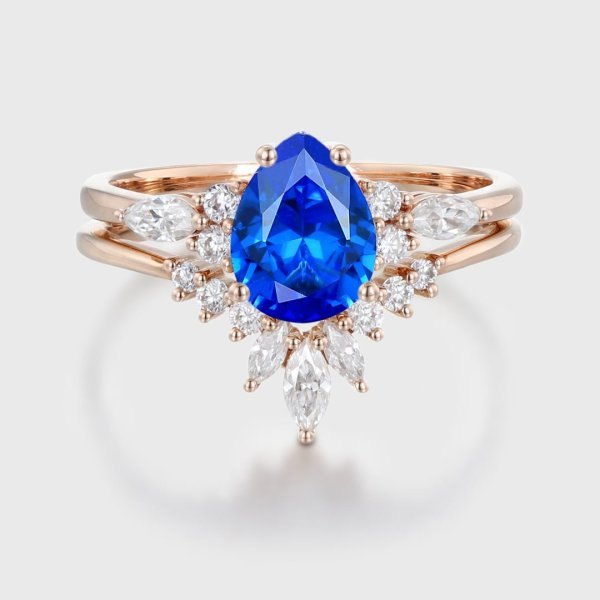
Pear Cut Lab Grown Sapphire Rose Gold Bridal Set
Durability: Is Lab Sapphire as Durable as Natural Sapphire?
Both natural and lab-grown sapphires rank: 9 on the Mohs hardness scale. This means they offer excellent scratch resistance, making them well suited for jewelry that's worn every day.
Whether a sapphire is mined or lab-grown, you can expect the same level of resistance to normal daily wear, including contact with common household materials that would scratch softer gemstones.
Like any gemstone, however, sapphire isn't indestructible. A hard impact against a sharp edge can still cause chipping or damage, so it's always worth treating fine jewelry with reasonable care.
Why Is Natural Sapphire So Much More Expensive?
If the stones are chemically identical, why can the prices be so different? The answer is rarity. Gem-quality natural sapphires are uncommon, especially stones with:
- Rich, even color
- High clarity
- Excellent cutting quality
- Larger carat weights
Mining, sorting, and cutting these stones require significant time and resources, and high-quality rough is limited.
Lab-grown sapphires don't have those same supply constraints. Because they're produced in a controlled environment, manufacturers can create gemstones with consistent quality and greater availability. As a result, lab sapphires typically cost a fraction of comparable natural sapphires, especially in larger sizes. For many buyers, that means choosing a larger center stone or a more elaborate setting without exceeding their budget.
Color Options: Which Offers More Variety?
Natural sapphires are available in many colors, including:
- Blue
- Pink
- Yellow
- Green
- White
- Purple
- Peach
Lab-grown sapphires can be created in the same color range. However, because laboratory conditions are carefully controlled, it's often easier to achieve highly saturated, consistent colors in lab-grown stones. If you're looking for a specific shade—such as a vivid royal blue or a pastel pink—you may find more predictable options with lab-grown sapphires.
Are Lab Sapphires More Ethical?
Many shoppers choose lab-grown gemstones because they appreciate the transparency of laboratory production and the reduced environmental impact associated with mining. That doesn't automatically make every natural sapphire unethical. Many responsibly sourced natural sapphires are available through reputable suppliers. Instead of thinking of one option as "good" and the other as "bad," it's more accurate to view them as two different sourcing methods, each with its own advantages.
Which One Holds Its Value Better?
If future resale value is your primary concern, natural sapphires generally retain value better because of their rarity and collector demand. However, it's important to keep expectations realistic. Most engagement rings—whether they feature natural diamonds, sapphires, or other gemstones—should be viewed as personal purchases rather than financial investments. Many people choose lab sapphires not because they expect appreciation, but because they prioritize beauty, durability, and value for money.
Care and Maintenance
The good news is that caring for both types of sapphire is exactly the same. To keep your sapphire jewelry looking its best:
- Clean it regularly with warm water, mild soap, and a soft brush.
- Remove jewelry before heavy manual work or activities that could cause impact.
- Store pieces separately to avoid scratching softer gemstones.
- Have prongs and settings checked periodically if the ring is worn every day.
With proper care, both natural and lab-grown sapphires can remain beautiful for generations.
Final Thoughts: Which Sapphire Is Right for You?
When comparing natural sapphire vs. lab-grown sapphire, there's no universal winner—only the option that best fits your priorities.
If you're drawn to the rarity, natural origin, and individuality of gemstones formed over millions of years, a natural sapphire offers a unique story that many buyers value.
If your focus is on beauty, durability, and getting the most value from your budget, a lab-grown sapphire delivers the same everyday performance and visual appeal at a much more accessible price.
The important thing to remember is that both are real sapphires. They sparkle the same, wear the same, and can become equally meaningful symbols of love or celebration. The biggest difference isn't how they perform—it's the story behind how they came to be.
Frequently Asked Questions
No. A lab-grown sapphire is a real sapphire with the same chemical composition, crystal structure, and hardness as a natural sapphire. The only difference is that it's created in a laboratory instead of forming underground.
Usually, yes—but not by eye alone. Professional gemologists use specialized equipment to identify growth patterns and inclusions that reveal whether a sapphire is natural or lab-grown.
Both are equally suitable for everyday wear because both have a Mohs hardness of 9 and excellent durability.
The lower price reflects production methods rather than lower quality. Lab-grown sapphires can be created efficiently under controlled conditions, while high-quality natural sapphires are much rarer and require mining.
No. Under normal wear, both natural and lab-grown sapphires retain their color permanently. The color is an inherent part of the crystal, not a surface treatment.