
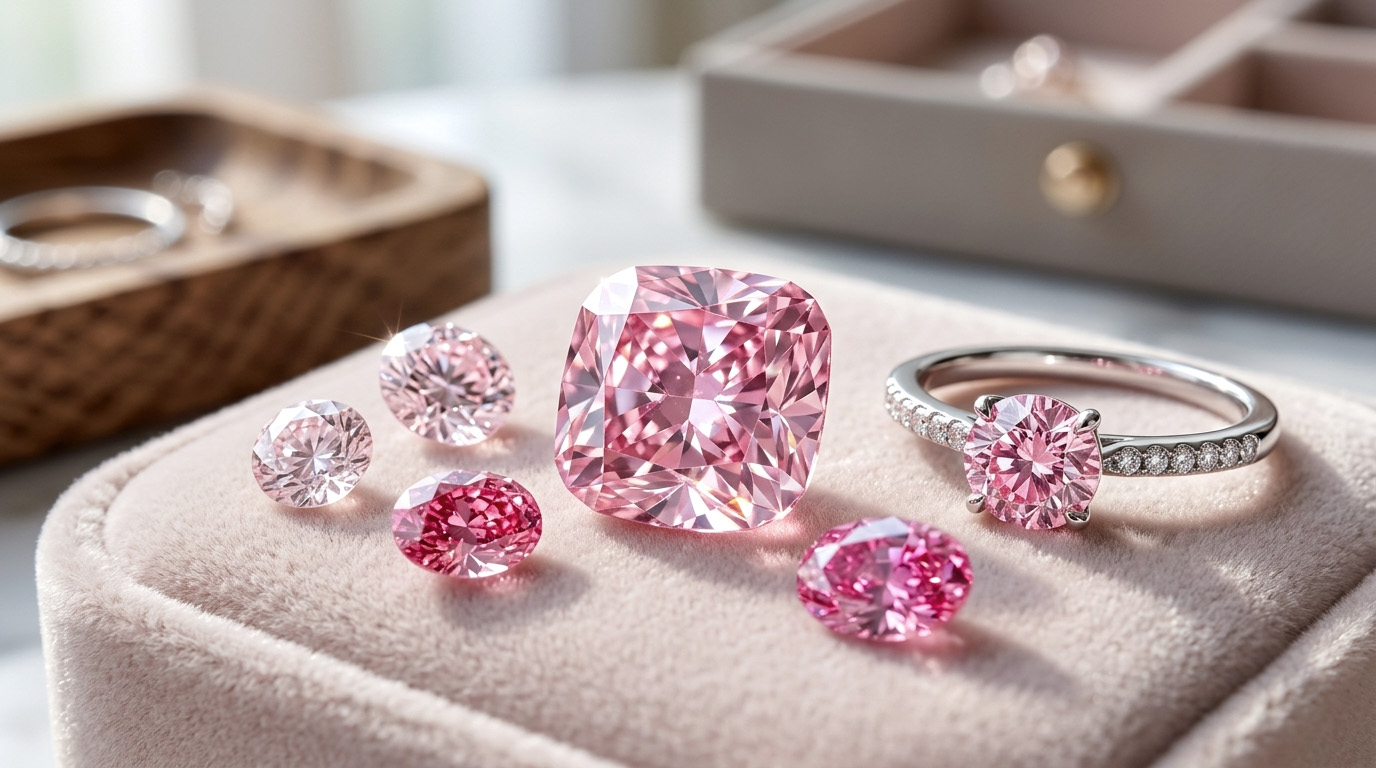
Yes, lab pink diamonds are real diamonds. They have the same chemical composition, crystal structure, and physical properties as mined diamonds. The main difference is their origin: natural pink diamonds form deep inside the Earth over billions of years, while lab-grown pink diamonds are created in controlled laboratory environments using advanced technology.
Before buying a lab pink diamond, it is important to understand how they are made, how their color is created, how they compare with natural pink diamonds, and what affects their quality and price.
What Are Lab Pink Diamonds?
Lab pink diamonds are diamonds created in a laboratory that have a pink color appearance. Unlike diamond simulants such as cubic zirconia or moissanite, lab-grown diamonds are not imitations. They are genuine diamonds grown using scientific processes that replicate the conditions under which diamonds naturally develop.
A lab pink diamond contains:
- Carbon atoms arranged in a diamond crystal structure
- The same hardness rating as natural diamonds
- The same optical properties, including brilliance and sparkle
- The same chemical composition as mined diamonds
The difference is simply where the diamond was formed. Natural diamonds are created beneath the Earth’s surface, while lab diamonds are grown using technology.
Are Lab Pink Diamonds Real Diamonds?
Yes, lab pink diamonds are real diamonds. A qualified gemologist using professional equipment can identify that a diamond was grown in a laboratory, but this does not mean it is fake. The distinction is based on origin, not whether the stone is a diamond.
A lab-grown diamond is different from:
|
Stone Type |
Real Diamond? |
Carbon Crystal Structure? |
|
Natural diamond |
Yes |
Yes |
|
Lab-grown diamond |
Yes |
Yes |
|
Cubic zirconia |
No |
No |
|
Moissanite |
No |
No |
Lab-grown diamonds are recognized by major gemological organizations as diamonds, provided they are properly disclosed as laboratory-grown.
How Are Pink Lab Diamonds Made?
Lab-grown diamonds are typically created through two main methods:
Chemical Vapor Deposition (CVD)
The CVD process grows diamonds by placing a diamond seed in a chamber filled with carbon-containing gases. Under controlled conditions, carbon atoms attach to the seed and slowly build a diamond crystal.
High Pressure High Temperature (HPHT)
The HPHT method recreates the extreme pressure and heat conditions found deep inside the Earth. Carbon material is transformed into a diamond crystal around a small diamond seed.
Both methods can produce gem-quality diamonds suitable for jewelry.
Why Are Lab Pink Diamonds Pink?
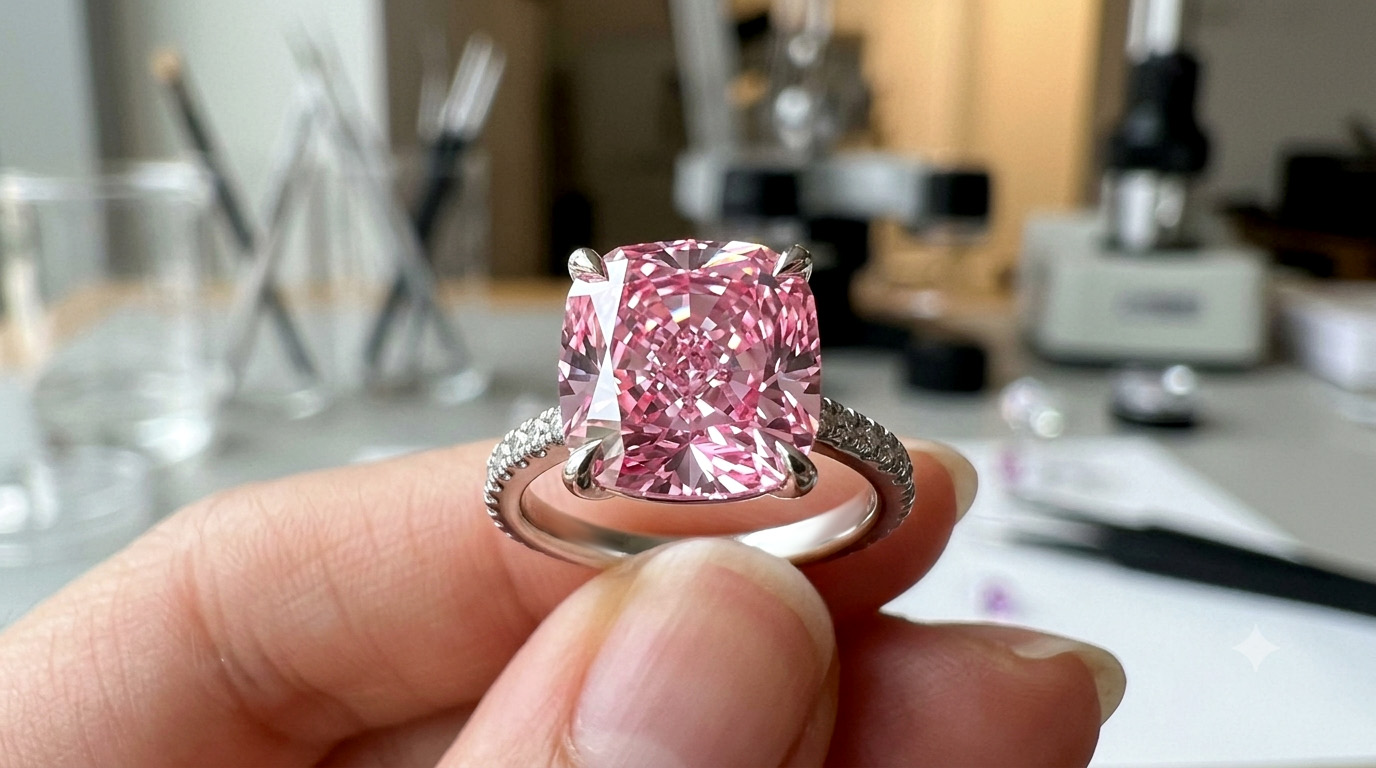
Pink diamonds get their color from changes in the diamond’s structure. Natural pink diamonds are rare because their color usually comes from structural distortions that occurred during formation. Scientists can create pink lab diamonds by introducing controlled growth conditions that produce similar color effects.
The intensity of pink color can vary:
- Faint pink
- Light pink
- Fancy pink
- Fancy intense pink
- Fancy vivid pink
Color strength, along with cut, clarity, and carat weight, affects the appearance and price of a pink diamond.
Lab Pink Diamonds vs Natural Pink Diamonds
The biggest difference between lab pink diamonds and natural pink diamonds is their origin and market value.
|
Feature |
Lab Pink Diamond |
Natural Pink Diamond |
|
Origin |
Created in a laboratory |
Formed naturally underground |
|
Chemical composition |
Carbon crystal |
Carbon crystal |
|
Hardness |
10 on Mohs scale |
10 on Mohs scale |
|
Appearance |
Can look identical |
Can look identical |
|
Rarity |
More available |
Extremely rare |
|
Price |
Usually lower |
Often significantly higher |
|
Formation time |
Weeks to months |
Millions to billions of years |
For many buyers, lab pink diamonds provide the appearance of a rare colored diamond at a more accessible price.
Why Are Lab Pink Diamonds Becoming More Popular?
Lab pink diamonds are becoming increasingly popular among modern jewelry buyers because they offer a rare combination of beauty, individuality, and accessibility. As more people learn about lab-grown diamonds, many are choosing them as a way to enjoy the elegance of a colored diamond without the extremely high price often associated with natural pink diamonds.
One of the biggest reasons for their growing popularity is their unique appearance. Pink diamonds have always been admired for their romantic color, rarity, and luxurious appeal. A lab-grown pink diamond allows more people to experience this distinctive beauty in engagement rings, anniversary jewelry, and meaningful everyday pieces.
Another reason buyers are choosing lab pink diamonds is the flexibility they provide. Compared with many natural pink diamonds, lab-grown options often allow customers to select larger carat sizes, stronger pink shades, and customized designs while staying within a more accessible budget.
Today’s jewelry buyers are also looking for transparency and informed choices. Lab pink diamonds provide a modern alternative for those who value innovation, craftsmanship, and responsible sourcing while still wanting a genuine diamond with the same physical characteristics as a mined diamond.
For many customers, a lab pink diamond is not just a beautiful gemstone—it represents a personal expression of love, individuality, and modern luxury.
How to Buy a Quality Lab Pink Diamond
Before purchasing a lab pink diamond, consider these steps:
1. Check Diamond Certification
Buy diamonds with grading reports from recognized gemological laboratories. A certification report can confirm:
- Diamond type
- Color grade
- Clarity grade
- Carat weight
- Measurements
- Treatment disclosure
2. Understand Color Grading
Pink diamonds are valued heavily based on color. A stronger, more vivid pink appearance generally creates more visual impact.
Ask about:
- Color origin
- Color intensity
- Whether treatments were used
3. Compare Cut Quality
Cut affects how much light the diamond reflects.
A well-cut diamond usually appears:
- Brighter
- More sparkling
- More attractive
4. Compare Prices Carefully
Prices can vary widely between sellers. Compare similar diamonds with matching:
- Carat size
- Color grade
- Clarity
- Cut quality
- Certification
5. Buy From a Transparent Seller
A reputable seller should clearly disclose:
- That the diamond is lab-grown
- The grading information
- Any treatments
- Return policies
Why Choose OVEELA Jewelry for Your Lab Pink Diamond?
At OVEELA Jewelry, we believe that every piece of jewelry should combine exceptional design, meaningful craftsmanship, and a story that reflects the person wearing it.
Our lab pink diamond jewelry is created for customers who appreciate the beauty of colored diamonds and want a distinctive piece that feels both timeless and personal. From selecting the right diamond color and shape to creating elegant jewelry designs, every detail is carefully considered to deliver a memorable experience.
Choosing OVEELA Jewelry means choosing:
- Unique lab pink diamond designs:We focus on creating jewelry that highlights the natural beauty and romantic character of pink diamonds.
- Attention to craftsmanship:Each piece is designed with careful consideration of proportions, details, and overall elegance.
- A modern approach to luxury:We offer contemporary jewelry choices for customers who want beauty, individuality, and meaningful value.
- Personalized experiences:Whether you are selecting an engagement ring, a special gift, or a statement piece, we help you find jewelry that matches your story.
A lab pink diamond is more than a gemstone—it is a symbol of love, confidence, and personal expression. At OVEELA Jewelry, our goal is to help you choose a piece that feels as unique as the moment it represents.
Common Myths About Lab Pink Diamonds
Myth 1: Lab diamonds are fake
Fact: Lab diamonds are real diamonds. Their difference is their creation method.
Myth 2: Lab diamonds are the same as diamond substitutes
Fact: Diamond substitutes only imitate diamond appearance. Lab diamonds have the same chemical structure as natural diamonds.
Myth 3: Lab diamonds cannot be certified
Fact: Qualified laboratories can grade and identify lab-grown diamonds.
Myth 4: Every pink diamond is naturally rare
Fact: Pink diamonds can be created in laboratories with controlled technology.
Pros and Cons of Lab Pink Diamonds
Advantages
- Real diamond material
- More affordable than many natural pink diamonds
- Wide availability
- Same physical properties as mined diamonds
- Attractive color options
Disadvantages
- Usually lower resale value than rare natural pink diamonds
- Less geological rarity
- Buyers must ensure proper disclosure and certification
Conclusion
Lab pink diamonds are real diamonds, not imitations. They offer the same chemical composition, durability, and beauty as natural diamonds while providing buyers with a different option based on price, availability, and personal preferences.
When buying a lab pink diamond, focus on certification, color quality, cut, clarity, and transparent disclosure. Whether you choose a lab-grown or natural pink diamond depends on whether you value affordability and appearance or rarity and collectibility.
Frequently Asked Questions
No. Lab pink diamonds are real diamonds created in laboratories. They have the same chemical composition and crystal structure as natural diamonds.
Yes. A well-cut lab pink diamond can have the same brilliance and sparkle characteristics as a natural diamond.
Generally, lab pink diamonds cost less because they can be produced in controlled environments and are more available.
Professional gemologists can identify whether a diamond was created in a laboratory using specialized equipment and grading methods.
Many buyers choose lab-grown diamonds because they are created without traditional mining. However, ethical considerations can vary depending on manufacturing practices and company policies.
A lab pink diamond can be a good choice for buyers who want a genuine diamond with a unique color and a lower price compared with many natural pink diamonds.
Like many jewelry purchases, resale value depends on market demand, quality, and other factors. Lab-grown diamonds generally have a different resale market than rare natural diamonds.