
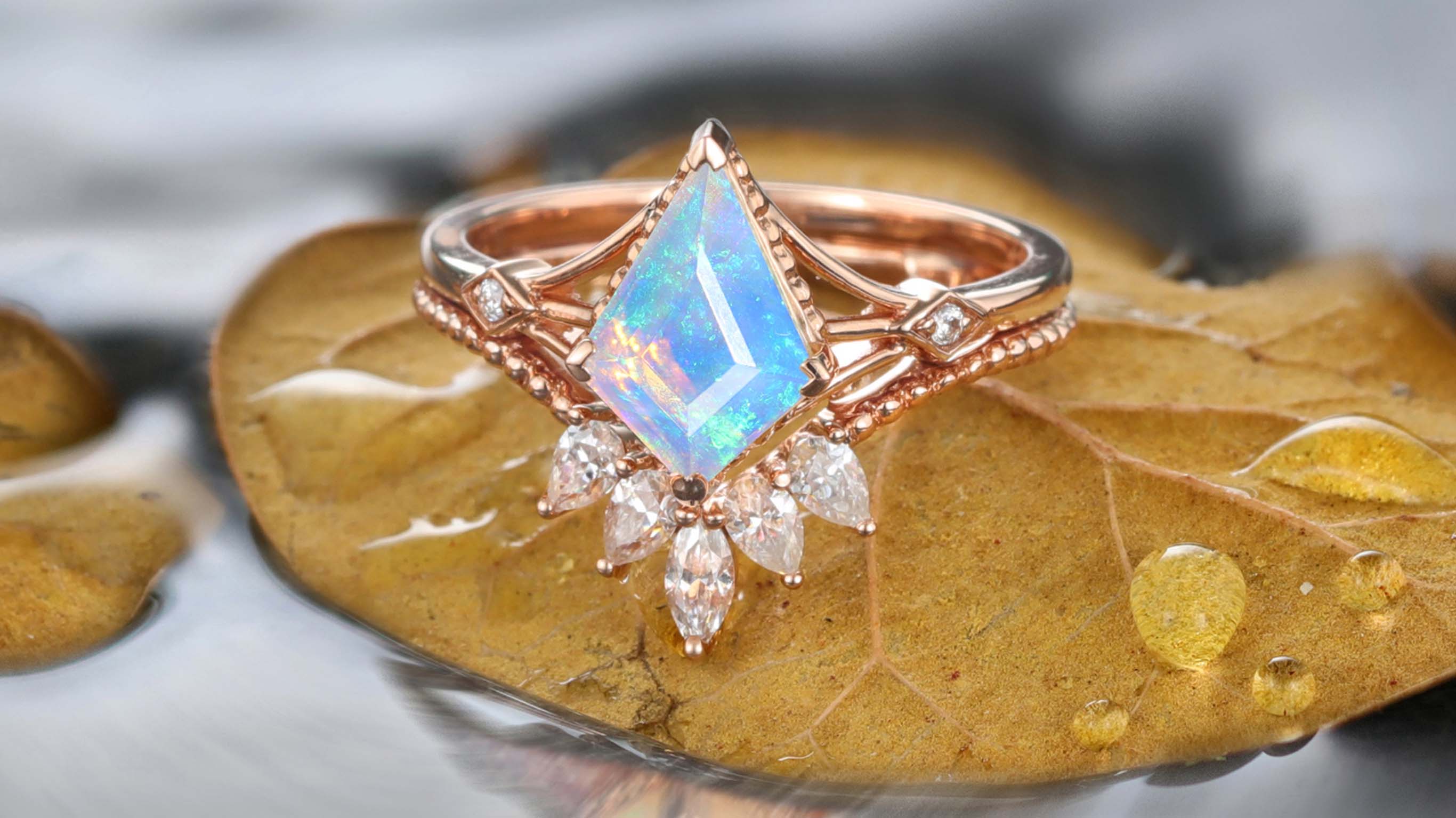
Opal engagement rings have become increasingly popular among people looking for something more personal and distinctive than a traditional diamond ring. With their shifting flashes of colour and completely one-of-a-kind appearance, opals feel artistic, romantic, and naturally unique in a way few gemstones do.
Yet despite their growing popularity, one question continues to follow almost every opal engagement ring conversation:
“Are opals too fragile for everyday wear?”
It’s a fair concern. An engagement ring is not occasional jewellery. It’s something most people plan to wear daily for years, so naturally durability matters. But much of the information online about opals tends to oversimplify the conversation, often grouping all opals together without explaining the major differences between stone types, quality levels, and ring construction.
In reality, opal durability is far more nuanced than simply calling the gemstone “fragile” or “delicate.” From our experience working with opal jewellery, long-term wearability depends far more on the type of opal selected, the quality of the material, and how the ring is designed than most buyers realise.
If you’ve been drawn to opal engagement rings but worried they may not hold up over time, it’s worth understanding what actually affects an opal ring’s durability before ruling them out entirely.
Are Opals Suitable for Engagement Rings? (Durability Guide)
- Are Opals Really Too Fragile for Engagement Rings?
- Not All Opals Behave the Same Way
- What Actually Makes an Opal More Durable?
- Why Setting Design Matters More Than Most People Think
- Can You Wear an Opal Engagement Ring Every Day?
- Do Opals Crack Easily?
- How to Care for an Opal Engagement Ring
- Why More People Are Choosing Opal Engagement Rings Anyway
- Final Thoughts: Are Opals Durable Enough for Engagement Rings?
- Frequently Asked Questions
Are Opals Really Too Fragile for Engagement Rings?
Opals are softer than diamonds, sapphires, and moissanite, which is often where the concern begins. On the Mohs hardness scale, most solid opals sit around 5.5 to 6.5, while diamonds sit at 10.
But hardness alone does not determine whether a gemstone is suitable for an engagement ring.
This is one of the biggest misconceptions buyers have when researching opals online. A gemstone being softer than diamond does not automatically make it unsuitable for daily wear. Many gemstones used in fine jewellery require thoughtful wear and protective design choices, especially rings intended to last for years.
In practice, the long-term durability of an opal engagement ring is influenced much more by factors such as:
- Whether the opal is solid or assembled
- The structural integrity of the stone
- The cut and thickness of the opal
- The type of setting used
- How exposed the stone sits on the finger
- The overall craftsmanship of the ring
A high-quality solid opal set into a protective design behaves very differently from a thin or poorly constructed opal ring.
Not All Opals Behave the Same Way
One of the reasons opals have developed a reputation for being “high maintenance” is because many people do not realise there are major differences between opal types.
This is where a lot of online advice becomes misleading.
For example, hydrophane Ethiopian opals are known for their ability to absorb moisture and oils, which can temporarily affect their appearance over time. Doublets and triplets, which are layered opals assembled using adhesives and backing materials, are also generally less suitable for long-term everyday wear compared to solid stones.
Solid Australian opals are very different.
Natural solid Australian opals are generally considered far more stable and reliable for engagement rings because the gemstone exists as a single solid piece rather than a layered construction. They do not absorb water in the same way hydrophane opals can, and they tend to perform better over time when properly selected and set.
Unfortunately, many articles online fail to explain these distinctions clearly, which leads buyers to assume that all opals share the same durability concerns.
What Actually Makes an Opal More Durable?
When jewellers evaluate opals for engagement rings, durability is not judged by colour alone.
The internal structure of the stone matters just as much.
A well-selected opal intended for daily wear should ideally have:
- Good overall thickness
- Strong internal integrity
- Minimal structural weaknesses
- No visible crazing or cracking
- Balanced proportions
- A cut that avoids overly thin edges
Lower-grade opals with internal fractures or weak structural composition are naturally more vulnerable to damage over time, especially in rings exposed to daily impact.
This is why stone selection matters so much.
Two opals may appear visually similar in photos, yet perform very differently long term depending on the quality of the material itself.
Buyers often focus entirely on colour play while overlooking structural quality, even though durability starts with the stone long before the ring is ever made.
Why Setting Design Matters More Than Most People Think
The setting is one of the biggest factors affecting how wearable an opal engagement ring will feel over time.
Protective settings help reduce direct exposure to accidental knocks and hard surfaces during daily wear.
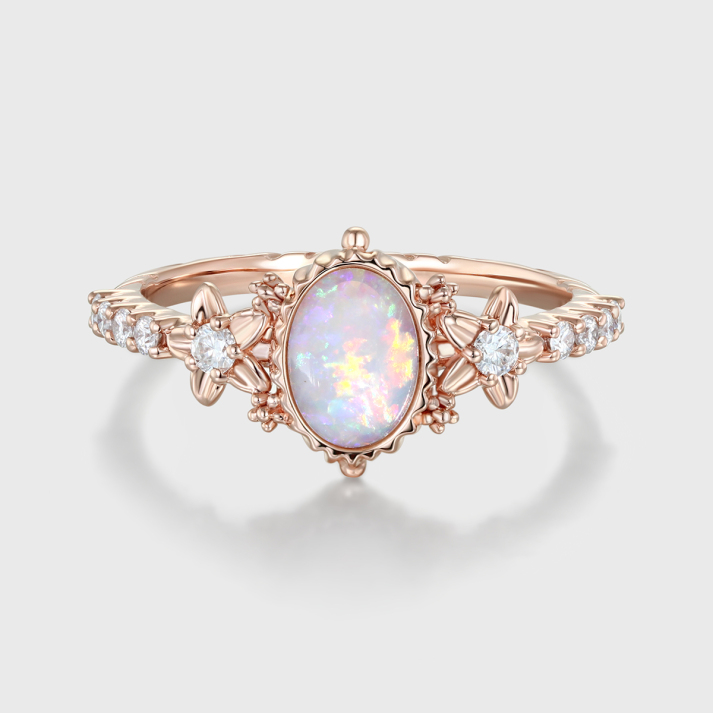
Lower-profile rings that sit closer to the finger are generally more practical for everyday use because they are less likely to catch or hit surrounding objects. Bezel settings, where metal surrounds the edge of the opal, are especially popular for opal engagement rings because they help shield the stone while still allowing the colour play to remain visible.
Prong settings can also work beautifully when executed properly, though they usually benefit from occasional maintenance checks over the years to ensure the stone remains secure.
Well-balanced ring proportions matter too. A thoughtfully designed ring distributes force more effectively if accidentally bumped, helping protect the gemstone rather than leaving it overly exposed.
In many cases, people blame the gemstone itself when the real issue is poor ring design.



Can You Wear an Opal Engagement Ring Every Day?
Yes — many people wear opal engagement rings daily without problems.
The key is understanding that opals are fine jewellery, not indestructible materials.
An opal ring designed specifically for long-term wear can absolutely function as an everyday engagement ring when reasonable care is taken. Most daily activities such as office work, dinners, shopping, travel, and general day-to-day wear are perfectly suitable for a well-made opal ring.
Like most fine jewellery, however, it’s smart to remove the ring during activities involving:
- Heavy lifting
- Gym workouts
- Gardening
- Manual labour
- Harsh chemicals
- High-impact sports
These precautions are not unique to opals. Even diamond rings can become damaged, loosened, or scratched under harsh physical conditions.
The difference is simply that opals benefit from slightly more mindfulness due to their composition.
Do Opals Crack Easily?
A high-quality solid opal does not typically crack from normal wear alone.
Most opal damage occurs from sudden impact against hard surfaces rather than gradual everyday use. Direct contact with concrete, tile flooring, stone countertops, or metal edges presents a much greater risk than ordinary daily activities.
From a jewellery-making perspective, many people underestimate how much pressure gemstones already experience during the setting process itself. Stone setters regularly apply controlled force while securing opals into rings, and structurally sound solid opals are often more resilient than buyers expect.
Cracking is far more commonly associated with:
- Lower-quality material
- Thin stones
- Existing internal weaknesses
- Poorly balanced cuts
- Assembled opals
rather than high-quality solid opals chosen specifically for engagement rings.
How to Care for an Opal Engagement Ring
Opal engagement rings do not require complicated maintenance, but a few simple habits can help preserve the stone over time.
To help protect your opal ring:
- Remove it during heavy lifting or gym workouts
- Avoid harsh chemicals and chlorine exposure
- Store it separately from harder jewellery pieces
- Clean it gently using warm water and a soft cloth
- Avoid direct hard impact against stone or tile surfaces
Solid Australian opals are generally stable enough for normal everyday wear, but like all fine jewellery, thoughtful care helps extend the longevity of the ring.
Why More People Are Choosing Opal Engagement Rings Anyway
Despite the durability concerns often discussed online, opal engagement rings continue to grow in popularity because they offer something many traditional gemstones cannot:
individuality.
No two natural opals ever display the exact same colour pattern. Some show soft pastel flashes, while others reveal vivid greens, blues, oranges, and reds that shift constantly in different lighting.
For many people, that uniqueness feels far more personal than a conventional clear stone.
Opals also tend to appeal to buyers looking for rings that feel:
- artistic
- romantic
- nature-inspired
- vintage-inspired
- unconventional
- emotionally personal
An opal engagement ring rarely feels mass-produced, which is part of the reason so many people become emotionally attached to them.
Final Thoughts: Are Opals Durable Enough for Engagement Rings?
Opals are not indestructible gemstones, but they are also far less fragile than many online discussions suggest.
When a high-quality solid opal is paired with thoughtful ring design and protective craftsmanship, an opal engagement ring can absolutely be worn and enjoyed for many years.
The most important factors are understanding the type of opal you are purchasing, choosing structurally sound material, and selecting a setting designed with everyday wear in mind.
For buyers who value individuality, natural beauty, and one-of-a-kind character, opal engagement rings offer something truly different from traditional bridal jewellery — not just visually, but emotionally as well.
Frequently Asked Questions
Yes, high-quality opal engagement rings can absolutely be worn daily when paired with a protective setting and reasonable care. Solid Australian opals are generally considered the best choice for long-term wear.
Not usually from normal daily wear. Most damage occurs from hard impact against surfaces like concrete, tile, or stone countertops rather than gentle everyday use.
Solid Australian opals are widely considered the most durable and stable option for engagement rings compared to doublets, triplets, or hydrophane Ethiopian opals.
Bezel settings are popular for opal engagement rings because they help protect the edges of the stone while still showcasing the opal’s natural colour play.
Yes. Like most fine jewellery, opal rings should be removed during gym workouts, heavy lifting, gardening, or activities involving strong impact or harsh chemicals.