
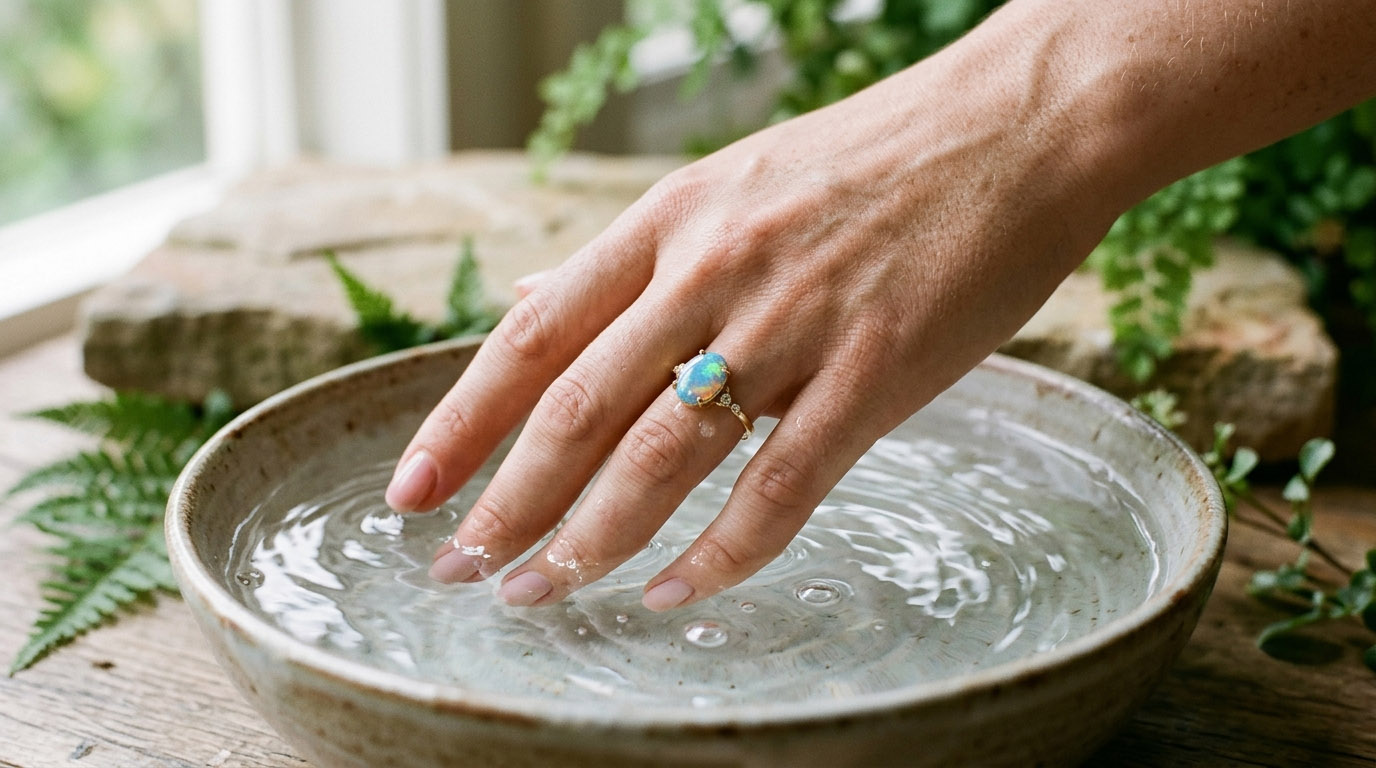
Opal rings have an unmistakable beauty. Their flashes of rainbow colors make every stone feel unique, romantic, and full of personality. Whether you've chosen an opal engagement ring or a meaningful everyday piece, it's natural to wonder: can opal rings get wet?
The short answer is yes—but only to a point. While occasional contact with clean water usually won't harm most opals, frequent soaking, hot water, harsh chemicals, and sudden temperature changes can shorten your ring's lifespan. Here's everything you should know before wearing your opal ring around water.
The Short Answer
Yes, an opal ring can get wet occasionally. Washing your hands, getting caught in the rain, or briefly rinsing your ring is generally safe. However, opals are much more delicate than gemstones like diamonds, sapphires, or moissanite, so long exposure to water—especially hot water, chlorinated pools, saltwater, or chemical cleaners—isn't recommended.
Think of your opal ring like fine silk instead of denim. A little moisture isn't a problem, but repeated exposure requires extra care.
Why Are Opals More Sensitive to Water?
Unlike many gemstones, opals have a unique internal structure. Natural precious opal contains tiny silica spheres arranged in a microscopic pattern that creates its famous play-of-color, and many natural opals also contain a small percentage of water within their structure. Because of this, opals react differently to environmental conditions than harder gemstones.
Water itself usually isn't the problem. Instead, damage often comes from rapid temperature changes, harsh chemicals, repeated soaking, sudden drying, and steam or excessive heat. These factors can increase stress within the stone over time.
If you're considering an opal for daily wear, it's worth understanding what actually determines opal durability beyond just hardness.
Can You Wash Your Hands Wearing an Opal Ring?
Yes—normal hand washing with lukewarm water is generally considered safe. That said, after washing, dry the ring with a soft cloth and don't leave moisture trapped beneath the setting. If possible, avoid antibacterial soaps with strong chemicals. Frequent hand washing won't usually ruin an opal, but drying it afterward is a good habit to build.
Can You Shower with an Opal Ring?
It's better not to. While one accidental shower probably won't damage your ring, making it a daily habit isn't ideal. A shower exposes your ring to several potential risks: hot water, soap residue, shampoo, conditioner, body wash, and sudden temperature changes. These products can leave buildup that dulls the stone's appearance, while repeated heat exposure may stress the opal over time. If possible, remove your ring before showering.
Can You Swim with an Opal Ring?
No—swimming is one of the situations where it's best to leave your opal ring safely at home.
Swimming pools contain chlorine and other treatment chemicals that can gradually affect both the gemstone and the metal.
Ocean water isn't ideal either. Salt deposits may collect around the setting, and cold ocean water followed by warm temperatures can create thermal stress.
Hot tubs are especially risky because they combine heat, chemicals, and extended soaking—one of the least desirable environments for opal jewelry.
What About Rain?
Rain is perfectly fine. Getting caught in a light shower won't harm your opal ring—just dry it gently once you're indoors.
Can Water Make an Opal Crack?
Not usually. Water alone doesn't normally crack an opal. Cracks are more commonly caused by sudden temperature changes, accidental impacts, improper storage, dehydration in certain types of opal, and repeated exposure to harsh environments. Think of water as only one part of the bigger picture—proper handling matters much more than avoiding every drop of moisture.
Does It Matter Which Type of Opal You Have?
Yes, different opals respond differently to moisture.
Natural Solid Opal generally tolerates occasional water exposure well, though prolonged soaking should still be avoided.
Doublets and Triplets are more vulnerable. These layered opals may eventually have their adhesive weakened by water, especially after repeated immersion. If you're unsure which type you own, check with your jeweler.

Kite Cut Opal Rose Gold Bridal Jewelry
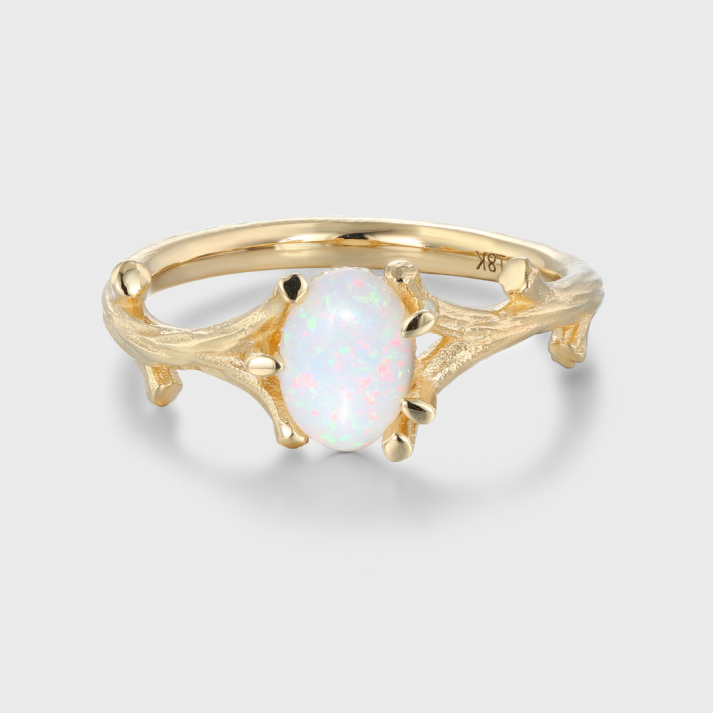
Oval Cut Natural Opal Twig Promise Ring, Engagement & Anniversary Ring
How to Clean an Opal Ring Safely
Cleaning an opal ring is simple. You'll only need lukewarm water, mild soap, a soft microfiber cloth, and optionally, a soft baby toothbrush.
- Mix mild soap with lukewarm water.
- Dip a soft cloth into the solution. Avoid soaking the ring for long periods.
- Gently wipe away dirt.
- If needed, use a very soft toothbrush around the setting.
- Rinse briefly with clean water.
- Dry completely with a lint-free cloth.
Avoid ultrasonic cleaners, steam cleaners, or jewelry dips.
Everyday Tips to Protect Your Opal Ring
Your ring can stay beautiful for many years with just a few simple habits. Remove it before showering, swimming, cleaning, gardening, exercising, lifting weights, washing dishes, or using household chemicals. Store it separately from harder gemstones like diamonds and sapphires to prevent scratches, and clean it gently every few weeks instead of waiting until heavy buildup forms.
Can You Wear an Opal Ring Every Day?
Yes—but thoughtfully. Many people wear opal engagement rings every day for years without problems. The key isn't avoiding daily wear, it's avoiding unnecessary risks. Treat your ring like a cherished heirloom rather than a piece of sports equipment.
How OVEELA Jewelry Designs Opal Rings for Everyday Beauty
At OVEELA Jewelry, every opal ring is thoughtfully crafted to balance elegance with everyday wearability. We carefully select beautiful opals and pair them with durable precious metals to help protect the gemstone while showcasing its natural brilliance. Many of our designs feature secure settings that provide added support without hiding the opal's unique play of color.
While no opal is as hard as a diamond, proper craftsmanship and mindful care allow an opal ring to remain a treasured piece for years to come.
Final Thoughts
So, can opal rings get wet? Yes—but moderation is key. Everyday contact with clean water, such as washing your hands or walking through the rain, is usually nothing to worry about. What matters more is avoiding prolonged soaking, harsh chemicals, extreme heat, and sudden temperature changes.
With thoughtful care and regular cleaning, an opal ring can remain just as captivating years from now as the day you first slipped it on. At OVEELA Jewelry, we believe that understanding how to care for your jewelry is just as important as choosing the piece that speaks to you—so you can enjoy its beauty for a lifetime.
Frequently Asked Questions
Yes. Alexandrite is durable enough for everyday wear, especially when set in a well-made ring. Removing it during heavy work or sports will help extend its lifespan.
No. Toothpaste contains fine abrasives that may scratch gold, silver, and platinum settings.
No. Vinegar is acidic and isn't recommended for fine gemstone jewelry. Mild soap and warm water are much safer.
Occasionally, yes. However, soaps, shampoos, and conditioners can leave residue that dulls the gemstone over time.
Not under normal daily wear. With a Mohs hardness of around 8.5, alexandrite is resistant to scratching, though it should still be protected from hard impacts and improper storage.