
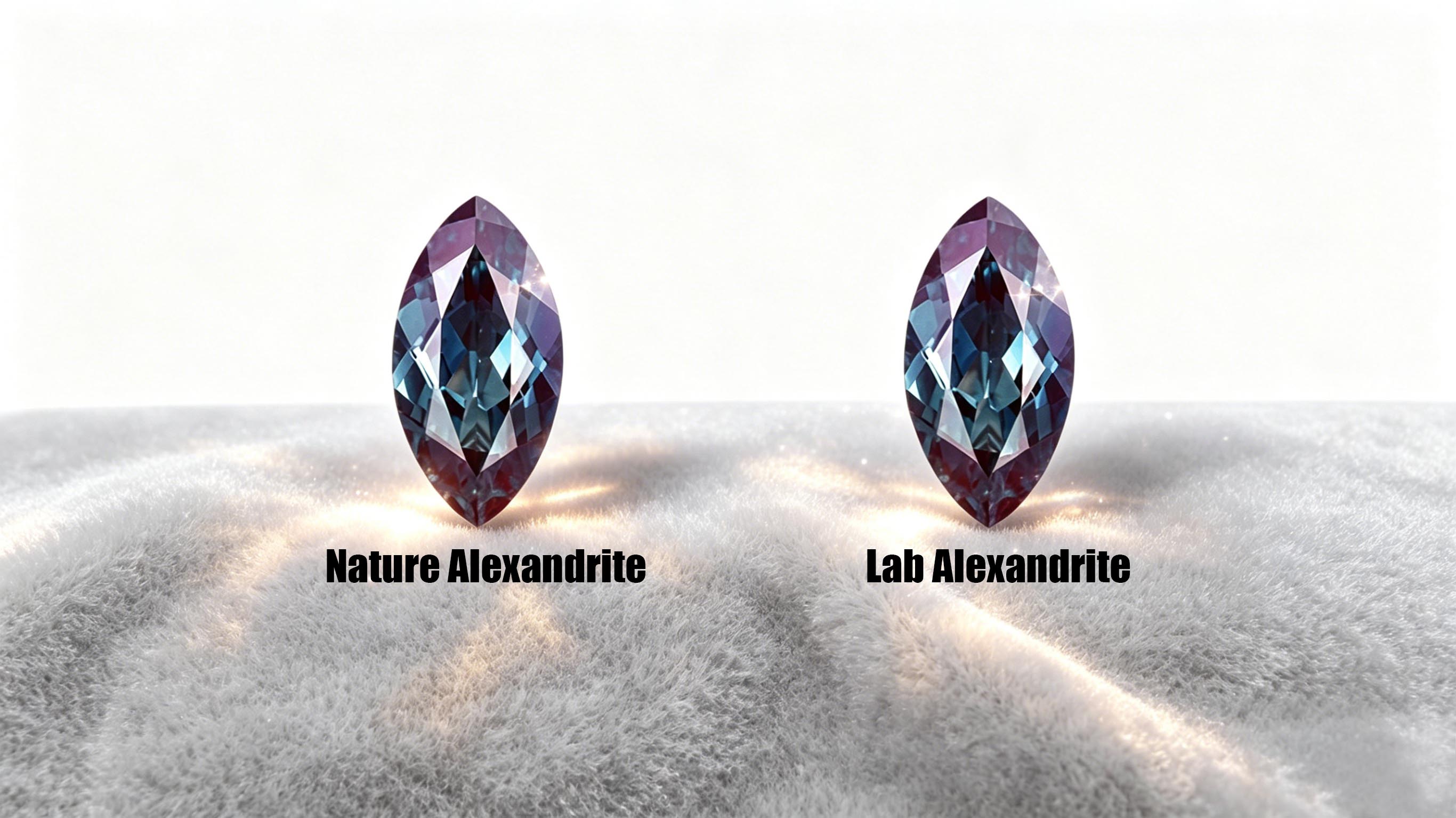
When people first discover alexandrite, they are usually drawn in by its color-changing beauty. But once they start looking for a ring, a new question quickly appears: Should I choose natural alexandrite or lab-created alexandrite?
At first glance, the two can look almost identical. Both show the famous green-to-purple color shift. Both are durable enough for everyday wear. And both can be set into engagement rings, wedding bands, and fine jewelry. But the real difference is not just about appearance—it’s about origin, rarity, price, and what you personally value in a gemstone.
In this guide, we’ll break down natural vs lab alexandrite in a clear, practical way so you can confidently decide which one fits your ring, lifestyle, and budget.
First, What Is Alexandrite?
If you’re still new to this gemstone, alexandrite is a rare variety of chrysoberyl best known for its color-changing effect.
In daylight, it often appears green or bluish-green. Under warm indoor lighting, it shifts to purple, raspberry, or reddish tones. This optical behavior is known as the “alexandrite effect.”
To understand this phenomenon more deeply, you may want to read our beginner guide:
What Is Alexandrite? The Complete Beginner’s Guide to This Color-Changing Gemstone
It will help you understand why this gemstone behaves so differently from traditional engagement ring stones like diamonds or sapphires.
What Is Natural Alexandrite?
Natural alexandrite is formed deep within the earth over millions of years under rare geological conditions. The most famous deposits were originally discovered in Russia in the 1830s. Today, natural alexandrite can also be found in limited locations such as Brazil, Sri Lanka, Tanzania, and Madagascar—but high-quality material remains extremely rare.
What makes natural alexandrite special is not just its color change, but how unpredictable and unique each stone can be. No two natural stones are exactly alike. Some show strong green-to-red shifts, while others lean more toward bluish-green and purplish tones depending on lighting and origin.
Because of this rarity, natural alexandrite is often considered one of the most valuable colored gemstones in fine jewelry.
What Is Lab-Created Alexandrite?
Lab-created alexandrite is grown in controlled laboratory environments using the same chemical composition and crystal structure as natural alexandrite.
This means:
- Same mineral structure
- Same color-change effect
- Same hardness and durability
- Same optical behavior
The key difference is not what it is—but how it forms. Instead of taking millions of years underground, lab alexandrite is created in a controlled setting that replicates natural conditions more efficiently and consistently. This results in stones that are often more affordable and more visually consistent.
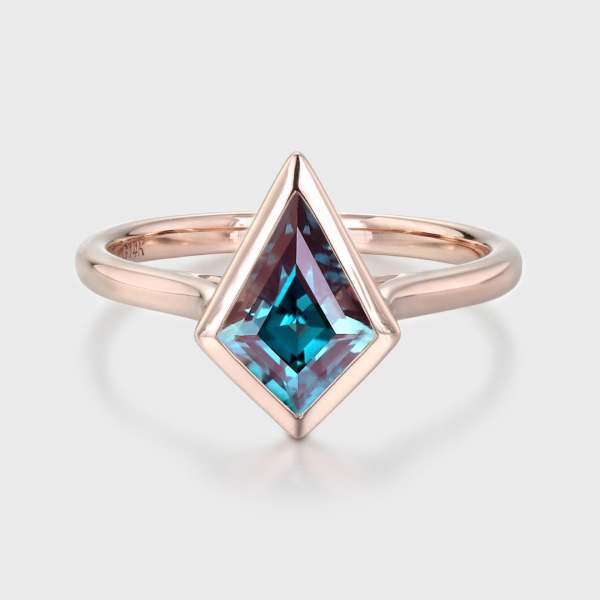
Kite Cut Lab Alexandrite Ring Rose Gold Bezel Engagement Ring
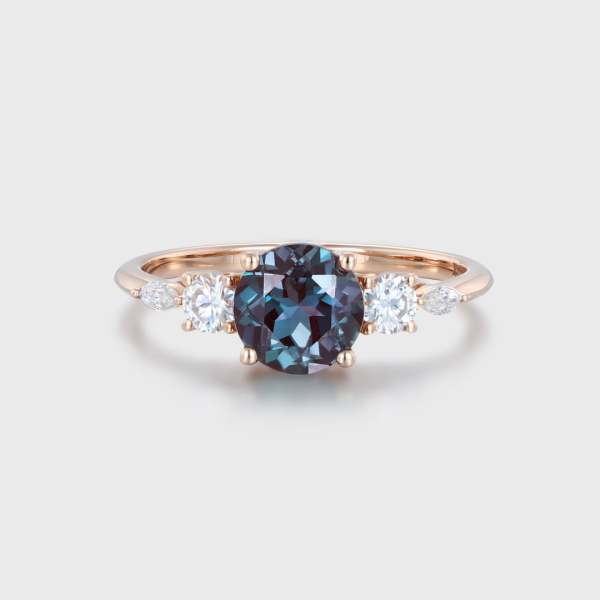
Round Cut Alexandrite Engagement Ring with Side Moissanite Stones
Natural vs Lab Alexandrite: Side-by-Side Comparison
|
Feature |
Natural Alexandrite |
Lab Alexandrite |
|
Origin |
Formed in nature over millions of years |
Grown in laboratory conditions |
|
Color Change |
Present |
Present |
|
Durability |
~8.5 Mohs |
~8.5 Mohs |
|
Visual Consistency |
Varies from stone to stone |
More consistent |
|
Availability |
Extremely limited |
Widely available |
|
Price |
High to very high |
More affordable |
|
Uniqueness |
Each stone is one-of-a-kind |
More standardized appearance |
At a functional level, both options perform similarly in everyday wear. The decision usually comes down to emotional value versus practicality.
The Real Difference: Rarity vs Accessibility
The most important difference between natural and lab alexandrite is not quality—it is scarcity.
Natural alexandrite is rare because nature rarely creates the exact conditions required for its formation. This rarity is what drives its high value in the gemstone market.
Lab alexandrite, on the other hand, removes the scarcity factor while preserving the visual and physical characteristics of the stone.
This creates two very different types of value:
- Natural alexandrite = geological rarity + collectible value
- Lab alexandrite = accessible beauty + design flexibility
Neither is “better”—they simply serve different priorities.
Appearance: Can You Tell the Difference?
In many cases, visually distinguishing natural and lab alexandrite without specialized equipment is extremely difficult.
Both can display:
- Green or teal daylight tones
- Purple or reddish indoor tones
- Strong or subtle color change depending on quality
However, natural alexandrite often shows more variation within the stone, while lab alexandrite may appear more uniform. This difference is subtle and usually only noticeable under professional gemological inspection. For most engagement ring wearers, the visual experience is very similar.
Durability and Everyday Wear
Both natural and lab alexandrite rank around 8.5 on the Mohs hardness scale, making them suitable for engagement rings and daily wear.
|
Gemstone |
Hardness |
|
Diamond |
10 |
|
Sapphire |
9 |
|
Alexandrite (Natural) |
8.5 |
|
Alexandrite (Lab) |
8.5 |
This means both options resist everyday scratches and hold up well over time when set properly. From a durability standpoint, there is no meaningful difference between the two.
Price Difference: Why It Matters So Much
Price is often the most noticeable distinction between natural and lab alexandrite.
Natural alexandrite can range from moderately expensive to extremely high-end depending on:
- Color strength
- Clarity
- Size
- Origin
Lab alexandrite, by contrast, is significantly more affordable, which allows for:
- Larger center stones
- More elaborate ring designs
- More accessible engagement ring pricing
This is why lab-grown alexandrite has become especially popular in modern engagement ring collections.
Which One Should You Choose?
There is no universal answer, but there is a clear way to decide based on priority.
Choose Natural Alexandrite if you value:
- Rarity and geological origin
- Collectible gemstone value
- Unique natural variation
- Traditional fine jewelry appeal
Choose Lab Alexandrite if you value:
- Budget flexibility
- Larger or more noticeable center stones
- Design freedom
- Accessibility without sacrificing appearance
In both cases, the emotional experience of alexandrite—the color change itself—remains the defining feature.
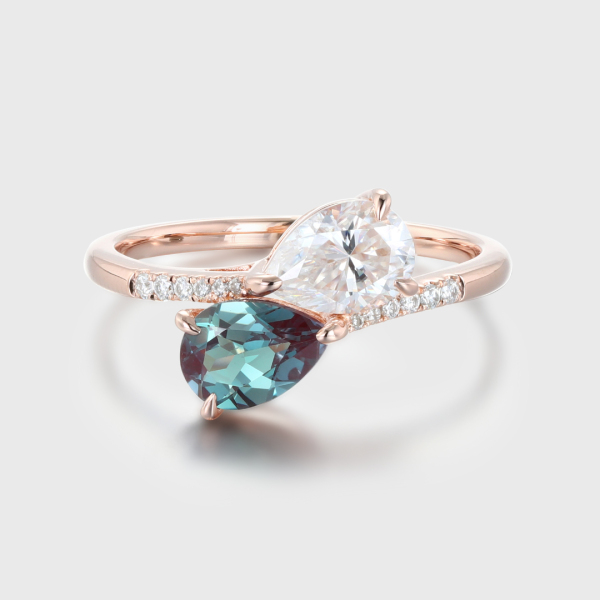
Pear Cut Toi Et Moi Engagement Ring – Lab Alexandrite & Moissanite Two-Stone Ring in 14K Solid Gold
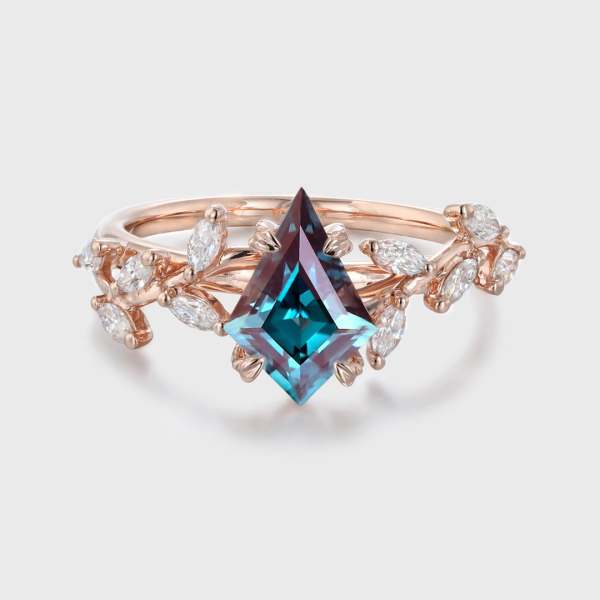
Rose Gold Nature-Inspired Kite Cut Lab-Grown Alexandrite Engagement Ring – Unique Leaf Gold Ring
A Note on Real-World Wear
One important misconception is that natural stones are automatically “better” for daily wear. In reality, both natural and lab alexandrite behave almost identically in everyday conditions when properly cut and set.
What matters more is:
- Ring setting design
- Stone protection
- Lifestyle habits
Not the origin of the gemstone.
Alexandrite Engagement Rings at OVEELA Jewelry
At OVEELA Jewelry, we offer both natural and lab alexandrite engagement rings because we believe the right choice depends on the wearer, not the trend.
Our designs focus on highlighting the stone’s color-changing behavior through carefully balanced proportions, rather than overwhelming it with heavy detailing. We also help customers choose between natural and lab options based on real-life priorities such as budget, ring size preference, and long-term wear expectations.
Whether you choose natural or lab alexandrite, the goal remains the same: creating a ring that feels personal every time the light changes.
Final Thoughts: It’s Not About Better or Worse
Natural and lab alexandrite are not competing versions of the same idea—they represent two different philosophies. Natural alexandrite reflects rarity and time. Lab alexandrite reflects accessibility and modern craftsmanship.
Both deliver the same core experience: a gemstone that changes color with light and feels different throughout the day. The right choice is not about what is objectively superior, but about what feels right for the way you want to wear and experience your ring.
FAQs
Yes. Lab alexandrite has the same chemical composition and physical properties as natural alexandrite.
In most cases, not without specialized gemological equipment.
Yes. Natural alexandrite is rarer and generally more expensive due to limited supply.
Yes. It has the same durability and optical properties as natural alexandrite, making it suitable for daily wear.
Yes. The color-change effect is the same because the crystal structure is identical.