
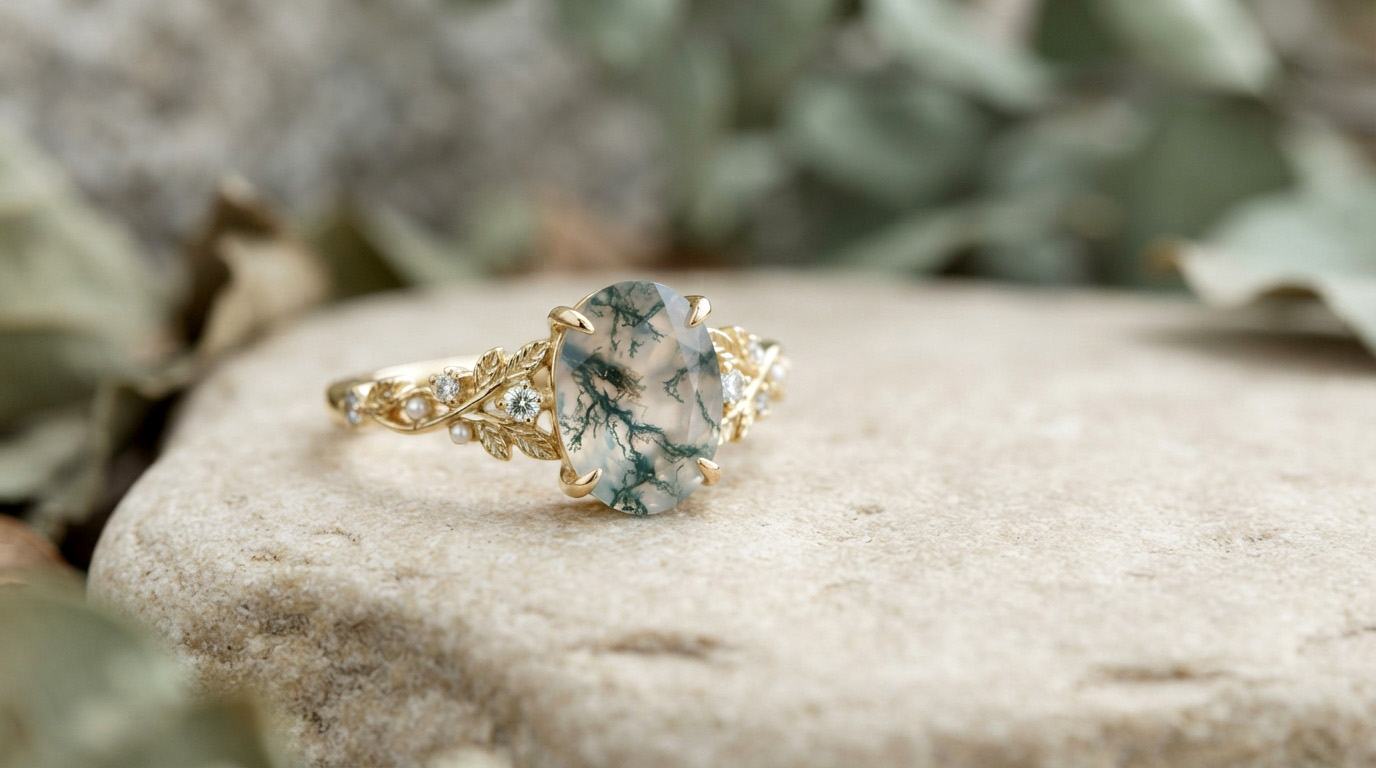
Moss agate is a natural gemstone best known for its green, branch-like inclusions that can look like moss, leaves, forests, or miniature landscapes suspended inside the stone. It is a variety of chalcedony in the quartz family, with a hardness of about 6.5–7 on the Mohs scale. Unlike gemstones valued mainly for clear color or high brilliance, moss agate is appreciated for its natural patterns—and no two stones have exactly the same appearance.
That individuality is also what makes a moss agate ring so appealing. Instead of choosing a center stone that looks highly standardized, you are choosing a natural pattern that becomes part of the design. For engagement rings, this creates an option that feels personal, nature-inspired, and distinctly different from a traditional diamond.
What Is Moss Agate and What Does It Look Like?
Moss agate is a variety of chalcedony, a form of silica composed of microscopic quartz crystals. Its base is often translucent, semi-translucent, milky white, grayish, or nearly colorless. Inside, mineral inclusions create branching patterns in shades of green, brown, black, and occasionally red.
Despite its name, moss agate contains no actual moss or plant material. Its distinctive appearance comes from mineral inclusions distributed within the stone. Some specimens have delicate green branches against a relatively clear background, while others feature dense, forest-like patterns.
Three characteristics help explain the differences between individual stones:
- Pattern:The inclusions may form fine branches, scattered patches, or dense, interconnected shapes.
- Transparency:A more translucent base can create a sense of depth, making the inclusions appear suspended inside the gemstone.
- Contrast:The relationship between the lighter base and darker inclusions determines how clearly the pattern stands out.
There is no single ideal appearance. Some people prefer subtle, delicate patterns, while others favor bold green markings. For a moss agate ring, the most appealing stone is the one whose natural pattern suits your personal taste.
What Makes Moss Agate Look Like Moss?
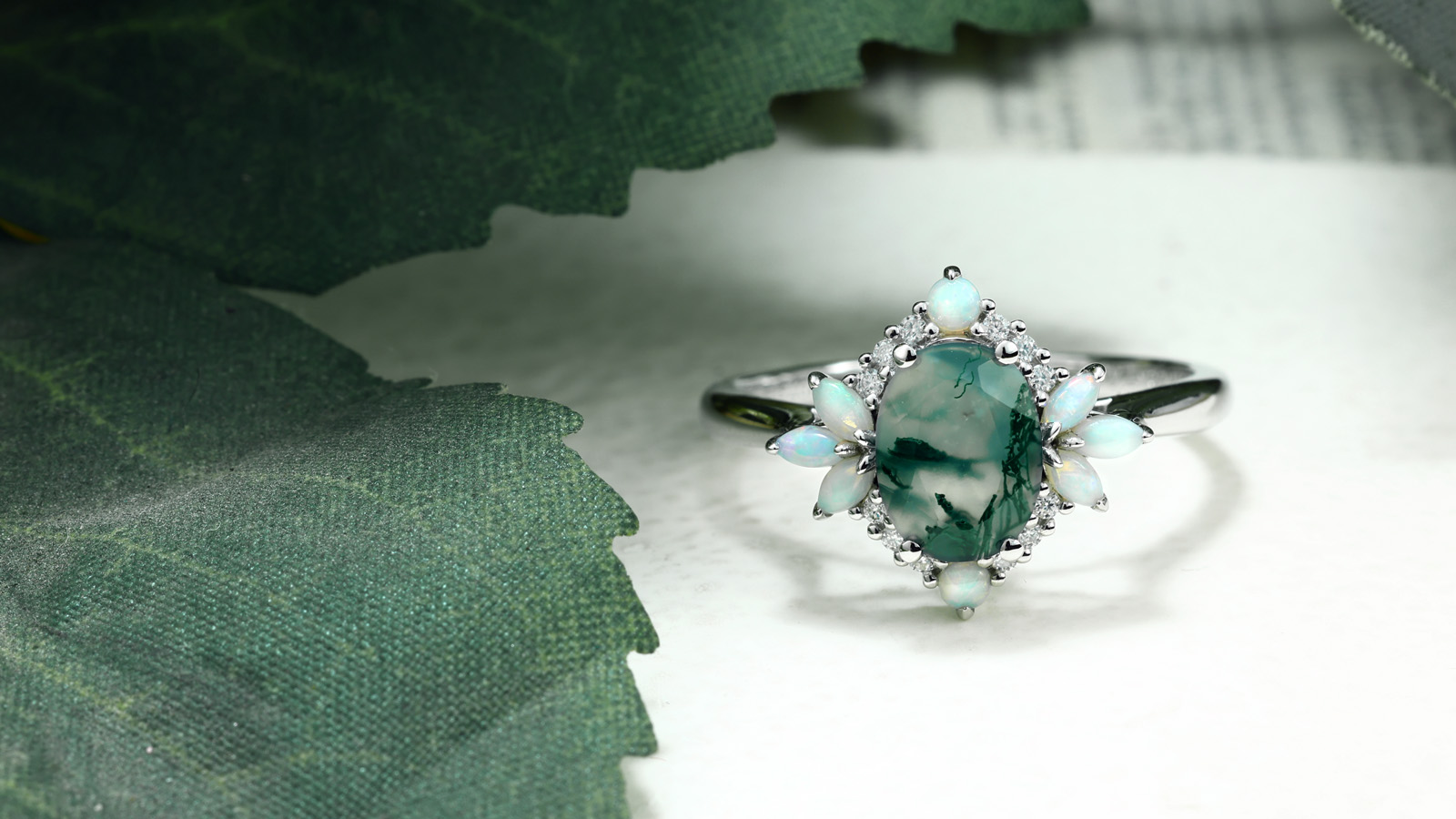
The most recognizable feature of moss agate is its dendritic, or branching, inclusions. These can resemble tree branches, ferns, roots, moss, or distant landscapes.
Iron- and manganese-bearing minerals are associated with many of these patterns, although the exact mineral composition can vary. These formations develop as mineral material becomes incorporated into chalcedony during geological processes. Their distribution is irregular, which explains why two moss agate stones can look dramatically different even when they have similar base colors.
Because these inclusions develop naturally rather than being printed or painted onto the surface, their shapes, density, and distribution vary considerably. One stone may have a light scattering of fine green branches, while another may contain a much denser forest-like pattern. That variation is one of the defining characteristics of a moss agate gemstone.
Is Moss Agate a Natural Gemstone?
Yes. Moss agate is a natural gemstone. Natural moss agate forms through geological processes, with mineral-rich fluids and silica contributing to the development of chalcedony and its internal inclusions over time.
However, “natural” does not mean that every material sold under a similar appearance is untreated or genuine. Dyed chalcedony, manufactured inclusions, glass, and resin imitations can be made to resemble natural moss agate. For a more detailed explanation of natural moss agate, its formation, and how it differs from imitations, see OVEELA's Is Moss Agate Natural? The Complete Guide to Earth's "Frozen Forest" Gemstone.
For a moss agate ring, buying from a seller that clearly identifies the stone and provides detailed photographs of the actual gemstone is a practical way to understand what you are purchasing.
Why Is Moss Agate So Popular for Rings?
Moss agate appeals to people who want a gemstone with visible character rather than a uniform appearance. Its popularity in alternative engagement jewelry comes from several qualities.
Every stone has its own pattern. The natural inclusions make each center stone visually different. This gives buyers an opportunity to choose a design around a pattern they personally connect with, rather than selecting a stone based mainly on standardized color or brilliance.
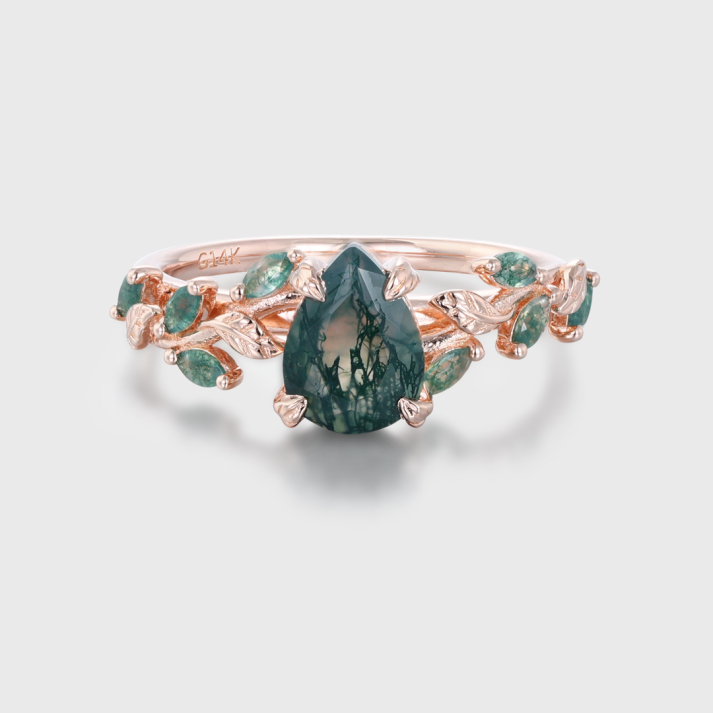
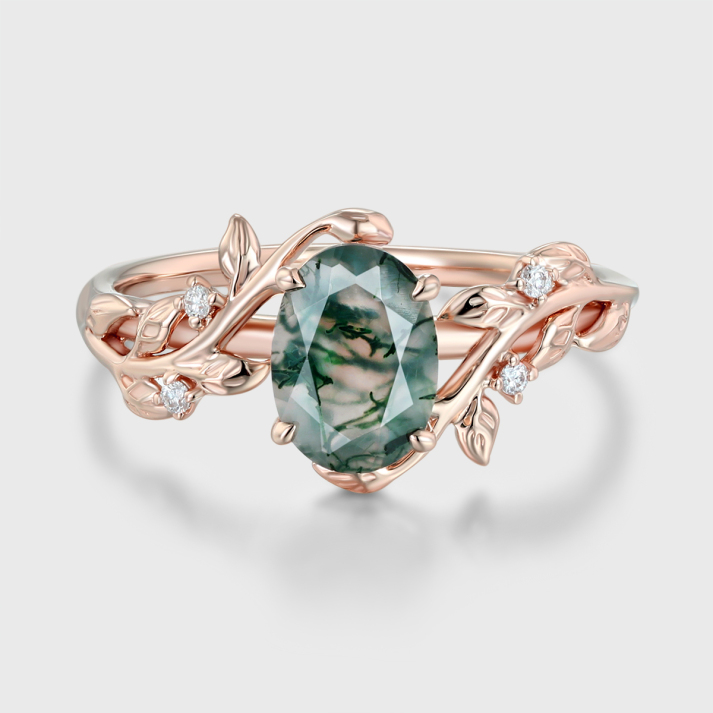
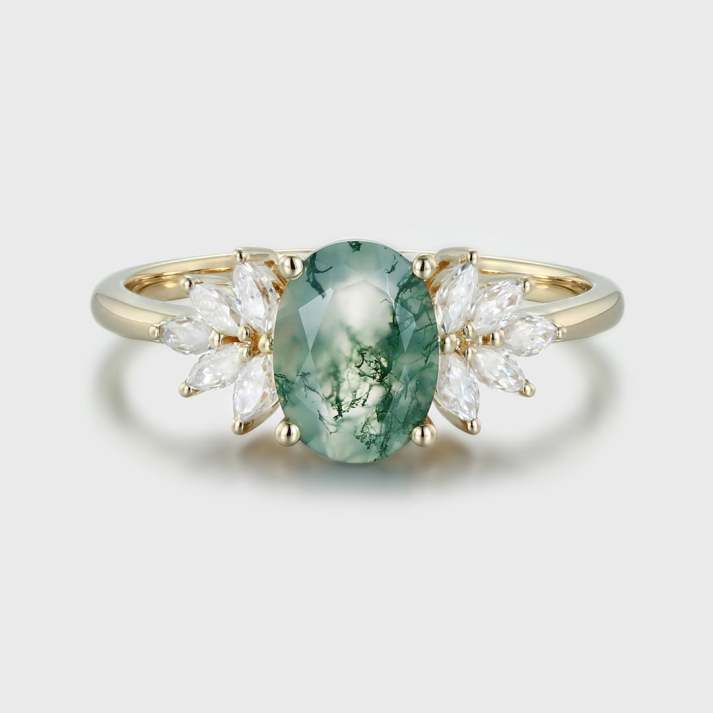
It suits nature-inspired jewelry. The branching patterns work naturally with leaf details, vine-like bands, textured gold, and organic settings. These designs reinforce the gemstone's botanical appearance without requiring elaborate decoration.
It offers an alternative to traditional engagement stones. Moss agate does not produce the intense brilliance associated with diamond or many faceted gemstones. Instead, it draws attention through its internal patterns, subtle colors, and visual depth. This makes it suitable for people who prefer an understated, earthy, or unconventional style.
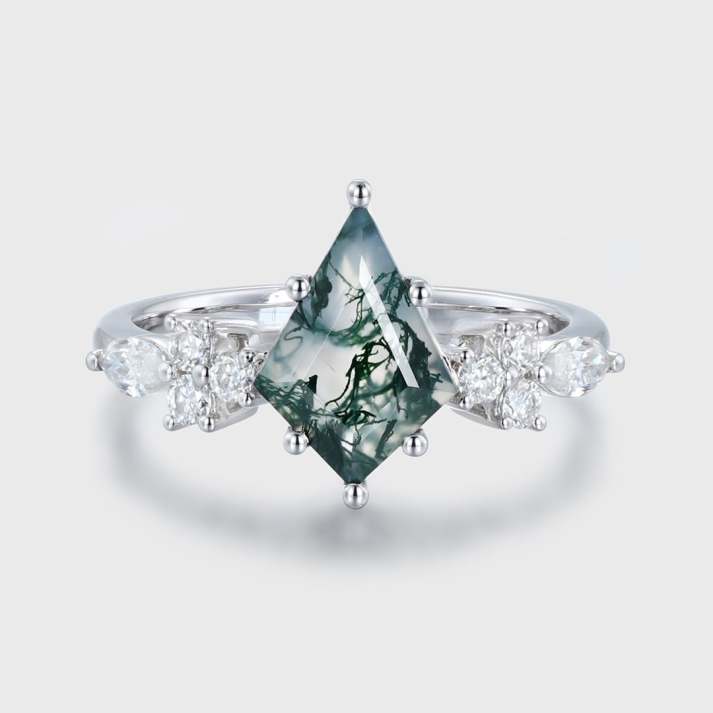
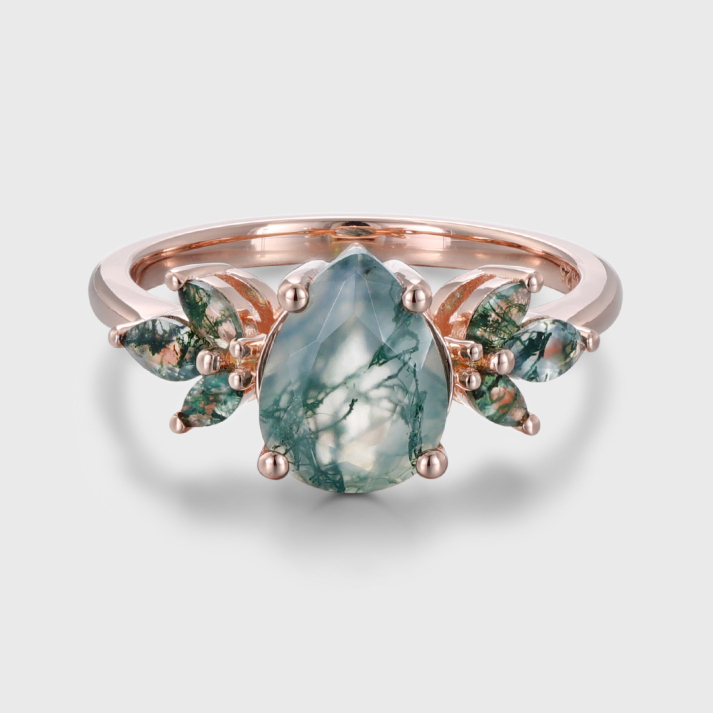
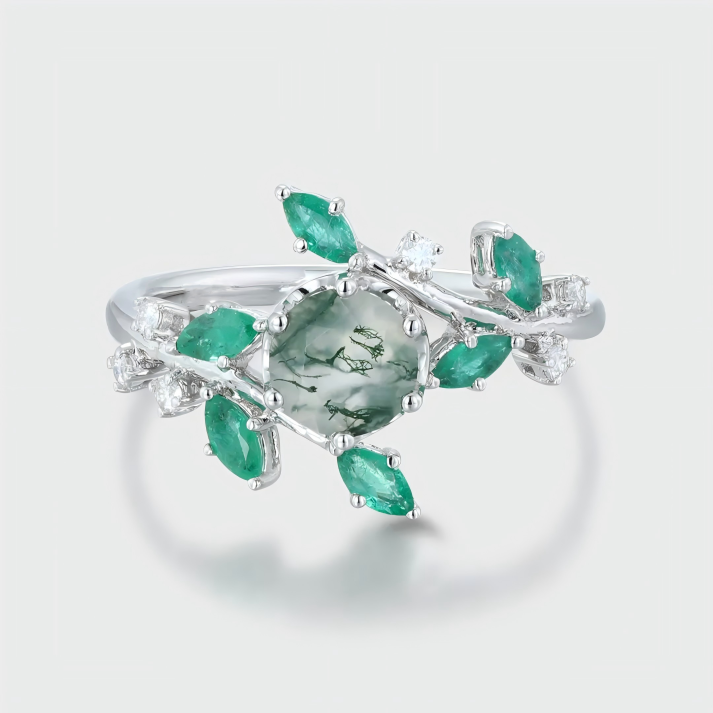
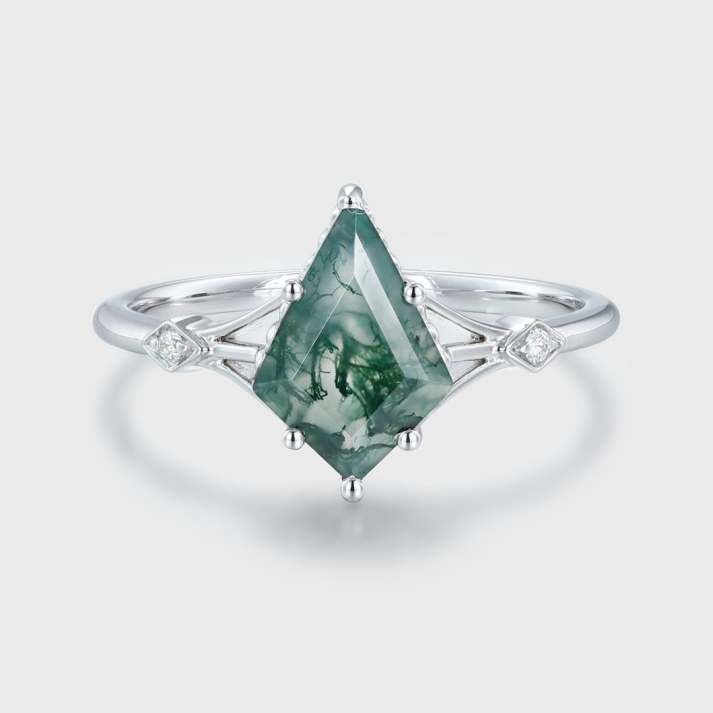
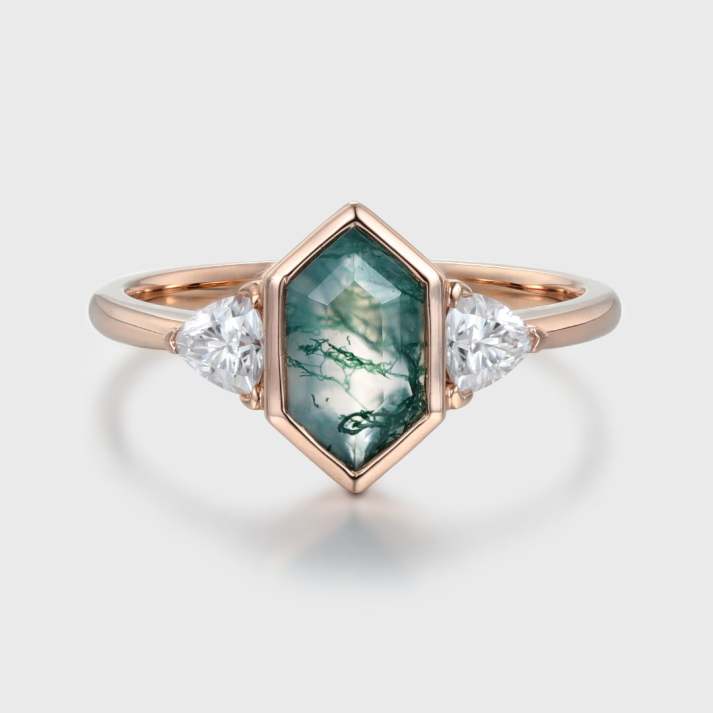
It allows creative combinations. Oval, pear, round, kite, and hexagon shapes can frame the inclusions in different ways. Yellow gold creates a warm, natural look, while white metals provide a cooler contrast. Moissanite or diamond accents can introduce additional sparkle.
For these reasons, a moss agate engagement ring can feel personal and distinctive, particularly for someone who values natural patterns and individual design over conventional sparkle.
Is Moss Agate Good for an Engagement Ring?
Moss agate can be a good engagement-ring choice for people who value individuality and nature-inspired design, provided they understand its durability limitations. Its suitability depends on three main considerations: appearance, everyday wear, and personal meaning.
First, its natural inclusions make each stone visually distinctive. This is a meaningful advantage for couples who want an engagement ring that feels personal rather than conventional. The stone's green patterns also work well with botanical settings and custom designs.
Second, moss agate has a Mohs hardness of approximately 6.5–7. This provides reasonable resistance to scratching, but it is less scratch-resistant than sapphire or diamond. Hardness measures resistance to scratching, not the ability to withstand every impact. Overall durability also depends on toughness, the stone's condition, its cut, and how the ring is worn.
Finally, moss agate is commonly associated with growth, renewal, and connection with nature. These symbolic associations are not scientific claims, but they can add personal significance to an engagement ring.
For a ring intended for frequent wear, a bezel setting that surrounds the stone's edges or a lower-profile design can help reduce exposure to knocks. Remove the ring during heavy work, gardening, sports, and activities involving harsh chemicals.
The practical conclusion is that moss agate is a reasonable option for many engagement rings, especially for people who appreciate its individuality and are willing to care for it. If maximum scratch resistance and minimal maintenance are your priorities, a harder gemstone may be a better fit.
What Does a Moss Agate Ring Symbolize?
Moss agate is commonly associated with growth, renewal, balance, abundance, and connection with nature. These associations come from historical and metaphysical traditions rather than scientific evidence.
For an engagement ring, growth and renewal can represent the beginning of a shared life, while the stone's individual patterns can serve as a reminder that every relationship has its own character. Its natural appearance may also appeal to couples who value simplicity, the outdoors, or a less conventional approach to jewelry.
These associations are personal rather than universal. You can choose a moss agate ring because its symbolism resonates with you, or simply because you appreciate its distinctive appearance.
How to Choose a Moss Agate Ring
Choosing a moss agate ring is different from choosing a diamond because the natural pattern deserves as much attention as the traditional specifications.
1. Start With the Pattern
Look at the actual stone whenever possible. Pay attention to where the green or darker inclusions sit within the center stone.
Do you prefer a dense forest-like appearance, delicate branching lines, or a more open landscape? Since the pattern is naturally formed, choosing the visual character you like is one of the most important decisions.
2. Consider Transparency
A translucent moss agate can show more depth between the base material and the inclusions. A more opaque stone can create a stronger, bolder pattern.
Neither is automatically better. The choice depends on whether you prefer a softer, layered appearance or a more graphic look.
3. Select a Shape That Complements the Stone
Oval and pear shapes create an elongated silhouette, while round cuts offer a more balanced outline. Kite and hexagon shapes can give a moss agate ring a geometric, contemporary feel.
The important consideration is how the cut frames the particular stone's pattern. If possible, examine the actual gemstone rather than relying only on a sample photograph.
4. Choose a Suitable Setting
A bezel setting surrounds the gemstone's perimeter and provides additional protection. Prong settings expose more of the stone and can create a more open appearance, but leave its edges less enclosed. Lower-profile designs can also reduce the chance of catching the ring on objects.
Your lifestyle should influence this choice as much as aesthetics.
5. Match the Metal and Accent Stones
Yellow gold complements green and brown inclusions with a warm, earthy appearance. Rose gold adds a softer, romantic tone, while white gold and platinum create a cooler contrast.
Moissanite or diamond accents can add brilliance, while a simpler setting keeps attention on the moss agate itself. The right combination depends on whether you prefer a delicate, vintage-inspired ring or a more striking contemporary design.
How Do You Care for a Moss Agate Ring?
Moss agate is durable enough for regular jewelry use, but it should not be treated like diamond.
For routine cleaning, use lukewarm water, mild soap, and a soft cloth or soft brush. Avoid harsh chemicals, unnecessary heat, and aggressive cleaning methods. Store the ring separately from harder gemstones to reduce the risk of scratches.
For a more detailed cleaning routine, see OVEELA's [How to Clean and Care for Your Moss Agate Ring: The Complete 2026 Guide].
Find a Moss Agate Ring That Reflects Your Style
Moss agate offers a different approach to engagement jewelry. Rather than relying on intense sparkle or uniform color, it stands out through natural patterns, subtle depth, and the individuality of each stone.
For couples drawn to organic details and unconventional designs, a moss agate engagement ring can bring together personal symbolism, distinctive patterns, and a choice of precious metals and accent stones.
At OVEELA, exploring gemstone jewelry is about finding a design that reflects your preferences, not simply following tradition. If you are drawn to natural patterns and nature-inspired details, explore our gemstone ring designs to find a style that feels right for you.
Moss Agate Ring FAQ
Yes. Moss agate is a natural gemstone associated with chalcedony, a microcrystalline form of silica in the quartz family. Its distinctive appearance comes from natural mineral inclusions.
No. The “moss” in moss agate is not plant material. The appearance comes from mineral inclusions that can form branching or dendritic patterns.
Yes. Moss agate can work well for an engagement ring with appropriate care and a suitable setting. Its 6.5–7 Mohs hardness makes it less scratch-resistant than sapphire or diamond, so setting design and lifestyle should be considered.
No. Natural moss agate varies considerably in color, transparency, inclusion density, and pattern. This variation is one of its defining characteristics.
Moss agate is generally more accessible than many traditional precious gemstones, but the price of a finished moss agate ring depends on factors such as the stone's pattern, size, cut, metal, setting, craftsmanship, and accent stones.
Yes, with reasonable care. Remove the ring during heavy work, gardening, intense exercise, or activities where the stone could experience hard impacts or harsh chemicals.