
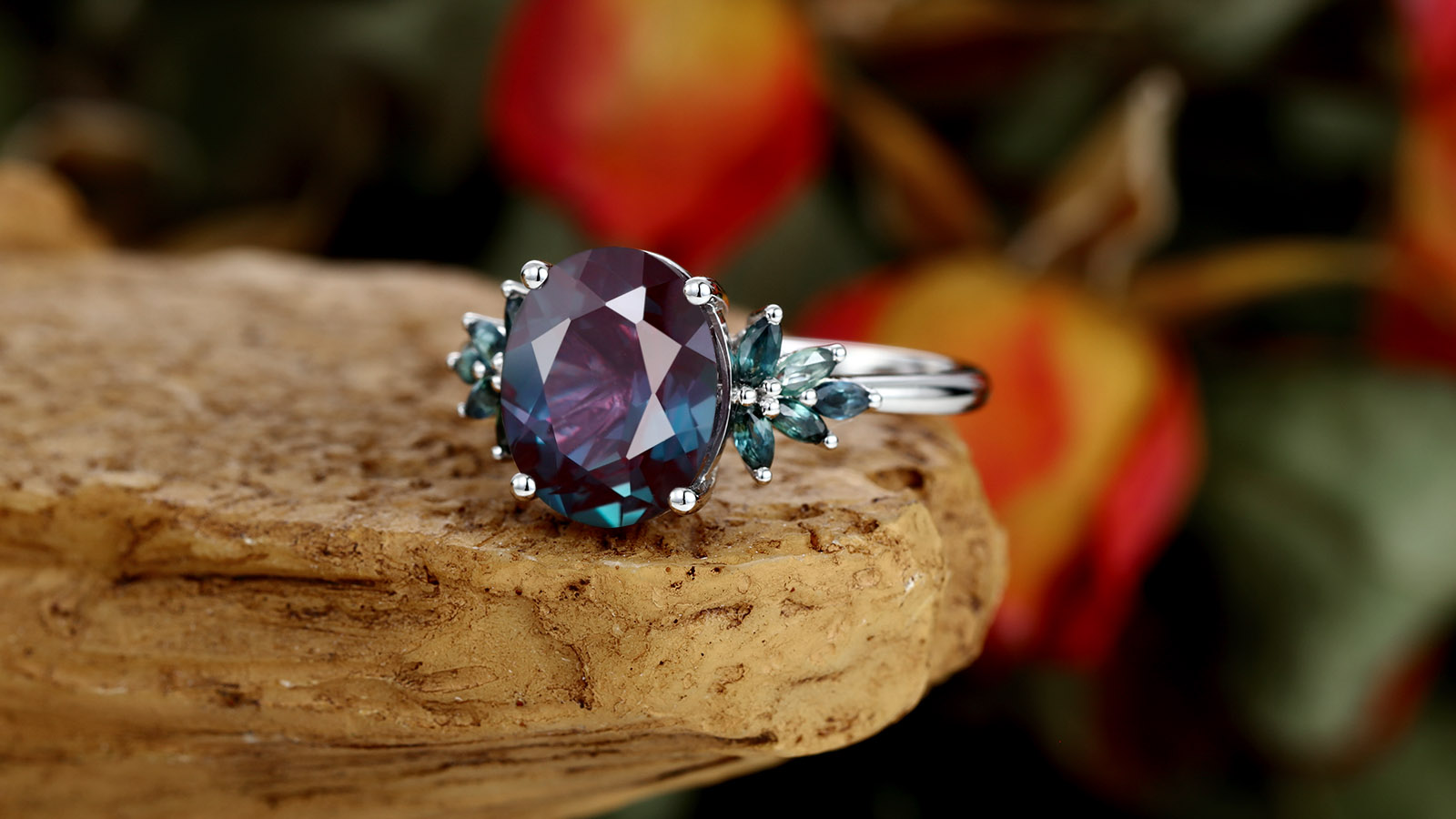
Some gemstones are admired for their sparkle. Others are chosen because they are rare. Alexandrite is different. People are often drawn to alexandrite because it feels meaningful before they even learn its history. The moment they see the stone shift from green in daylight to purple-red under warm lighting, they realize it’s not a gemstone that stays the same from moment to moment.
That unique characteristic has made alexandrite one of the most symbolic gemstones in modern jewelry. Yet unlike many gemstone meanings that rely heavily on folklore or mystical claims, alexandrite's symbolism comes directly from something you can actually see: its remarkable ability to change with its environment.
In this guide, we'll explore the meaning of alexandrite, its symbolism in modern jewelry, its role as a June birthstone, and why more couples are choosing alexandrite engagement rings today.
What Is Alexandrite?
Before exploring its symbolism, it's helpful to understand what makes alexandrite unique. Alexandrite is a rare variety of chrysoberyl known for its dramatic color-changing effect. In natural daylight, it often appears green, teal, or bluish-green. Under incandescent or warm indoor lighting, it can shift to purple, raspberry, or reddish tones. This phenomenon, known as the "alexandrite effect," is what gives the gemstone its distinctive character.
If you're new to this gemstone, you may also enjoy reading our complete guide:
What Is Alexandrite? The Complete Beginner's Guide to This Color-Changing Gemstone
Understanding how alexandrite changes color helps explain why so many people associate it with personal growth, adaptability, and life's evolving journey.
The Meaning of Alexandrite: More Than a Color-Changing Stone
Many gemstone meanings come from centuries-old traditions. Alexandrite's symbolism, however, feels surprisingly modern. Because the stone changes appearance depending on its surroundings, many people see it as a reflection of real life.
Life rarely stays the same. Relationships evolve. Careers change. Families grow. People adapt to new circumstances and discover different sides of themselves over time. Alexandrite visually mirrors that experience.
Rather than symbolizing perfection or permanence, it often represents the ability to remain authentic while embracing change. This idea resonates with many modern jewelry buyers because it feels realistic rather than idealized.
The Symbolism of Change and Adaptability
Among all alexandrite symbolism, the theme most commonly associated with the gemstone is change. But not change in the sense of instability. Instead, alexandrite represents the ability to adapt without losing your identity. The gemstone remains the same stone under every light source. What changes is how its character is revealed. For many people, that feels deeply relatable. You may be a professional at work, a partner at home, a friend in social settings, and a parent or caregiver in other moments. Different environments bring out different sides of who you are, yet your core self remains unchanged. Alexandrite reflects that idea beautifully.
This is one reason the gemstone has become increasingly popular among people celebrating:
- Personal growth milestones
- Career achievements
- New chapters in life
- Relationship anniversaries
- Engagements and weddings
Rather than representing a single moment, alexandrite often symbolizes an ongoing journey.
Why Alexandrite Feels Especially Meaningful in Relationships
Many engagement ring gemstones symbolize love, commitment, or devotion. Alexandrite adds another layer to that story. Long-lasting relationships are not successful because two people never change. They succeed because both people continue growing while staying connected. In many ways, alexandrite reflects that reality. The stone changes under different conditions, yet remains fundamentally the same. This symbolism feels particularly relevant today, when couples often value authenticity, individuality, and personal growth as much as tradition. That's one reason alexandrite engagement rings have gained popularity among couples looking for something more personal than a conventional diamond ring.
If you're considering one, you may also like: Is Alexandrite Good for Engagement Rings? A Complete Guide Before You Choose
Alexandrite as a June Birthstone
Alexandrite is one of the official birthstones for June, alongside pearl and moonstone. Among June birthstones, alexandrite is often considered the rarest and most unusual option because of its color-changing ability. Many people choose alexandrite birthstone jewelry because it combines personal significance with everyday wearability.
Unlike some softer gemstones, alexandrite has a hardness of approximately 8.5 on the Mohs scale, making it durable enough for rings, pendants, earrings, and other jewelry worn regularly. For June birthdays, alexandrite offers a distinctive alternative to more traditional birthstone choices.
Does Alexandrite Have Historical Symbolism?
Alexandrite was first discovered in Russia during the 19th century and quickly became associated with prestige because of its rarity. Historically, the gemstone was admired for its unusual color-changing properties, which seemed almost magical compared to other gems available at the time.
Today, however, most buyers connect with alexandrite for more personal reasons rather than historical traditions.
Its modern symbolism tends to focus on:
|
Traditional Associations |
Modern Interpretations |
|
Rarity |
Individuality |
|
Transformation |
Personal growth |
|
Dual colors |
Balance and adaptability |
|
Uniqueness |
Self-expression |
|
Endurance |
Long-term commitment |
This shift makes alexandrite particularly relevant for contemporary jewelry buyers.
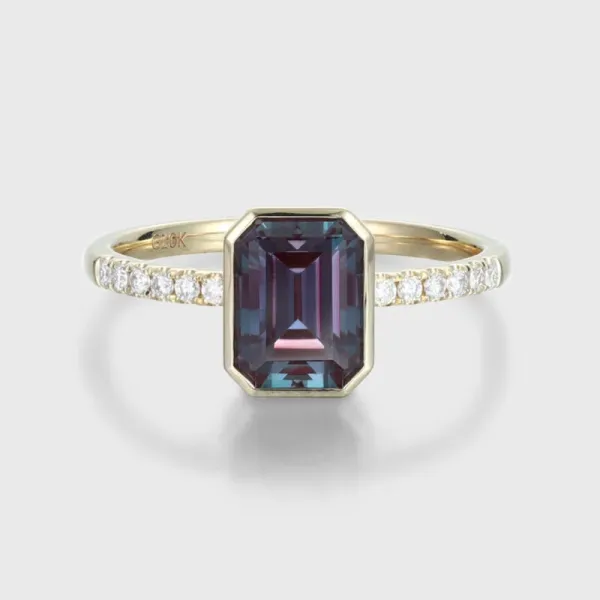
Emerald Cut Lab Alexandrite Yellow Gold Half Pave Bezel Engagement Rings
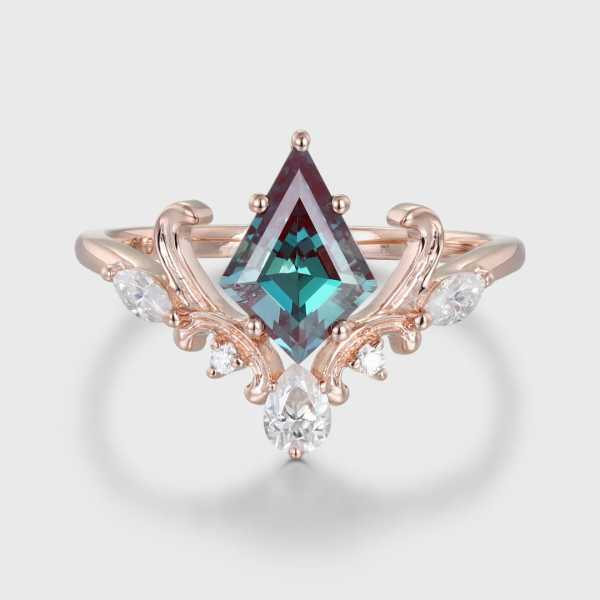
Nature Inspiration Leaf Vine Kite Cut Alexandrite Engagement Ring
Natural vs Lab Alexandrite: Does Symbolism Change?
One question buyers often ask is whether the meaning changes if the stone is lab-created. For most people, the answer is no. The symbolism of alexandrite comes from its color-changing nature rather than where it was formed. Both natural and lab-created alexandrite display the same remarkable optical effect. The choice between the two is usually based on rarity, budget, and personal preference rather than meaning.
If you're comparing the options, our guide below explains the differences in more detail: Natural vs Lab Alexandrite: What's the Difference?
Why More Couples Are Choosing Alexandrite Today
The growing popularity of alexandrite isn't simply about aesthetics.
Consumer preferences have changed significantly over the last decade.
Many couples now want engagement rings that feel:
- Personal rather than traditional
- Meaningful rather than expected
- Distinctive without being overly flashy
- Durable enough for everyday wear
Alexandrite naturally fits those priorities. Its color-changing behavior creates a sense of individuality that few other gemstones can replicate. At the same time, its durability makes it practical for long-term wear. Rather than following tradition for tradition's sake, many couples are choosing gemstones that reflect their own story. Alexandrite happens to tell that story particularly well.
For a deeper look at this growing trend, you may also enjoy: Why Alexandrite Engagement Rings Are Trending: Unique Styles & Color-Changing Beauty
Is Alexandrite Right for Everyone?
Not necessarily. Alexandrite is often ideal for people who appreciate symbolism, uniqueness, and subtle beauty. However, those who prefer maximum sparkle may still gravitate toward diamonds or moissanite. Similarly, people who want a gemstone with a completely consistent appearance might find alexandrite's changing colors less appealing.
The beauty of alexandrite is that it isn't trying to be everything. It appeals most strongly to people who appreciate nuance, individuality, and the idea that beauty can reveal itself differently over time.
Alexandrite Jewelry at OVEELA Jewelry
At OVEELA Jewelry, we believe jewelry should feel personal long after the day it is received. That's one reason alexandrite has become such an important part of our collection.
Whether featured in engagement rings, anniversary gifts, or personalized birthstone jewelry, alexandrite offers something few gemstones can: a visual reminder that change is not something to fear, but something to embrace.
We carefully select and design alexandrite jewelry that highlights the gemstone's natural color-changing beauty while balancing everyday wearability, meaningful design, and lasting craftsmanship. For many of our customers, alexandrite isn't simply chosen because it looks beautiful. It's chosen because it feels relevant to the journey they're already living.
Frequently Asked Questions
Alexandrite is most commonly associated with change, adaptability, growth, and resilience. Its ability to change color under different lighting conditions makes it a natural symbol of personal evolution and life's transitions.
Many cultures and historical traditions have associated alexandrite with good fortune. However, most modern buyers value the gemstone for its symbolism of adaptability and transformation rather than luck.
Many couples choose alexandrite because it feels unique, meaningful, and personal. Its color-changing nature can symbolize a relationship that continues to grow and evolve over time.
Yes. Alexandrite is one of the official birthstones for June and is known for being one of the rarest birthstones available.
For most people, yes. The symbolism comes from the gemstone's color-changing behavior rather than its origin. Both natural and lab-created alexandrite display the same optical effect.
Natural alexandrite is considered one of the rarest colored gemstones in the world. Lab-created alexandrite is more widely available while maintaining the same physical and optical properties.
Its ability to dramatically change color under different lighting conditions is what sets alexandrite apart from most other gemstones. This unique characteristic is also the foundation of its symbolism and appeal.