
Why Ethics Matter in Modern Jewelry Choices
Ethical jewelry is no longer a niche concern—it has become a defining factor in how modern buyers choose meaningful pieces. Consumers today care deeply about where gemstones come from, how they are mined, and who is involved in their creation. Against this backdrop, moss agate rings have gained widespread attention as a beautiful and responsible alternative to traditional gemstones.
So, are moss agate rings ethical?
In most cases, yes—when sourced responsibly, paired with ethical metals, and crafted under fair labor standards. This guide offers a clear, comprehensive explanation of why moss agate is considered ethical, how it compares to diamonds, and how to choose a ring that truly aligns with sustainability values.
What Is Moss Agate and Why It’s Gaining Popularity
A Unique Natural Gemstone
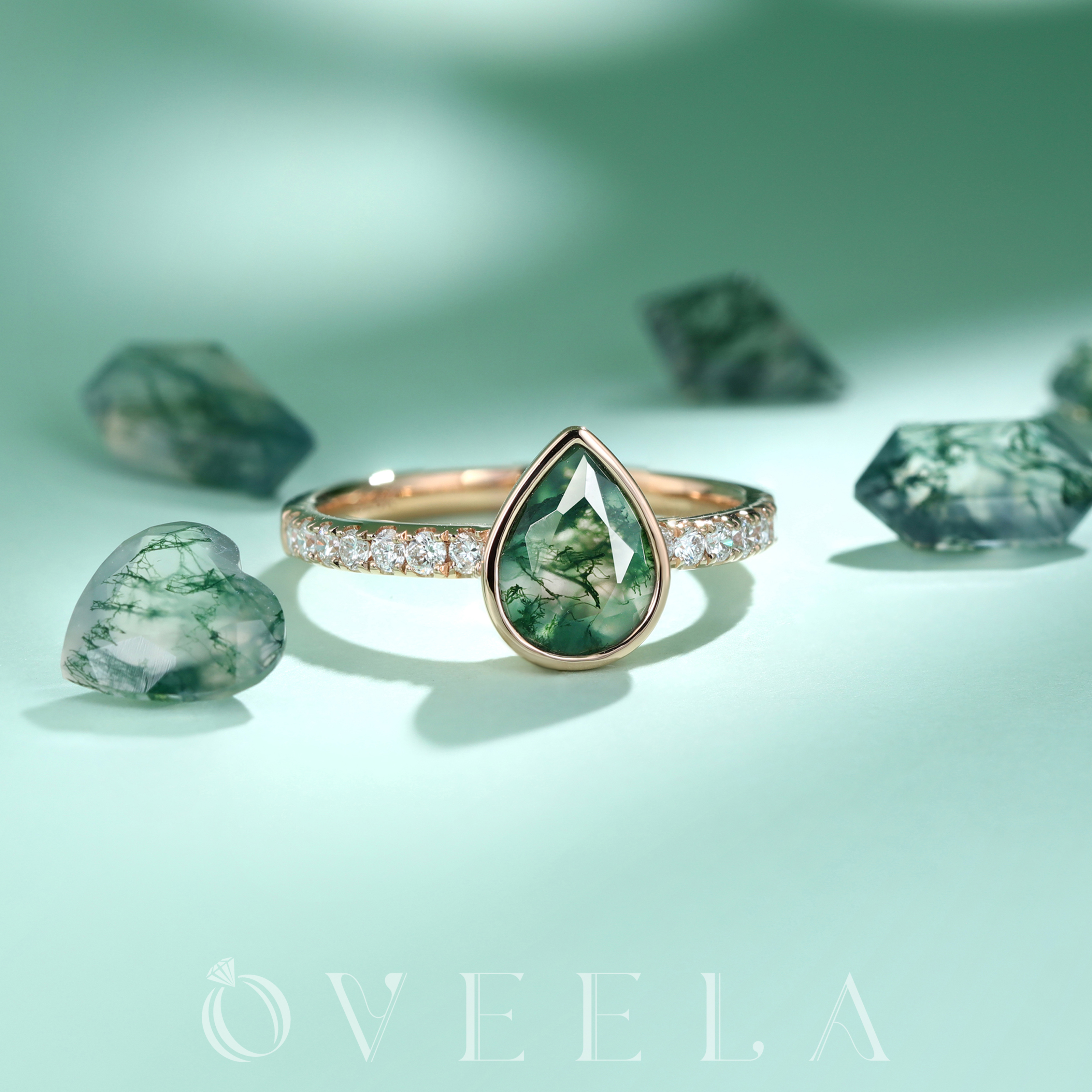
Moss agate is a semi-precious form of chalcedony known for its translucent base and organic, moss-like inclusions. These natural patterns are formed when silica-rich fluids settle within volcanic rock cavities or riverbeds over time. No two stones are ever identical, making every moss agate ring one of a kind.
Symbolism and Emotional Appeal
Beyond aesthetics, moss agate is often associated with:
- Nature and growth
- Balance and harmony
- New beginnings
This symbolism, combined with its earthy appearance, appeals strongly to buyers seeking jewelry with meaning rather than mass-produced perfection.
What Makes Moss Agate an Ethical Gemstone
Naturally Conflict-Free
Unlike high-value gemstones such as diamonds, moss agate is not linked to conflict financing, forced labor, or geopolitical instability. Its lower market value removes the incentive structures that have historically driven unethical practices in other gemstone industries.
This makes moss agate inherently conflict-free and a safer choice for ethically conscious buyers.
Low Environmental Impact Compared to Traditional Gemstones
Surface-Level and Small-Scale Mining
One of moss agate’s strongest ethical advantages lies in how it is sourced. It is typically collected through surface-level or small-scale artisanal mining, often from riverbeds or near-surface rock formations. This approach significantly reduces:
- Land disruption
- Water pollution
- Energy consumption
- Carbon emissions
In contrast, diamond mining often requires deep-earth excavation, heavy machinery, and large-scale environmental alteration.
Transparent and Decentralized Supply Chains
Moss agate is found in multiple regions worldwide, including:
- The United States
- Brazil
- India
- Parts of Africa
Because it is not controlled by a single country or cartel, its supply chain tends to be more decentralized and transparent. This allows jewelers to work directly with small-scale miners and cutters, improving traceability and labor oversight.
Transparency is a key factor in determining whether a gemstone can truly be called ethical.
Moss Agate vs. Diamonds: An Ethical Comparison
|
Factor |
Moss Agate |
Mined Diamonds |
|
Conflict Risk |
None |
Possible |
|
Mining Method |
Surface / artisanal |
Deep-earth industrial |
|
Environmental Impact |
Low |
High |
|
Supply Chain |
Transparent |
Often opaque |
|
Uniqueness |
Naturally unique |
Standardized grading |
While diamonds remain popular, moss agate offers a compelling ethical alternative with far fewer environmental and social risks.
Durability and Longevity: Sustainability Beyond Mining
Moss agate ranks 6.5–7 on the Mohs hardness scale, making it suitable for everyday wear when set properly. Protective settings such as bezels or halos enhance durability and prevent chipping.
Longevity matters. A ring worn for decades spreads its environmental impact over time, making it far more sustainable than jewelry replaced every few years.
The Role of Ethical Metals in Moss Agate Rings
Why the Setting Matters as Much as the Stone
A gemstone alone does not determine a ring’s ethics. The metal used in the setting plays an equally important role. Ethical moss agate rings are most credible when paired with:
- Recycled gold or silver
- Responsibly sourced alloys
- Transparent metal supply chains
Recycled metals dramatically reduce the environmental damage associated with new mining, reinforcing the overall sustainability of the ring.
Craftsmanship and Slow Jewelry Principles
Made-to-Order and Small-Batch Production
Moss agate naturally aligns with slow jewelry values. Its unique patterns encourage:
- Custom or made-to-order designs
- Small production runs
- Hand-selected stones
This approach reduces overproduction, minimizes waste, and supports skilled artisans rather than factory-style mass manufacturing.
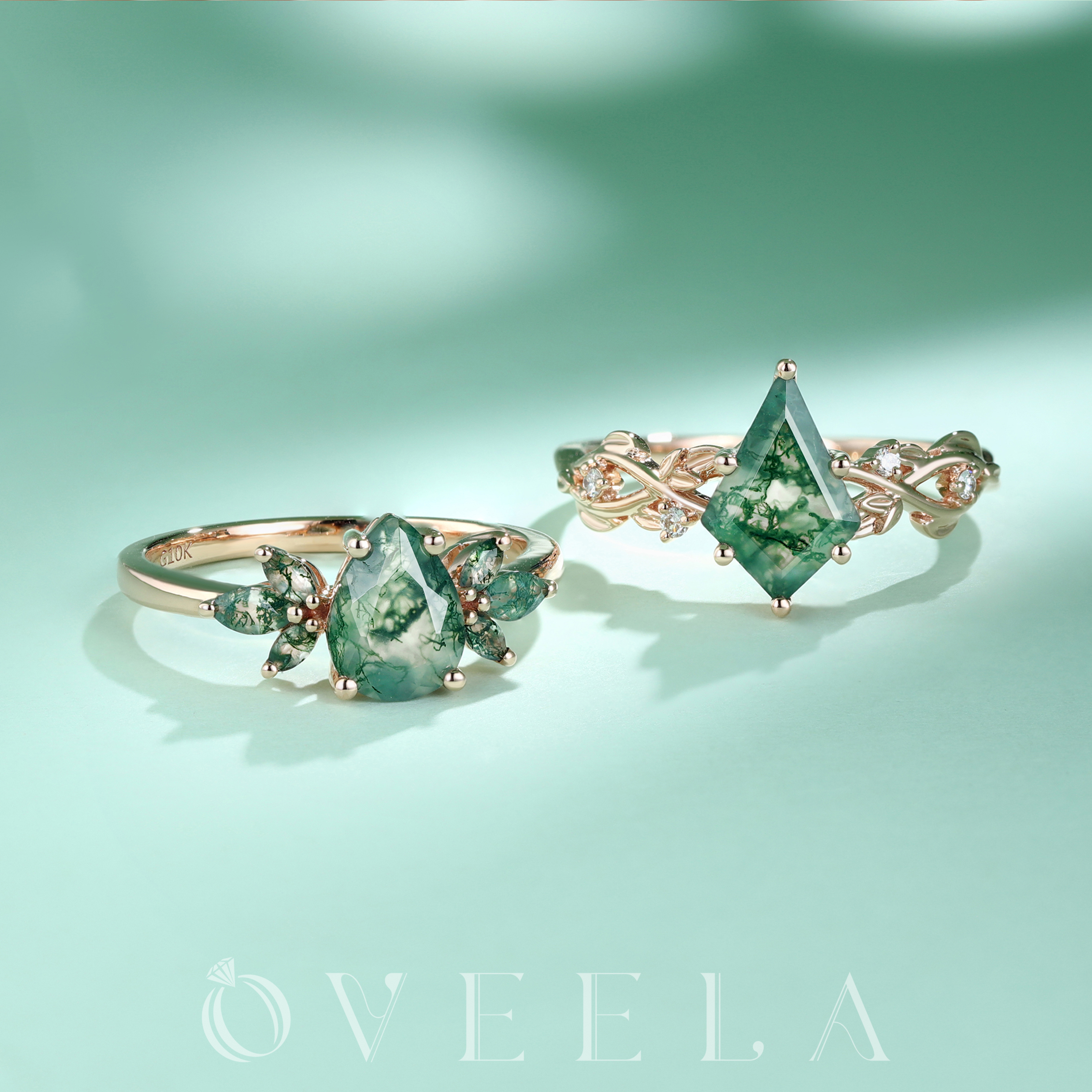
At OVEELA, each moss agate ring is created with a strong focus on ethical values, bringing together carefully selected stones, responsibly sourced metals, and skilled handcraftsmanship to emphasize lasting quality, unique character, and transparent practices instead of mass production.
Red Flags to Avoid
- Vague claims like “eco-friendly” with no explanation
- No disclosure about metal sourcing
- Mass-produced designs labeled as “ethical”
- Informed questions lead to ethical purchases.
Caring for Moss Agate Engagement Rings Sustainably
Sustainability continues after purchase. Proper care extends a ring’s life and reduces the need for replacement.
Best Practices
- Clean gently with mild soap and water
- Store separately to avoid scratches
- Inspect settings periodically
- Repair or resize rather than replace
- An heirloom mindsetturns a ring into a lasting symbol instead of disposable fashion.
Why Moss Agate Rings Align With Modern Values
Moss agate resonates strongly with buyers who value:
- Authenticity over uniformity
- Nature-inspired design
- Ethical consumption
- Environmental responsibility
- Each ring reflects intention, individuality, and respect for both people and the planet.
Frequently Asked Questions
Are moss agate rings truly ethical?
Yes, when sourced responsibly and paired with ethical metals and fair labor practices.
Are moss agate rings sustainable?
Yes. Their low-impact extraction and compatibility with recycled metals support sustainability.
Are moss agate rings conflict-free?
Yes. Moss agate is not linked to conflict financing or forced labor networks.
Can moss agate rings be worn daily?
Yes, especially when designed with protective settings.
How can I verify ethical sourcing?
Ask for transparency and prioritize jewelers who disclose sourcing and production methods.
Are moss agate rings suitable for engagement rings?
Absolutely. They are a meaningful, ethical alternative to traditional diamond rings.
Final Verdict: Are Moss Agate Rings Ethical?
When responsibly sourced, thoughtfully designed, and crafted with recycled or traceable metals, moss agate rings rank among the most ethical gemstone jewelry options available today. They offer conflict-free assurance, a reduced environmental footprint, and unmatched individuality.
For those who value sustainability, transparency, and timeless beauty, moss agate rings are not just an alternative—they are a deliberate and principled choice.