
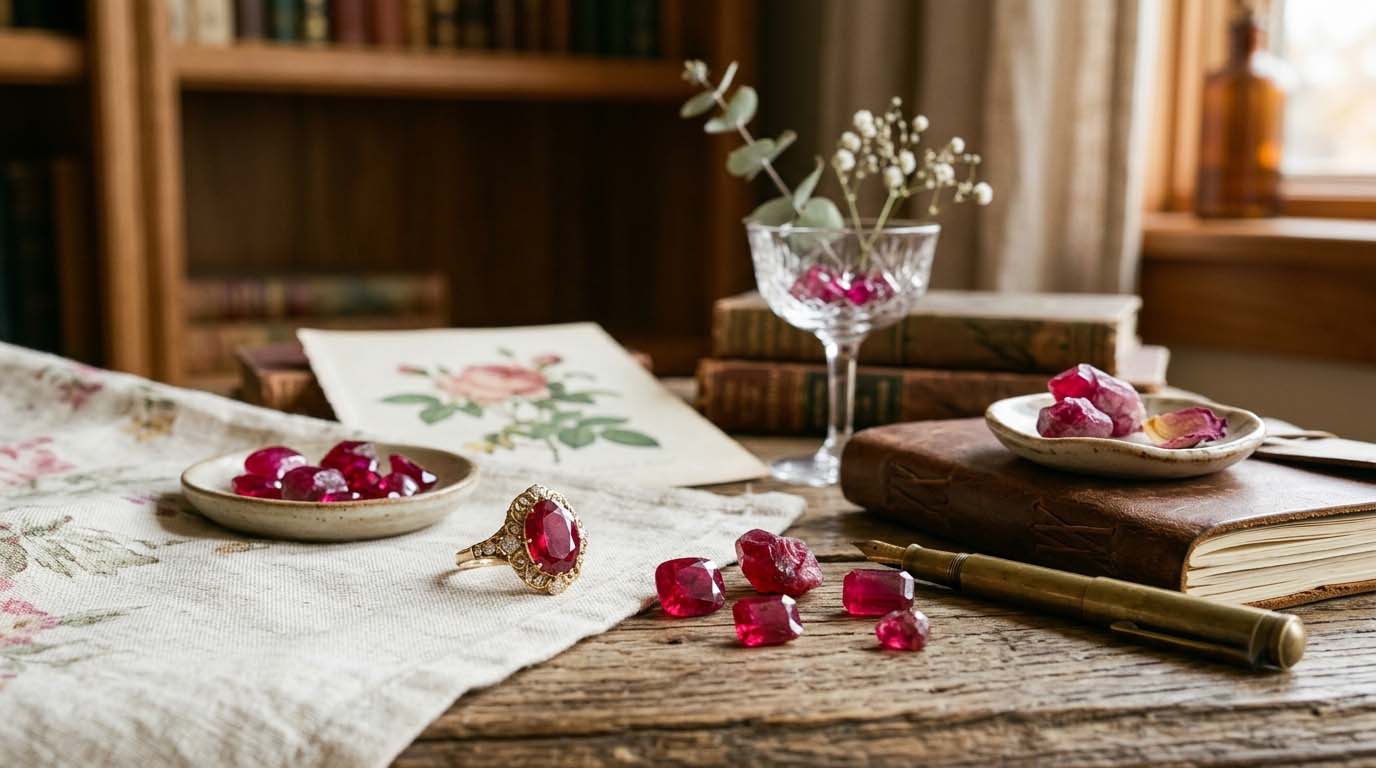
There is a reason rubies have been called the "King of Colored Gemstones" for thousands of years. It is not just their color — though that color, when perfect, is unlike anything else on earth. It is not just their rarity, though fine rubies are rarer than diamonds of comparable quality. It is something harder to name: the way a ruby seems to hold light rather than reflect it, as if the stone itself is quietly burning.
If you were born in July, this stone is yours. Not by accident. Not by marketing committee. But by a tradition that stretches back to ancient civilizations who looked at the calendar, looked at the earth, and decided that the deepest red of summer belonged to the height of the year.
At OVEELA Jewelry, we do not treat birthstones as a sales category. We treat them as a language — a way of saying something about who you are that words cannot quite capture. And for those born in July, ruby speaks with a voice that is passionate, protective, and unmistakably alive.
What Makes Ruby Different From Every Other Red Stone
Before we talk about what ruby means, we need to talk about what ruby is — because the answer is more specific than most people realize.
Ruby is the red variety of corundum, one of the hardest minerals on earth. On the Mohs hardness scale, ruby scores a 9 — second only to diamond. This is not a soft stone that needs coddling. It is a stone built for daily wear, for rings that live on your hand through every season of life.
But here is what separates ruby from every other red gemstone: its color comes from chromium, an element that also gives ruby its characteristic fluorescence. Under certain light, a fine ruby does not just look red. It glows. That inner fire — called "pigeon's blood" when it reaches perfection — is the standard by which all rubies are judged. It is a vivid, slightly bluish red with exceptional saturation, a color so intense it seems to generate its own light.
Fine natural rubies, especially those from Myanmar with pigeon's blood color, are among the most valuable colored gemstones per carat in the world.
At OVEELA, we work with both natural and lab-grown rubies. Both share the same chemical composition, the same hardness, the same optical properties. The difference is origin — and price. Lab-grown rubies make this legendary stone accessible to more people without compromising on quality or beauty.
The History: Why July Got Ruby
The tradition of birthstones dates back to the Breastplate of Aaron described in the Bible — a ceremonial garment set with twelve stones, each representing a tribe of Israel. Over centuries, this evolved into the modern birthstone calendar we know today, standardized in 1912 by the American National Retail Jewelers Association (now Jewelers of America).
But ruby's association with July goes deeper than a committee decision.
In ancient India, ruby was called ratnaraj — "king of precious stones." It was believed to protect warriors in battle, to warn its wearer of danger by darkening in color, and to grant peace and wisdom to those who possessed it. Burmese warriors actually inserted rubies into their flesh before battle, believing the stone made them invincible.
In medieval Europe, rubies were associated with royalty, passion, and divine power. They were set into crowns, scepters, and religious relics. The Black Prince's Ruby — actually a spinel, but believed to be a ruby for centuries — sits in the British Imperial State Crown to this day.
The connection to July makes symbolic sense. July is the height of summer in the Northern Hemisphere — the month when the sun is strongest, when days are longest, when the natural world is at its most abundant and intense. Ruby's fiery red mirrors that solar energy. It is a stone of peak vitality, of maximum life force, of the moment when everything is fully alive.
What Ruby Means: The Symbolism Behind the Stone
Every birthstone carries meaning. But ruby's meaning is layered, ancient, and surprisingly modern.
Passion & Love
Ruby has been the stone of passionate love since antiquity. In Sanskrit, it is associated with the sun and the heart. In Western traditions, it is the traditional gift for 40th wedding anniversaries — a celebration of love that has endured and deepened over decades.
But ruby's version of love is not soft or passive. It is active, courageous, and alive. This is love as a force — the kind that fights for what matters, that deepens through challenge, that chooses again every day.
Protection & Strength
Historically, ruby was believed to protect its wearer from harm, from illness, and from misfortune. It was set into armor, sewn into clothing, and carried as a talisman. While we no longer believe stones have magical powers, the psychological effect remains: wearing something associated with strength and protection can genuinely affect how you move through the world.
Vitality & Courage
Ruby resonates with the Root Chakra (grounding, stability, survival) and the Heart Chakra (love, compassion, emotional openness) simultaneously.
This dual activation is rare among gemstones. It means ruby supports both physical energy and emotional courage — the ability to stand firm and to love fully at the same time.
In 2026, birthstone jewelry trends have shifted toward what experts call "Intention Wear" — choosing stones based on the specific energy or vibe you want to invite into your life. Ruby, associated with confidence and high energy, is increasingly worn not just by July birthdays but by anyone facing a challenge that requires courage.
Explore: Who Should Wear Ruby Stone? Benefits, Personality Match & Buying Guide
Who Ruby Is For: Beyond the Birthday
If you were born in July, ruby is your birthstone. But at OVEELA, we believe the right stone chooses the person, not just the calendar.
Ruby might be your stone if:
| You Are... | Why Ruby Fits |
|---|---|
| A leader | Ruby has been the stone of kings, warriors, and CEOs. It amplifies authority without arrogance. |
| Going through a transition | Ruby symbolizes new beginnings fueled by courage. It is for the moment when you leap. |
| Deeply in love | Not the soft pink of rose quartz. The burning red of choosing someone every day. |
| Reclaiming your power | Ruby activates the Root Chakra — the energy center of grounded confidence. |
| A Cancer or Leo | As the July birthstone, ruby holds special significance for both signs — emotional depth for Cancer, fiery charisma for Leo. |
| Someone who wears their heart visibly | Ruby does not hide. It announces. It is for people who are done apologizing for being intense. |
At OVEELA, we have seen clients choose ruby for reasons that have nothing to do with birthdays. The executive who wanted a power ring for boardroom negotiations. The survivor who wanted a stone that matched the strength it took to rebuild. The romantic who wanted an engagement ring that said "I choose you passionately" rather than "I choose you traditionally." Ruby is not a quiet stone. And it is not for quiet people.
How to Wear Ruby: Styling for 2026
Birthstone jewelry in 2026 is no longer about "matching your outfit." It is about "clashing with confidence."
Here is how OVEELA recommends styling ruby in the current moment:
Everyday Wear
Do not save your ruby for special occasions. A simple ruby pendant on a heavy chain elevates a white t-shirt and jeans. Ruby studs add just enough color for the workplace without demanding attention. The 2026 rule is: wear your birthstone daily, not just on your birthday.
Layering & Stacking
The "Stacking with Intention" trend involves pairing your birth month stone with other meaningful gems — your partner's birthstone, your children's stones, or stones that represent milestones. Ruby stacks beautifully with diamond (April), emerald (May), and sapphire (September) for a rich, royal palette.
East-West Settings
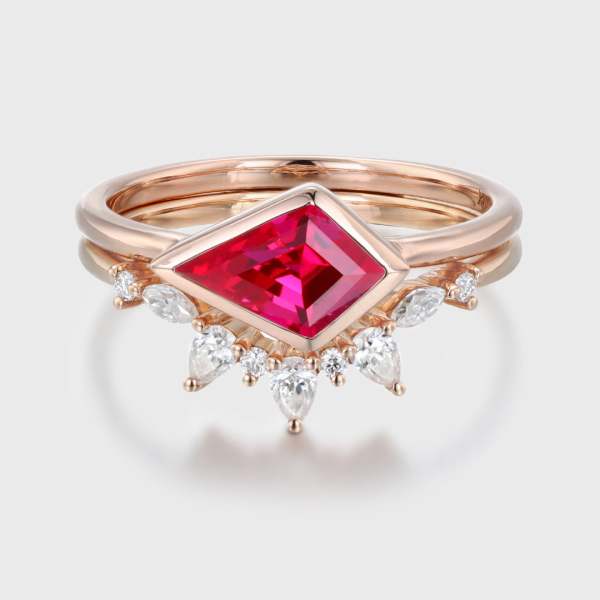
One of the hottest trends in 2026 is the East-West setting — turning oval or emerald-cut stones horizontally instead of vertically. This creates a modern, architectural look that feels less traditional and more current. Ruby in an East-West setting is bold without being flashy.
Mixed Metals
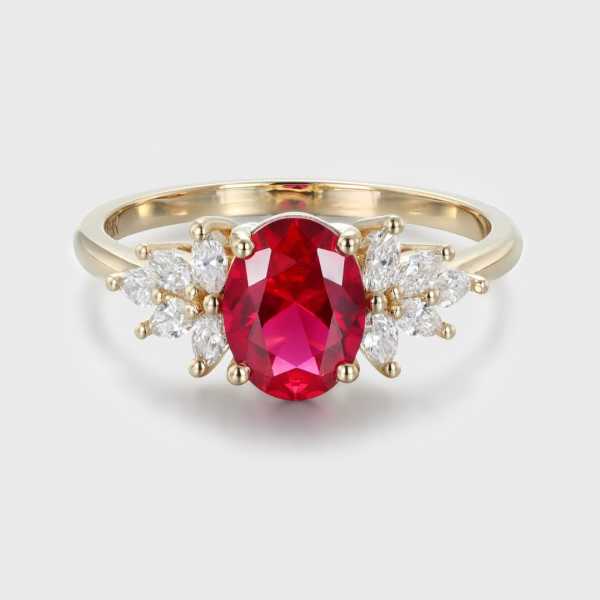
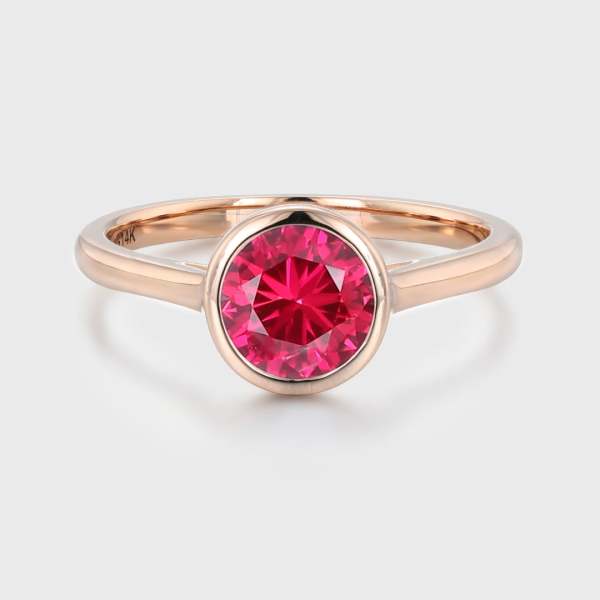
The old rule of matching metals is gone. Ruby looks stunning in yellow gold (warm and vintage), white gold (crisp and modern), rose gold (romantic and soft), and platinum (luxurious and permanent). In 2026, mixing metals is not just allowed — it is encouraged.
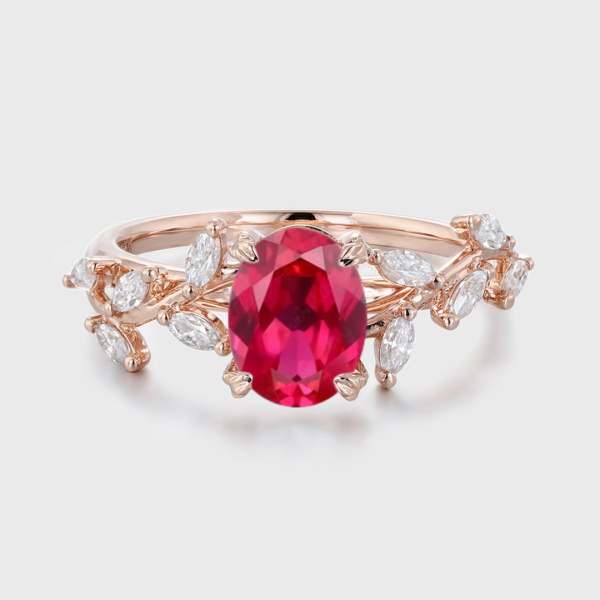
Ruby vs. Other Red Stones: Know What You're Buying
Not every red stone is a ruby. And at OVEELA, we believe in transparency.
| Stone | What It Is | How It Differs From Ruby |
|---|---|---|
| Ruby | Red corundum | The only true ruby. Hardness 9. Natural fluorescence. |
| Red Spinel | Magnesium aluminum oxide | Similar color, but no fluorescence. Softer. Often historically mistaken for ruby. |
| Garnet | Silicate mineral group | Deeper, browner red. Significantly softer. Less brilliance. |
| Rubellite | Red tourmaline | Pinkish-red to deep red. Softer and less durable than ruby. |
| Red Sapphire | Pinkish corundum | Technically the same mineral as ruby, but color is too light or purplish to qualify as ruby. |
Caring for Your Ruby: The OVEELA Guide
Ruby is durable, but it still deserves respect.
Cleaning: Most rubies can be cleaned with warm water, mild soap, and a soft brush. Untreated natural rubies can even handle ultrasonic cleaners. But if your ruby has been fracture-filled or heavily treated, stick to gentle hand cleaning.
Storage: Store ruby separately from softer gemstones. Its hardness of 9 means it can scratch almost anything else in your jewelry box.
Wearing: Remove your ruby ring before heavy physical work, gardening, or contact sports. While hard, ruby can still chip if struck at the wrong angle.
Professional Care: At OVEELA, we offer complimentary annual inspections for all ruby pieces. We check settings, clean thoroughly, and ensure your stone is as secure as the day you bought it.
Final Thoughts: The OVEELA Perspective on Ruby
At OVEELA Jewelry, we do not believe in selling stones. We believe in matching people with symbols that amplify who they already are.
Ruby is not a stone for the faint of heart. It is intense. It is visible. It demands attention without asking for it. It is the color of blood, of fire, of the heart beating hard in your chest when you are about to do something that matters.
If you were born in July, ruby is your birthright — a stone that has been associated with your month for thousands of years, across cultures and continents. But even if July is not your month, ruby might still be your stone. It is for anyone who has ever needed to remember that they are strong enough, passionate enough, and alive enough to deserve something beautiful.
The world will tell you that diamonds are the only choice for serious jewelry. That subtlety is more sophisticated than intensity. That you should want what everyone else wants. Ruby says something else. It says: Be visible. Be intense. Be exactly who you are.