
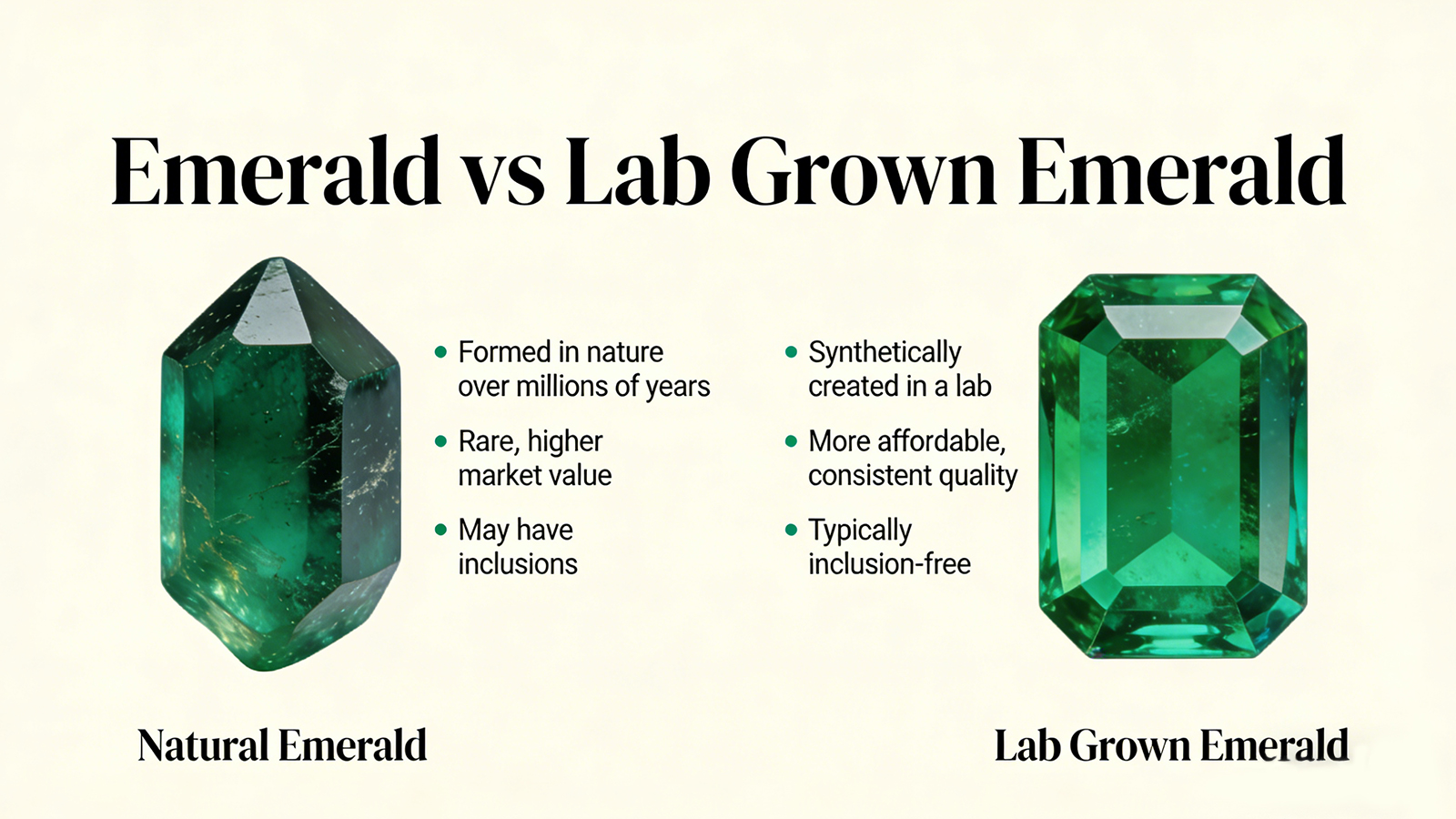
Yes — a lab-grown emerald is a real emerald.
It has the exact same chemical composition (beryllium aluminum silicate), crystal structure (hexagonal), and physical properties as a natural emerald. The only difference is origin: one formed deep underground over millions of years, the other was grown in a laboratory over several months.
If you’re shopping for an emerald ring and wondering whether “lab-grown” means “fake,” you’re not alone. This is one of the most common questions in fine jewelry today.
In this guide, we’ll cut through the confusion. You’ll learn exactly what lab-grown emeralds are, how they compare to natural emeralds and imitations, and whether they’re the right choice for your engagement ring or jewelry purchase.
- What Does “Real” Mean in Gemstones?
- Lab-Grown vs Natural Emerald: The Key Differences
- Terminology Matters: Synthetic, Lab-Grown, and Imitation — What’s the Difference?
- Lab Emerald vs Cubic Zirconia: They’re Not Even Close
- Are Lab-Grown Emeralds Durable Enough for Everyday Wear?
- Do Lab-Grown Emeralds Hold Their Value?
- Why More Couples Are Choosing Lab-Grown Emeralds in 2026
- How to Care for Your Lab-Grown Emerald Ring
- Final Thoughts: Is Lab-Grown Emerald Right for You?
- FAQ
What Does “Real” Mean in Gemstones?
When gemologists talk about whether a stone is “real,” they’re asking about mineral identity — not origin.
A lab-grown emerald:
- Is genuine beryl(the same mineral family as natural emerald)
- Gets its green color from chromium or vanadium(same as natural)
- Has the same crystal structure(hexagonal)
- Ranks 5–8 on the Mohs hardness scale(same as natural)
- Can be tested and identified as emeraldby professional gem labs
What it is not:
- Not glass
- Not cubic zirconia
- Not a “fake” or “imitation”
- Not a different mineral pretending to be emerald
Think of it this way: ice from your freezer and ice from a glacier are both real ice. They have the same chemical formula (H₂O), the same structure, and the same properties. The only difference is where they formed.
Lab-grown emeralds and natural emeralds share the same relationship.
Lab-Grown vs Natural Emerald: The Key Differences
Rather than vague explanations, here’s a clear, data-backed comparison:
|
Feature |
Lab-Grown Emerald |
Natural Emerald |
|
Mineral |
Beryl |
Beryl |
|
Chemical Formula |
Be₃Al₂(SiO₃)₆ |
Be₃Al₂(SiO₃)₆ |
|
Color Source |
Chromium / Vanadium |
Chromium / Vanadium |
|
Hardness |
7.5–8 Mohs |
7.5–8 Mohs |
|
Formation |
2–12 months in a lab |
100+ million years underground |
|
Inclusions |
Minimal to none |
Almost always present (“jardin”) |
|
Clarity |
Typically VS to VVS |
Typically SI to I (included) |
|
Color Consistency |
Highly uniform |
Varies widely by source |
|
Rarity |
Controllable production |
Geologically rare |
|
Environmental Impact |
Significantly lower |
Mining has substantial footprint |
The bottom line: They are the same mineral — different origin, different trade-offs.

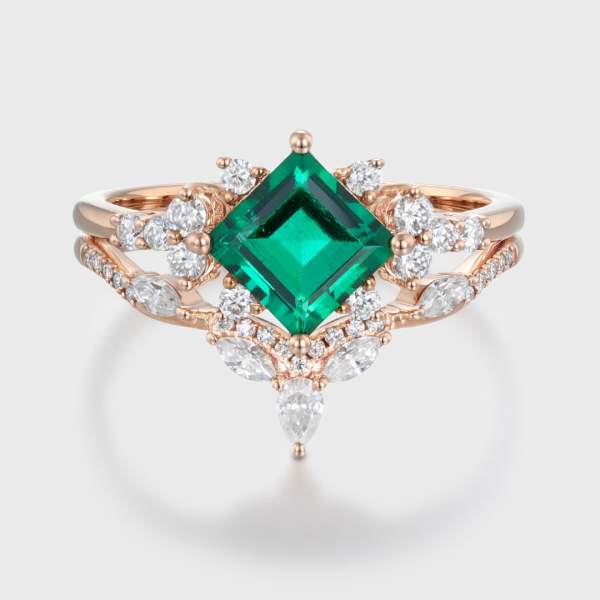


Terminology Matters: Synthetic, Lab-Grown, and Imitation — What’s the Difference?
One reason consumers get confused is that jewelers and marketers use different terms inconsistently. Here’s what they actually mean:
|
Term |
Definition |
Example |
|
Lab-Grown / Lab-Created / Cultured |
A genuine gemstone created in a laboratory that has the same physical, chemical, and optical properties as its natural counterpart. |
Lab-grown emerald, lab-grown diamond |
|
Synthetic |
Technically means the same as “lab-grown.” However, some consumers associate it with “fake,” so many brands now avoid this term. |
Synthetic emerald = lab-grown emerald |
|
Simulant / Imitation |
A completely different material that looks like a gemstone but has different properties. |
Cubic zirconia (diamond simulant), green glass (emerald simulant) |
|
Natural / Mined |
A gemstone that formed naturally in the earth without human intervention. |
Mined emerald, mined diamond |
Key takeaway: If a jeweler says “synthetic emerald,” they mean a real emerald made in a lab. If they say “emerald simulant” or “emerald imitation,” they mean something that looks like emerald but isn’t.
Always ask for clarification if you’re unsure.
Lab Emerald vs Cubic Zirconia: They’re Not Even Close
This comparison pops up frequently in online forums, but it’s fundamentally misleading.
|
Feature |
Lab-Grown Emerald |
Cubic Zirconia (CZ) |
|
Mineral Identity |
Genuine beryl |
Synthetic zirconium dioxide |
|
Composition |
Be₃Al₂(SiO₃)₆ |
ZrO₂ |
|
Hardness |
7.5–8 Mohs |
8–8.5 Mohs |
|
Purpose |
A genuine emerald |
A diamond simulant |
|
Gemological Status |
Recognized as emerald |
Recognized as CZ, not emerald |
Cubic zirconia is not an emerald alternative — it’s a diamond alternative. The fact that some sellers use green CZ and call it “emerald” doesn’t make them the same thing.
When you buy a lab-grown emerald, you’re buying an actual emerald. When you buy green CZ, you’re buying a different material altogether.
Are Lab-Grown Emeralds Durable Enough for Everyday Wear?
Yes — with the right setting and care.
Hardness: 7.5–8 Mohs. For context:
- Diamond: 10
- Sapphire / Ruby: 9
- Emerald: 7.5–8
- Opal: 5–6.5
Emeralds are durable enough for daily wear, but they’re not indestructible.
The durability difference between lab-grown and natural:
- Natural emeraldsoften contain surface-reaching fractures that can propagate with impact
- Lab-grown emeraldstypically have far fewer inclusions, making them more structurally sound
In practical terms, a lab-grown emerald in a protective setting (bezel, halo, or with sturdy prongs) can be worn daily for decades without issue.
Best settings for durability:
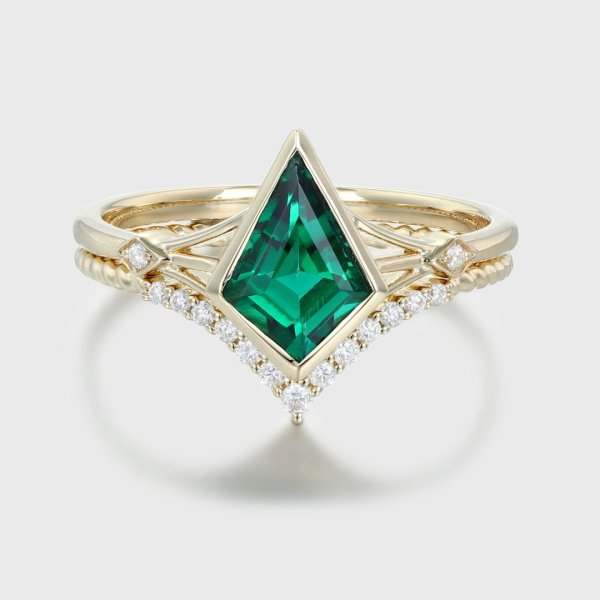
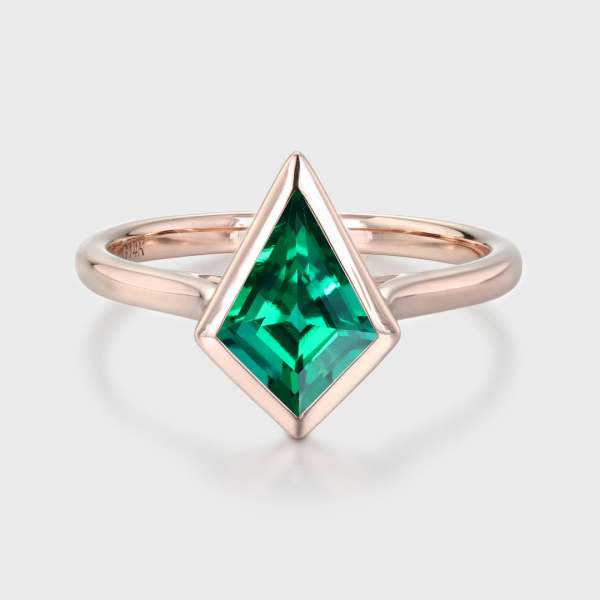
- Bezel setting — metal surrounds the stone entirely
- Halo setting — diamonds around the center stone add protection
- Thick prongs — avoid thin, delicate prongs
Settings to avoid for daily wear:
- Tension settings (puts pressure on the stone)
- Thin prongs on a large stone
- Exposed corners on an emerald-cut stone without protective prongs
Do Lab-Grown Emeralds Hold Their Value?
Lab-grown emeralds do not hold resale value like rare natural emeralds, because they can be produced on demand. However, most jewelry is not an investment — its value lies in the wearing and enjoyment. You get a larger, clearer stone for your budget, which is a trade off many couples happily make.
Why More Couples Are Choosing Lab-Grown Emeralds in 2026
Lab-grown emeralds have shifted from “alternative” to “mainstream” in recent years. Here’s why:
1. Affordability Without Compromise
A lab-grown emerald allows couples to put their budget toward a larger center stone, a more intricate setting, or simply stay within a comfortable range without sacrificing quality.
2. Consistent, Vivid Color
Natural emeralds vary wildly in color. Finding one with that perfect, rich green often requires patience — and a significant budget. Lab-grown emeralds offer consistent, vivid green out of the box.
3. Better Clarity = Better Durability
As mentioned above, fewer inclusions mean less risk of chipping. For an engagement ring worn daily, this is a meaningful practical advantage.
4. Ethical Confidence
Lab-grown emeralds offer:
- Full traceability— you know exactly where it came from
- No mining impact— no habitat disruption, no labor concerns
- Lower carbon footprint— though not zero, significantly less than mining
5. Design Freedom
Because lab-grown emeralds are more affordable and available in consistent quality, jewelers can work with them more freely. This means:
- Larger center stones
- Matched pairs for earrings
- Intricate vintage designs without worrying about hidden inclusions
6. Individuality
In a world where many engagement rings feature a round diamond solitaire, an emerald ring — lab-grown or natural — signals intention and individuality. It says, “We chose this because it means something to us.”
How to Care for Your Lab-Grown Emerald Ring
While lab-grown emeralds are more structurally sound than natural emeralds, they still require proper care.
Do’s
✅ Clean with warm water, mild dish soap, and a soft toothbrush
✅ Remove your ring during:
- Heavy exercise or sports
- Gardening or cleaning with chemicals
- Applying lotions or hairspray
- Sleeping (to prevent snagging)
✅ Store separately from other jewelry (emeralds can scratch softer stones, and harder stones can scratch emeralds)
Don’ts
❌ Never use ultrasonic cleaners — the vibrations can damage the stone, even lab-grown ones
❌ Avoid steam cleaners — rapid temperature changes can cause fractures
❌ Don’t wear during activities with hard impacts — while durable, emeralds can still chip with a sharp blow
Frequency
A gentle cleaning every 2–4 weeks keeps your emerald looking its best. If you wear your ring daily, consider having it professionally inspected once a year to check prongs and general wear.
Final Thoughts: Is Lab-Grown Emerald Right for You?
Lab-grown emeralds are real emeralds. They share the same mineral identity, beauty, and properties as natural emeralds — just with a different origin.
Choose a lab-grown emerald if:
- You want the look of emerald at a more accessible price point
- You prioritize larger size and higher clarity
- You value consistent color without hunting for the “perfect” natural stone
- Ethical sourcing and traceability matter to you
- You’re buying for enjoyment, not investment
Choose a natural emerald if:
- The romance of a stone formed over millions of years matters deeply to you
- You’re seeking a specific provenance (Colombian, Zambian, etc.)
- You view the ring as a potential heirloom with appreciation potential
- Your budget comfortably accommodates the premium
Neither choice is “right” or “wrong.” Both are real emeralds. The difference is alignment — with your priorities, your budget, and what the ring means to you.
FAQ
No. A lab-grown emerald is real emerald. It has the same chemical composition, hardness, and properties as a natural emerald. The only difference is origin.
Yes, with proper equipment. Professional gemologists can distinguish lab-grown from natural by examining growth patterns and inclusions under magnification. This is why lab-grown emeralds come with certification.
Yes. Lab-grown emeralds typically cost 50–80% less than natural emeralds of comparable size and appearance.
Some do, but they typically have far fewer inclusions than natural emeralds. Most lab-grown emeralds are eye-clean (no visible inclusions without magnification).
Yes. Reputable labs like GIA, IGI, and AGS will certify lab-grown emeralds, clearly stating that they are laboratory-created.
They are widely considered a more ethical choice than mined emeralds due to:
- No mining-related environmental damage
- Full supply chain transparency
- No labor concerns associated with artisanal mining