
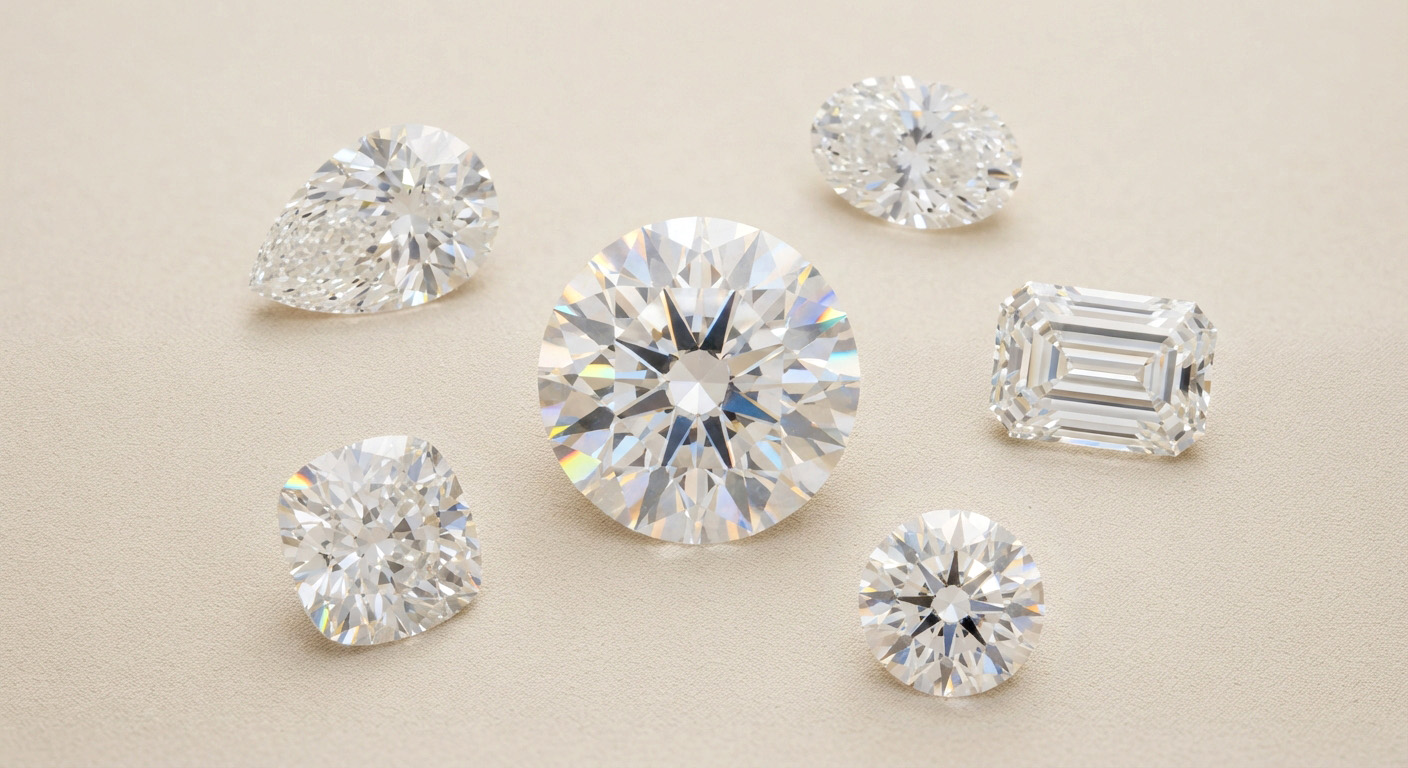
Choosing a moissanite cut is about more than deciding whether you prefer a round or oval stone. The shape and facet pattern affect how a moissanite interacts with light, how large it appears from above, and how the finished Moissanite ring looks on your hand. Some shapes emphasize lively sparkle and rainbow fire. Others create broader flashes, longer lines, or a cleaner geometric appearance. There is no single best moissanite shape for everyone—the right choice depends on what you want your ring to look and feel like.
In this guide, we’ll compare six popular moissanite shapes—Round, Oval, Pear, Emerald, Kite, and Marquise—and explain how each differs in brilliance, visual size, style, and everyday wear.
Moissanite Shape vs. Cut: What Is the Difference?
The terms shape and cut are often used interchangeably, but they describe different aspects of a gemstone.
The shape is the outline you see when looking at the stone from above. Round, oval, pear, marquise, cushion, and emerald are examples of shapes. The cut, meanwhile, refers more broadly to the arrangement and proportions of the facets that control how light enters, moves through, and exits the stone. This facet arrangement plays an important role in how light is reflected and refracted.
For example, an oval moissanite has an oval outline, but its facet arrangement can vary. Emerald cut is different because its long, parallel step facets create a distinctive visual pattern rather than the busier sparkle associated with brilliant-style cuts.
That distinction matters when comparing moissanite because two stones can have similar outlines but noticeably different light performance.
How Does the Cut Affect Moissanite’s Color, Brilliance and Fire?
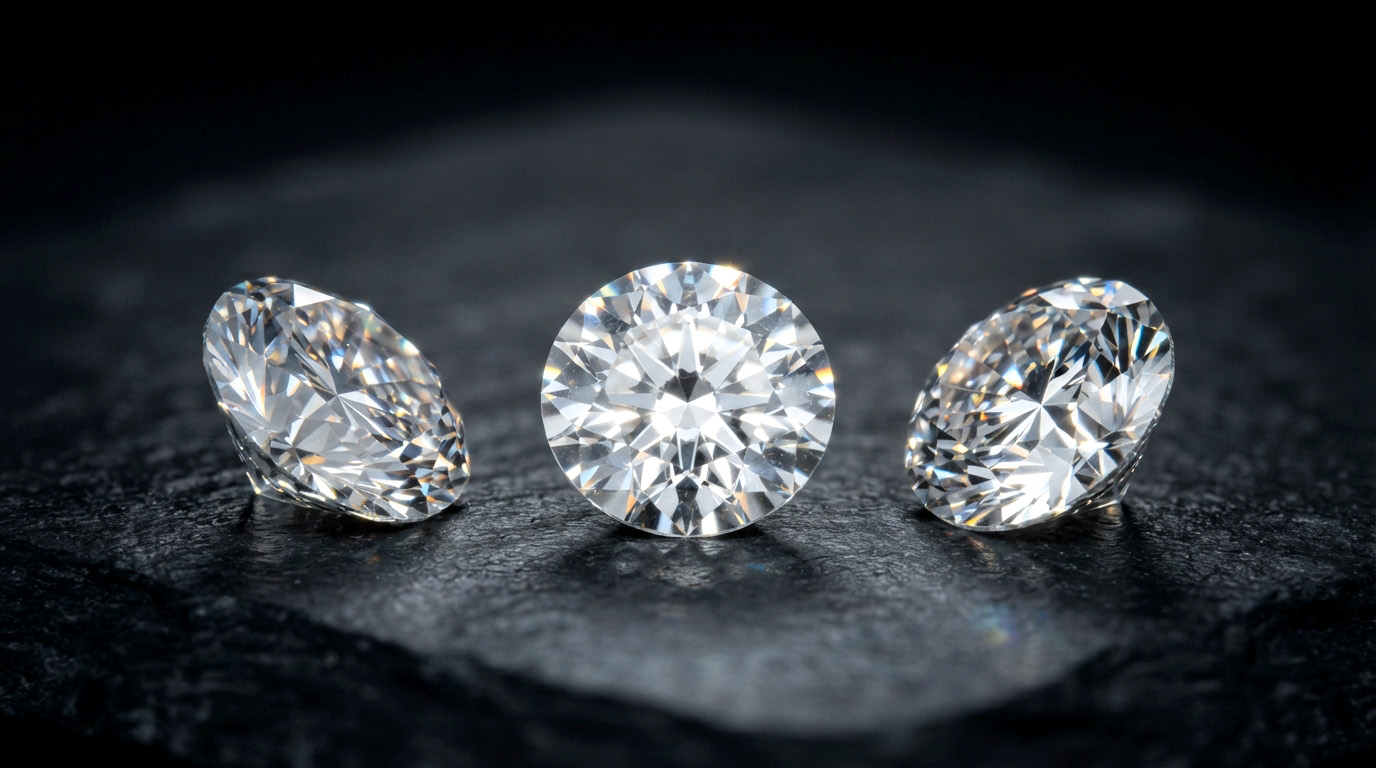
The way a gemstone is cut affects how it interacts with light. Three terms are particularly useful when discussing a stone's appearance: brightness, fire, and scintillation. Brightness refers to the amount of white light reflected back from the stone. Fire describes flashes of spectral color created when light is dispersed. Scintillation refers to the flashes and changing pattern of light and dark areas that appear as the stone, light source, or observer moves.
Brilliant-style faceting generally uses many smaller facets to create a lively pattern of reflections, while step cuts use larger, more linear facets to create broader reflections. GIA notes that brilliant and step cuts can produce noticeably different appearances because of the way their facets are arranged. For moissanite, this distinction is especially noticeable because the material is known for strong brilliance and noticeable fire. As a result, choosing a shape is also choosing a particular way for that sparkle to appear.
Round Cut Moissanite: Maximum Brilliance and Classic Sparkle
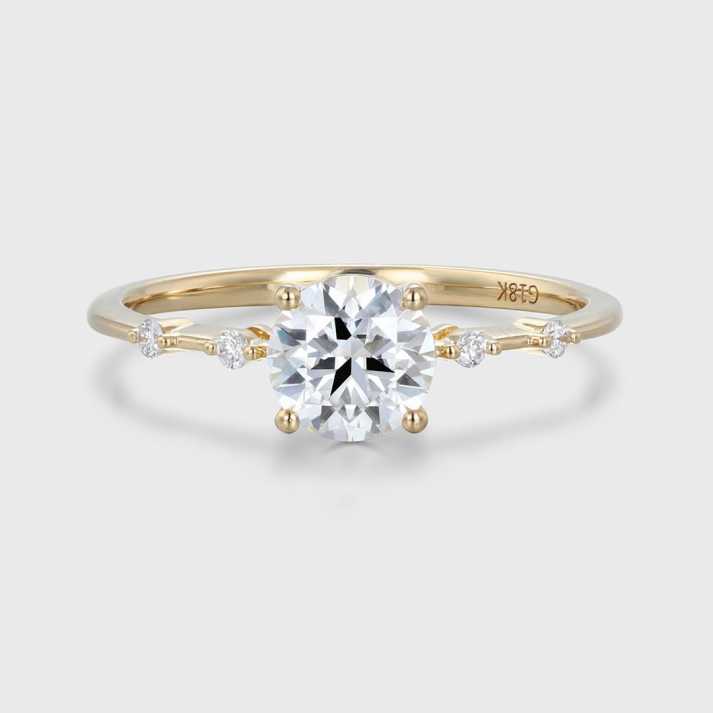
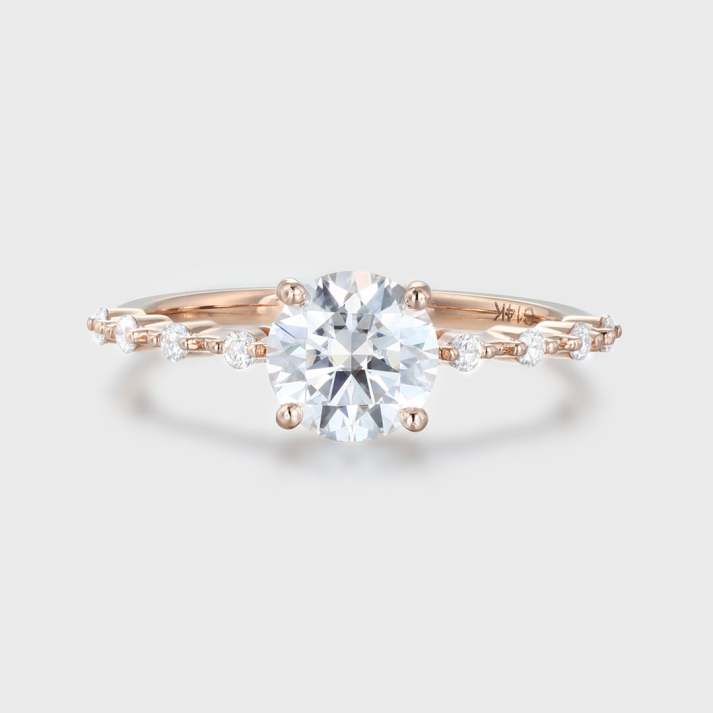
Round Brilliant is a natural choice for anyone who puts sparkle first. Its symmetrical outline and brilliant-style faceting create a lively pattern of reflected light. The combination of brightness, fire, and scintillation gives Round moissanite the classic engagement-ring appearance many shoppers expect from a traditional center stone. Round is also one of the easiest shapes to style. It works naturally with solitaire, halo, pavé, three-stone, and many other ring designs.
Choose Round moissanite if you want:
- A classic and balanced silhouette
- Strong overall sparkle
- A symmetrical appearance
- A versatile shape that works with many settings
If your main question is, “Which moissanite shape should I consider if I want the stone to look especially lively?” Round Brilliant is a logical starting point.
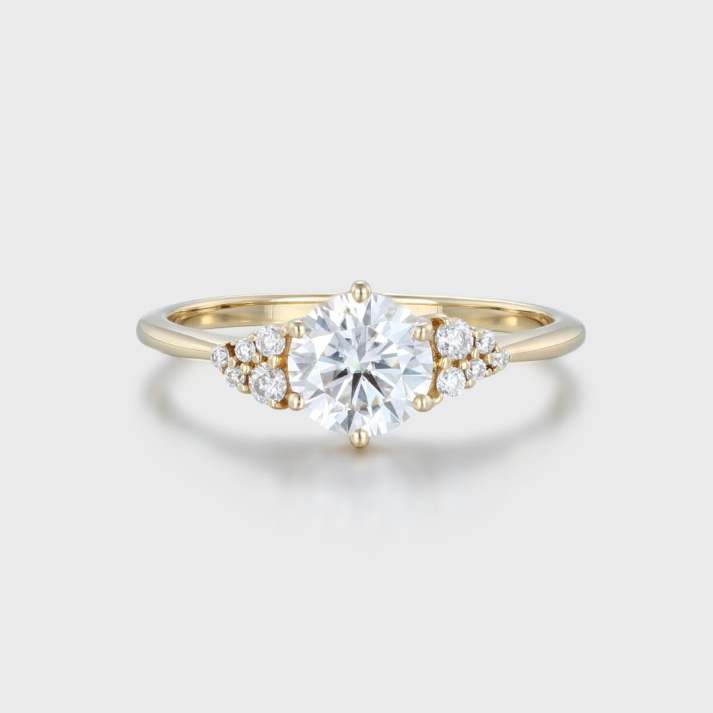
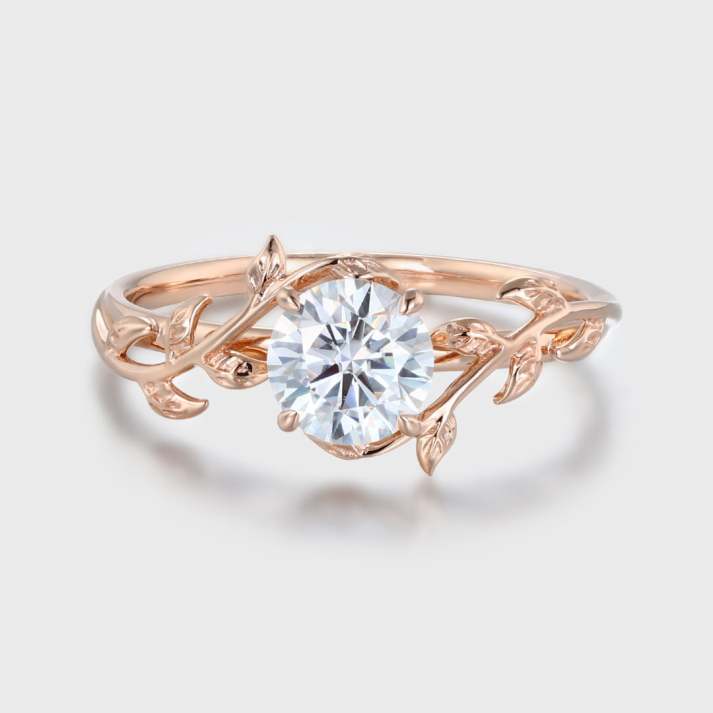
Oval Cut Moissanite: Elongated Look with Plenty of Sparkle
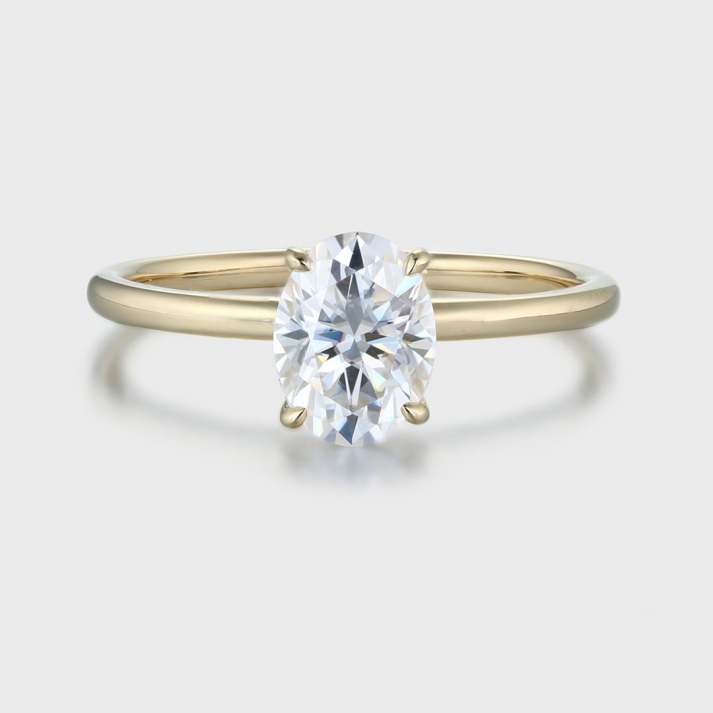
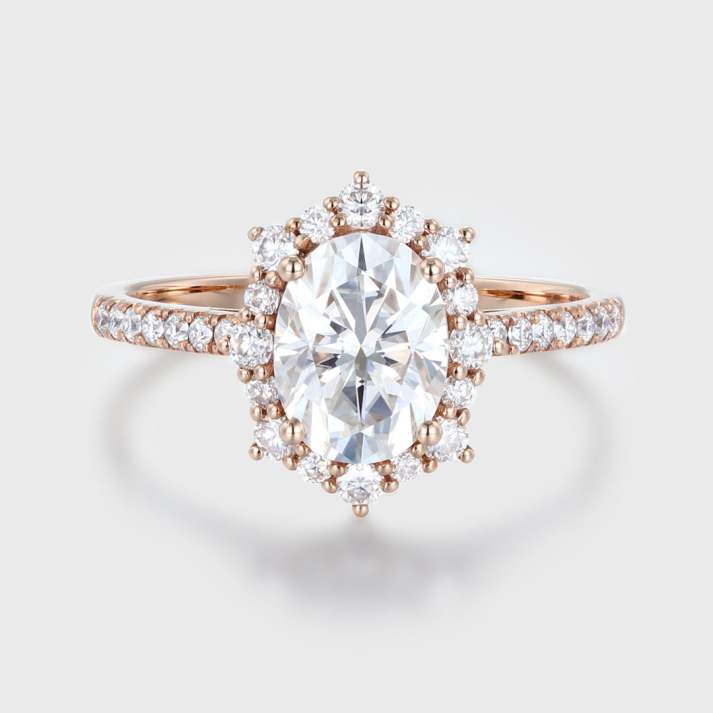
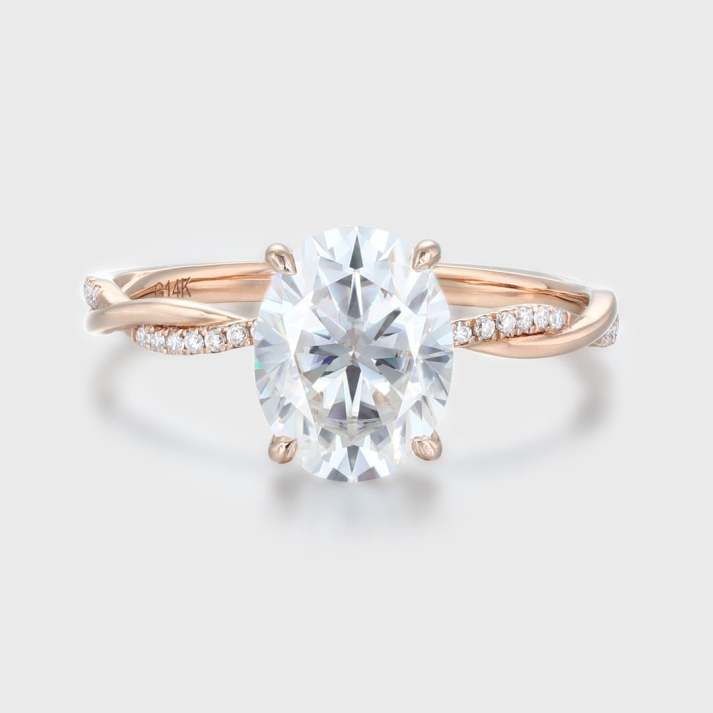
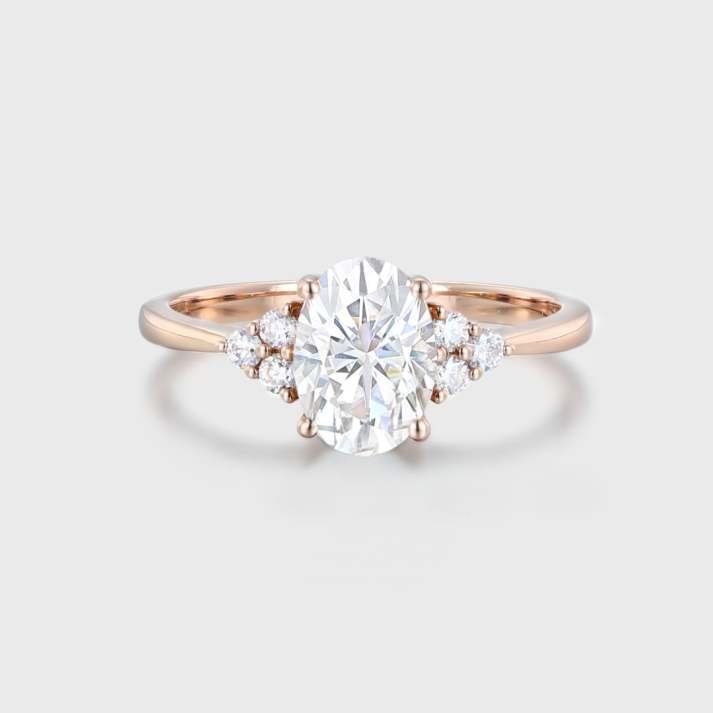
Oval moissanite combines the familiar curves of a Round with a more elongated outline. That longer shape can create greater visual coverage across the finger and may make the center stone appear larger in face-up view compared with a round stone of a similar weight. Oval also retains the lively appearance associated with brilliant-style faceting.
One detail worth paying attention to is the bow-tie effect. Some elongated brilliant-cut stones can show a darker area across the center. The degree of visibility varies from stone to stone, so it is better to evaluate the actual stone or detailed product imagery rather than assume that every Oval will look the same.
Oval is a strong choice if you want a combination of sparkle, elegance, and an elongated silhouette.
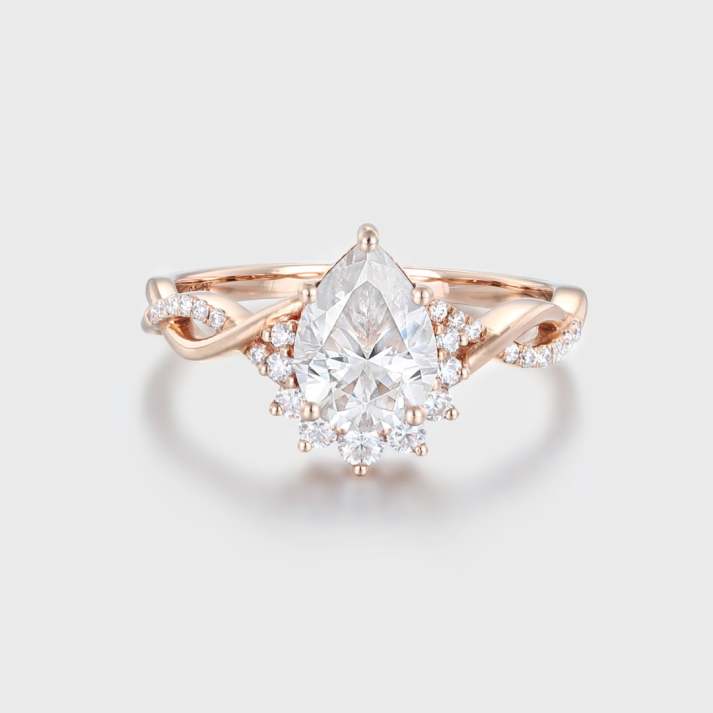
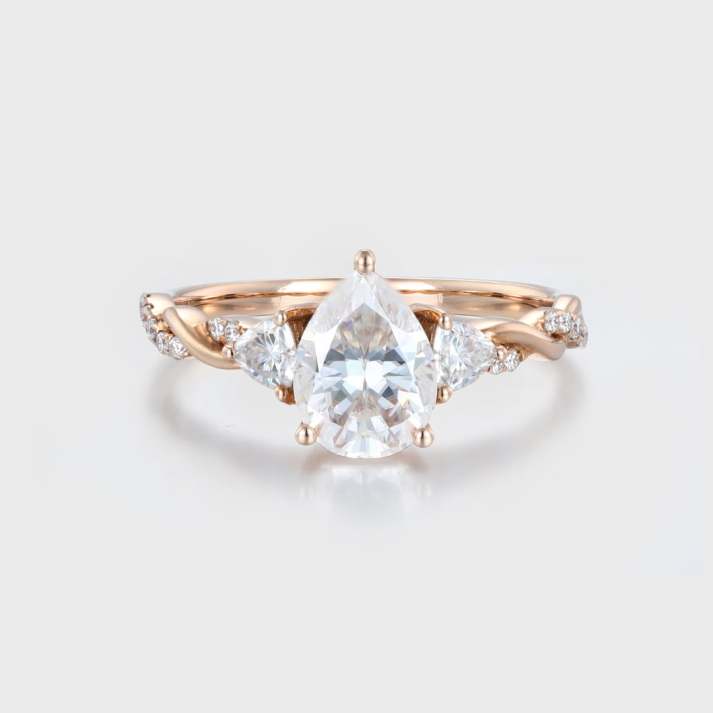
Pear Cut Moissanite: A Distinctive Teardrop Silhouette
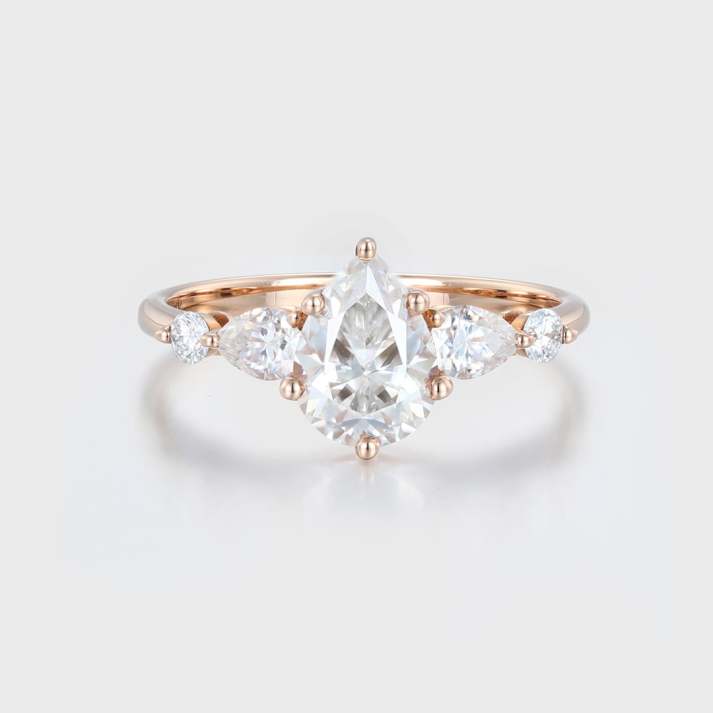
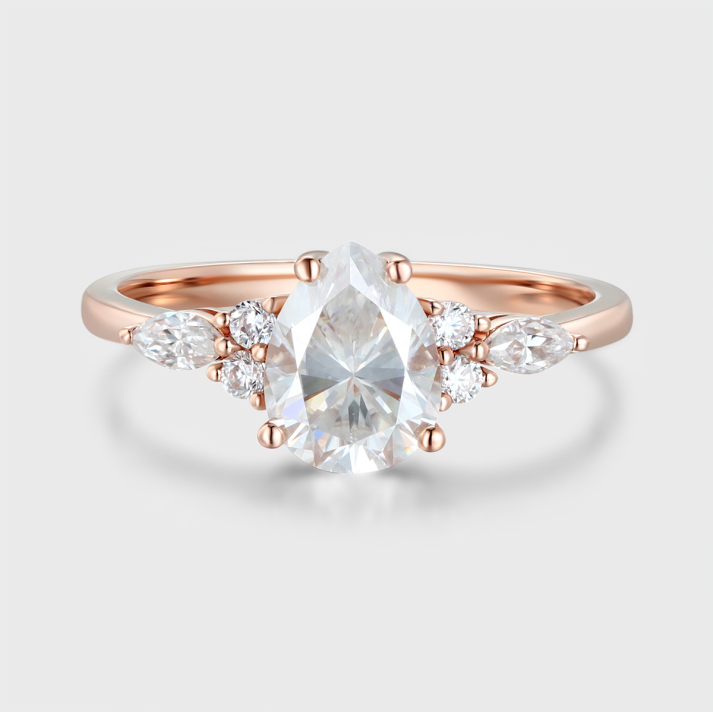
Pear cut, sometimes called a teardrop shape, combines a rounded end with a pointed tip. This gives it a distinctive silhouette that sits visually between the softness of an Oval and the directional character of a Marquise. Its pointed end draws attention along the length of the stone, which can create an elongated appearance on the finger. Pear moissanite also works well in different orientations and settings, from classic solitaires to halos.
There is one practical consideration: the pointed tip needs appropriate protection. A well-designed setting can help shield this area from accidental impact.
Choose Pear if you want a shape that feels more distinctive than Round or Oval while still offering plenty of sparkle.
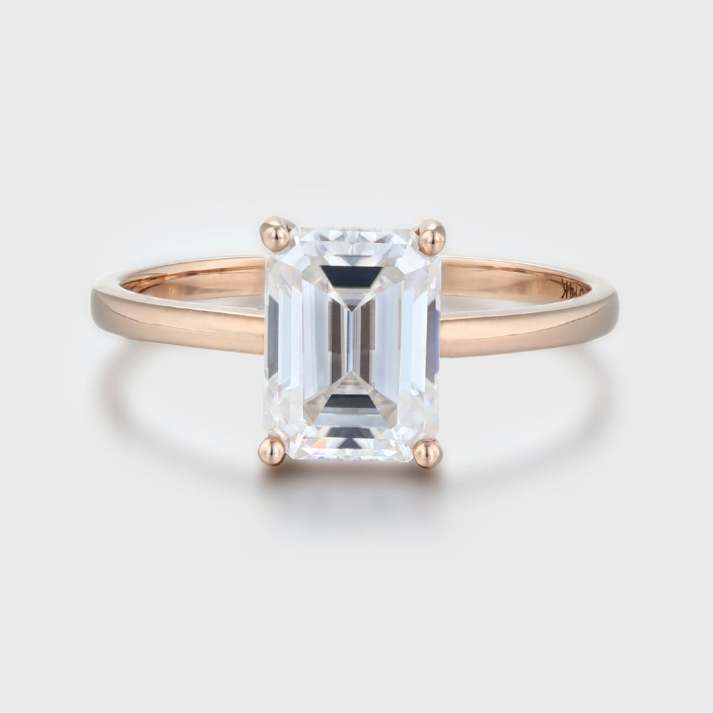
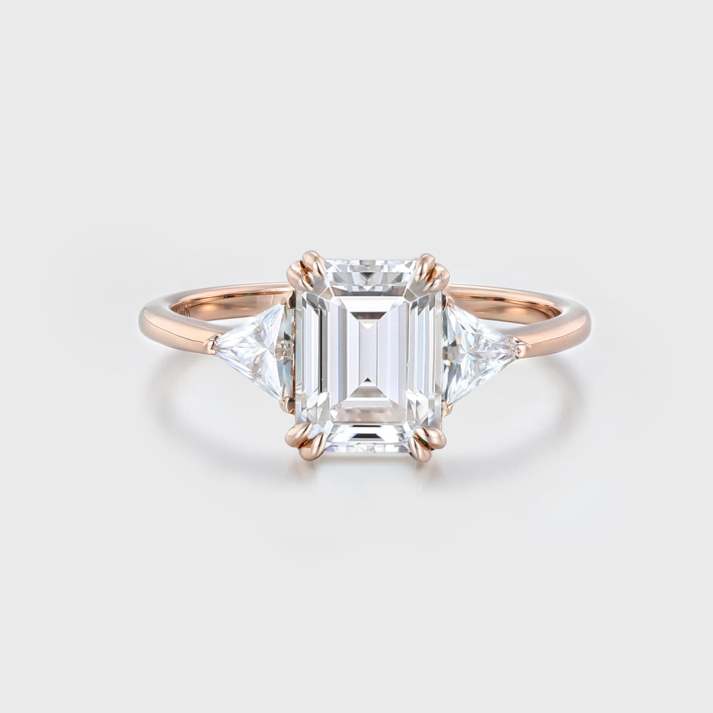
Emerald Cut Moissanite: Clean Lines and Broad Light Flashes
Emerald cut offers one of the biggest visual differences from brilliant-style shapes. Instead of creating a dense pattern of small flashes, its step-cut facets create larger, more linear reflections. The result is a cleaner and more architectural appearance, with broad flashes of light rather than highly fragmented sparkle. Step cuts can also make the stone itself easier to observe because their larger facets tend to reveal color and clarity characteristics more clearly.
For moissanite, Emerald cut can therefore appeal to someone who likes the stone's brightness but prefers a more restrained and structured visual effect rather than intense, highly dispersed sparkle.
Emerald cut works especially well with:
- Minimalist engagement rings
- Art Deco-inspired designs
- Three-stone settings
- Clean, geometric jewelry
If you prefer broad reflections, crisp lines, and a structured look rather than a more intensely fragmented sparkle, Emerald cut may be a strong choice.
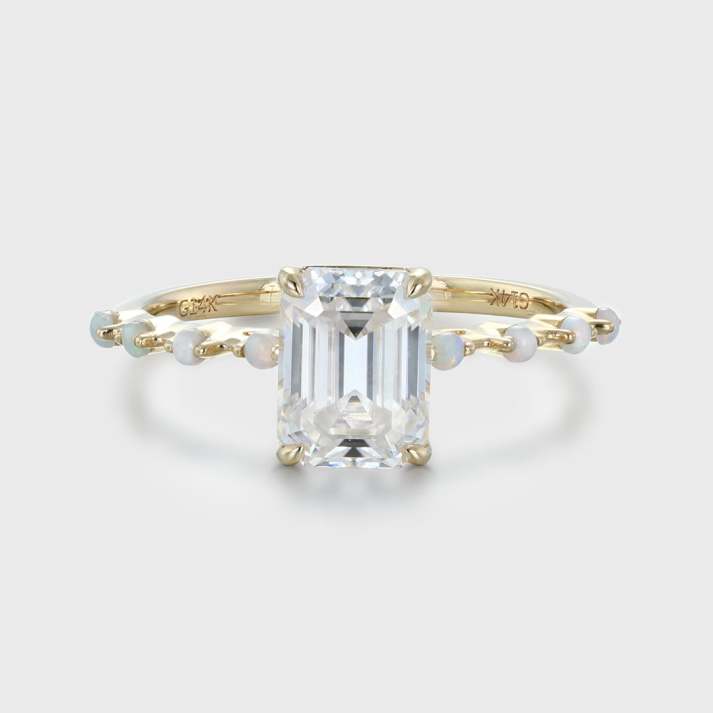
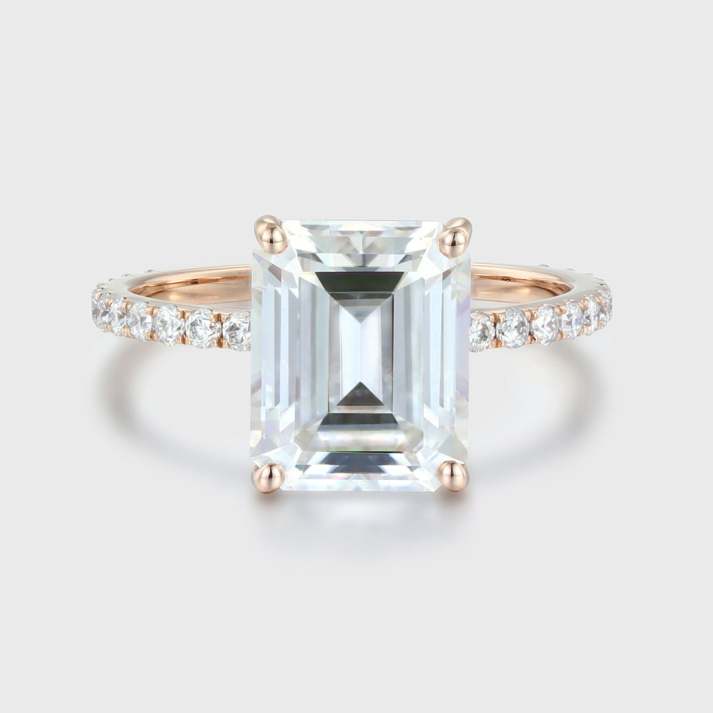
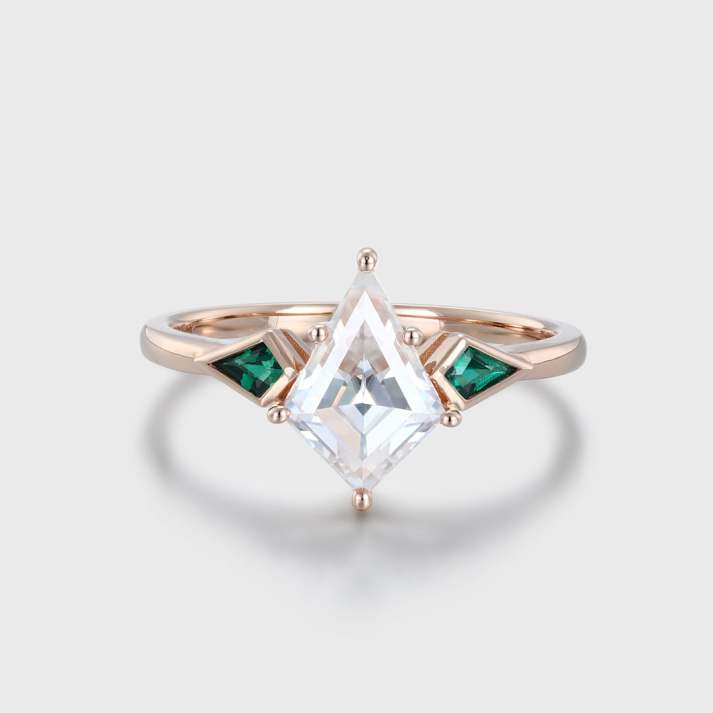
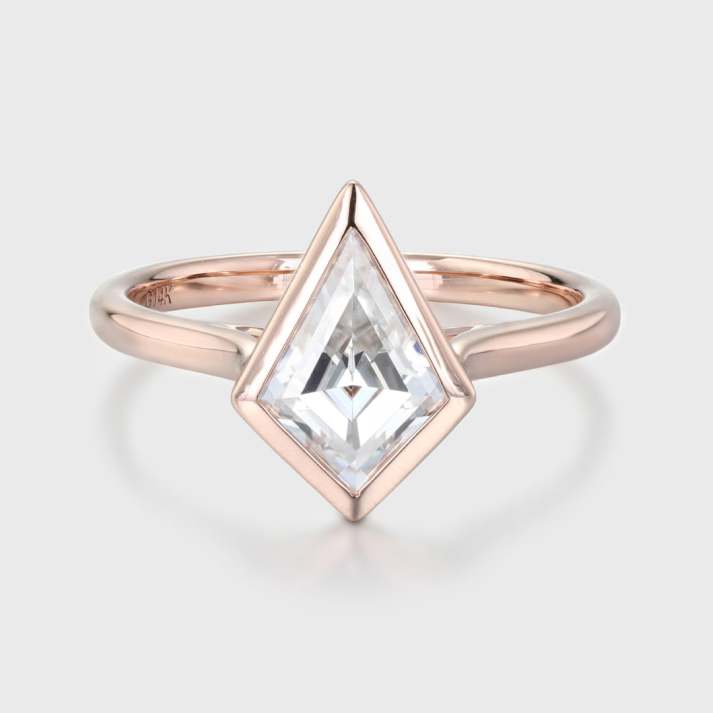
Kite Cut Moissanite: Angular, Unconventional and Full of Character
Kite cut moissanite offers a very different silhouette from the familiar Round, Oval, and Pear. Its four-sided, angular outline resembles a kite, creating a geometric appearance with a strong sense of direction.
Because Kite describes the shape rather than one single standardized facet pattern, the stone's light performance can vary depending on how it is cut. Some Kite stones use brilliant-style faceting, while others may use more geometric or step-style arrangements. This makes the individual stone's proportions and faceting particularly important when evaluating its appearance.
The real appeal of Kite is its silhouette. It can make a ring feel more unconventional without relying on an oversized center stone or elaborate decoration. The angular outline also works naturally with asymmetrical designs, geometric settings, and rings that combine different gemstone shapes.
Because of its angular proportions, Kite is especially interesting for shoppers who view the engagement ring as a piece of personal design rather than simply a traditional center-stone setting.
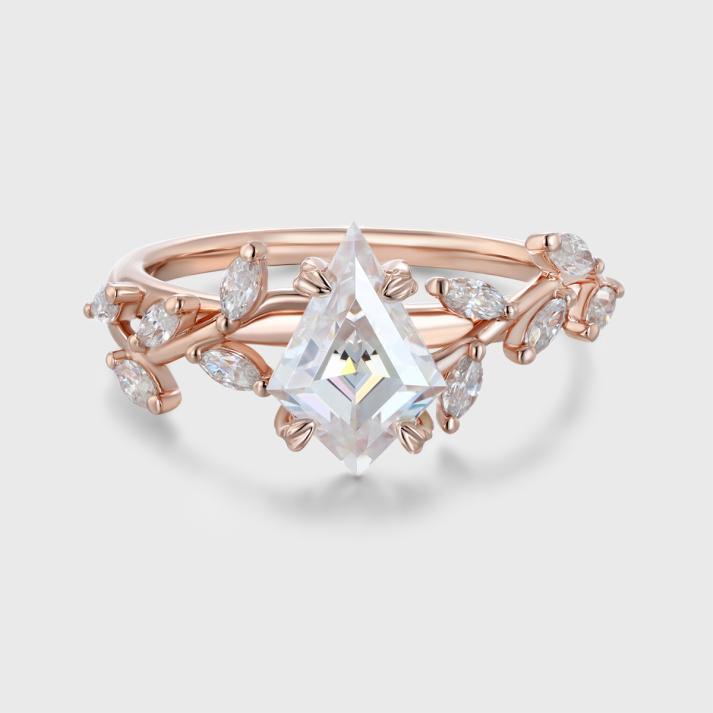
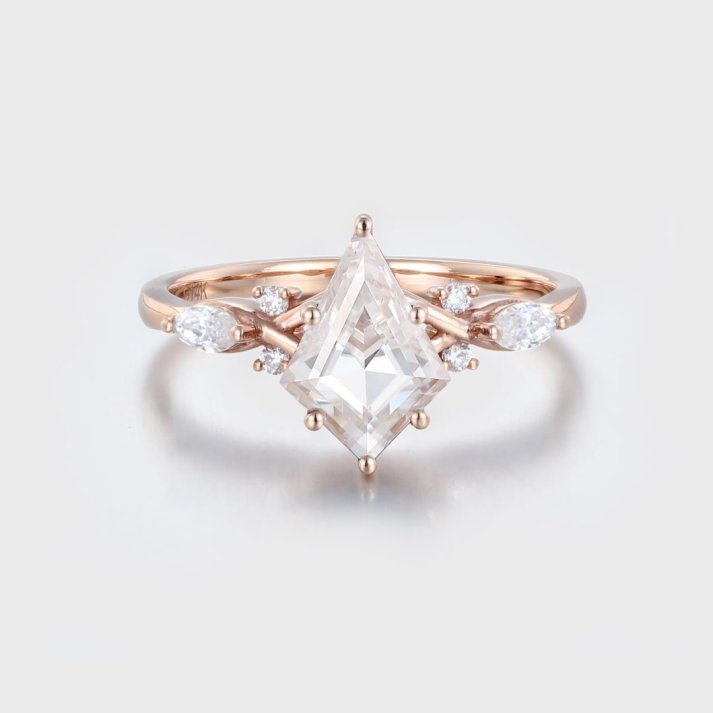
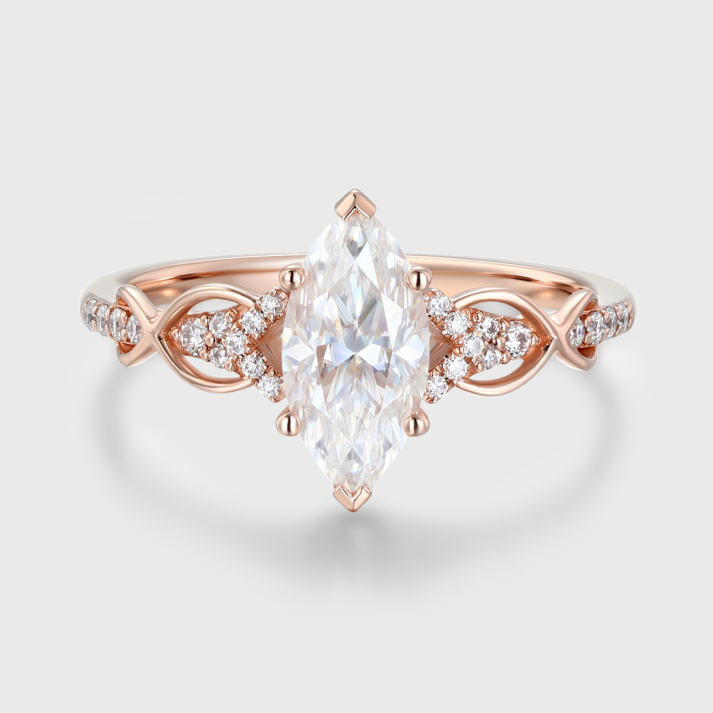
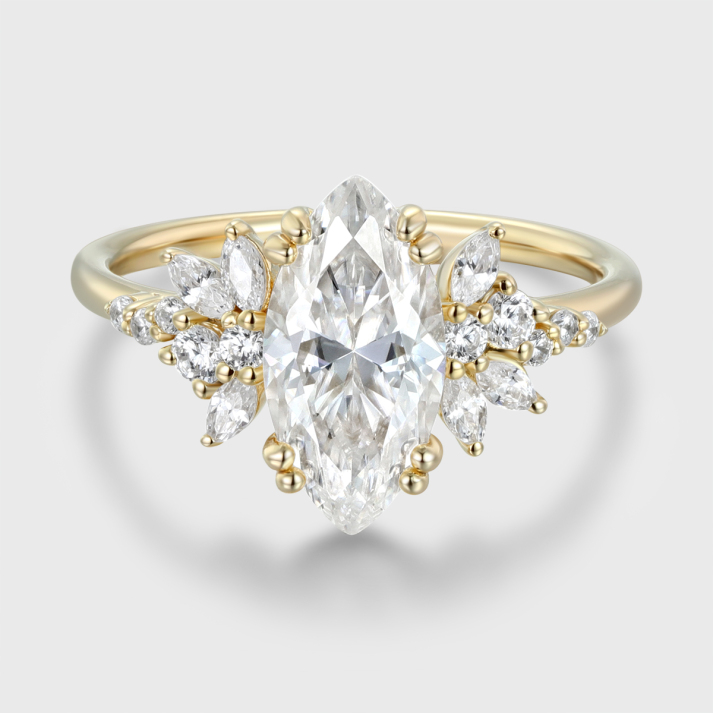
Marquise Cut Moissanite: Long, Dramatic and Visually Larger
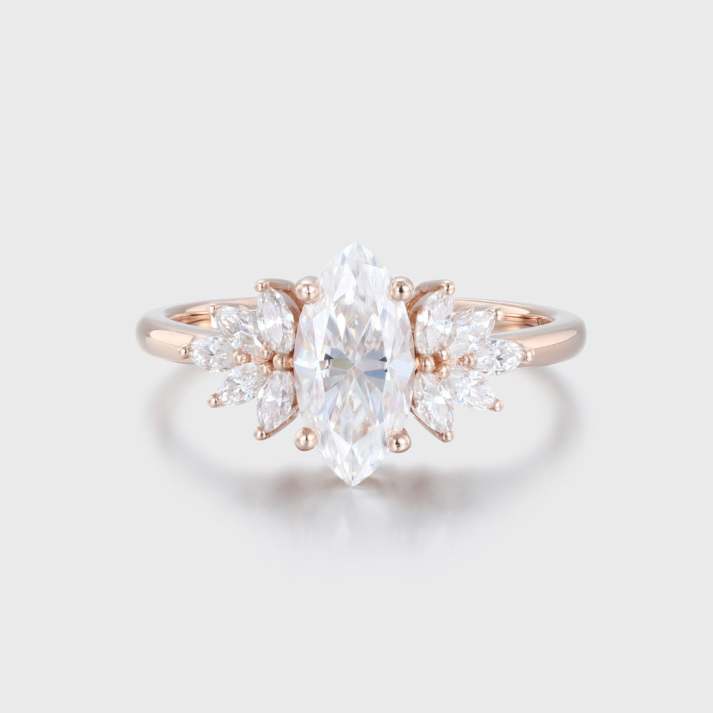
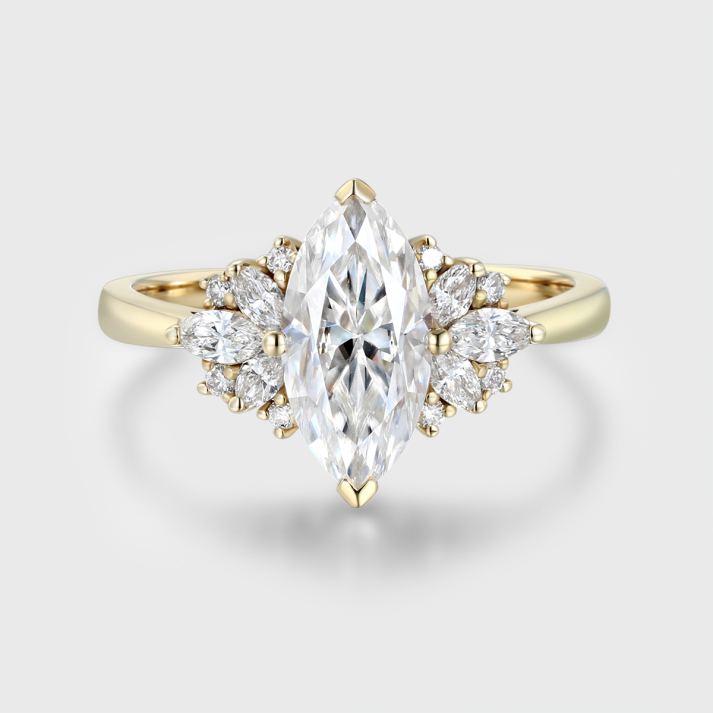
Marquise is one of the most elongated traditional gemstone shapes. Its long body and pointed ends create a dramatic silhouette and can provide substantial face-up coverage. Because of its length, Marquise can make a strong visual statement even without an extremely wide stone. Its shape also naturally draws the eye along the length of the finger.
Like other elongated brilliant-style shapes, Marquise can sometimes show a bow-tie effect, so the actual stone should be examined rather than judged only by its shape name. The pointed ends also deserve attention when choosing a setting. Protective prongs or another secure setting design can help shield the tips during everyday wear.
Other Moissanite Shapes to Consider
Round, Oval, Pear, Emerald, Kite, and Marquise cover a broad range of traditional and distinctive styles, but they are not the only options.
Radiant combines a rectangular or square outline with brilliant-style faceting, making it suitable for someone who wants geometric proportions with active sparkle.
Princess offers a square outline and crisp corners for a clean, modern appearance.
Asscher uses step-cut faceting in a square shape, creating a structured and vintage-inspired look.
Heart has an unmistakable symbolic silhouette and can make a particularly personal choice for an engagement ring.
Other shapes, including Hexagon, Baguette and Trillion, can also be used as center stones or accent stones depending on the ring design. The important point is that shape does not determine quality by itself. The proportions, symmetry, polish, faceting, and overall craftsmanship of the individual stone still matter.
How to Choose the Right Moissanite Cut for You
Instead of asking which moissanite cut is universally “best,” start with the visual effect you want.
If sparkle is your priority: consider Round Brilliant or another well-cut brilliant-style shape.
If you want a longer-looking stone: Oval, Pear, and Marquise all create elongated silhouettes, although their personalities are quite different.
If you prefer clean, architectural reflections: Emerald or Asscher can provide the broader flashes associated with step cuts.
If you want a distinctive geometric silhouette: Consider Kite. Its angular four-sided outline can create a more unconventional look and works particularly well with modern, asymmetrical, or artistic ring designs.
If you want a distinctive silhouette: Pear and Marquise make a stronger stylistic statement than traditional Round.
Also consider the setting. A stone with pointed corners or tips, such as Pear or Marquise, needs appropriate protection. The relationship between the center stone and the setting can be just as important to the finished appearance as the shape itself.
Explore: 4 Best Moissanite Cuts for an Engagement Ring
Moissanite Cut Comparison: Which Shape Matches Your Priorities?
|
Shape |
Light Appearance |
Visual Effect |
Style |
Considerations |
|
Round |
Strong brilliance and fire |
Balanced, symmetrical |
Classic |
Best for sparkle-focused buyers |
|
Oval |
Lively brilliance |
Elongated, larger-looking |
Elegant, modern |
Check for bow-tie |
|
Pear |
Strong sparkle |
Elongated, directional |
Romantic, distinctive |
Protect the pointed tip |
|
Emerald |
Broad, clean flashes |
Long, open appearance |
Sophisticated, geometric |
Color and clarity can be easier to see |
|
Kite |
Depends on facet arrangement |
Angular and directional |
Modern, artistic |
Evaluate proportions and faceting |
|
Marquise |
Strong brilliance |
Long, dramatic coverage |
Bold, distinctive |
Check bow-tie and tip protection |
The goal is not to find the shape with the highest score. It is to find the shape whose light pattern, proportions, and silhouette match what you actually want to see on your hand.
Final Thoughts
The right moissanite cut depends on the kind of sparkle and silhouette you prefer. Round offers a classic, highly brilliant look; Oval provides elongated elegance; Pear and Marquise create more directional silhouettes; Emerald emphasizes broad, architectural reflections; and Kite brings a more angular and unconventional character. Once you know which visual characteristics matter most to you, comparing Moissanite rings by shape becomes much easier. At Oveela, you can explore different Moissanite styles and choose a ring based not only on the gemstone itself, but also on the setting and overall design that best fits your personal style.
Frequently Asked Questions About Moissanite Cuts
There is no single best cut for every moissanite engagement ring. Round Brilliant is a strong choice for maximum sparkle, while Oval, Pear, Marquise, Emerald, and Kite offer different combinations of brilliance, proportions, silhouette, and style.
Round Brilliant is generally a strong choice when lively brilliance and fire are the main priorities. However, the appearance of an individual stone also depends on its proportions, facet arrangement, symmetry, polish, and lighting.
Moissanite is known for noticeable fire because its optical properties allow significant dispersion of light into spectral colors. How much fire you see also depends on the cut and lighting conditions.
Emerald cut produces a different type of sparkle rather than simply having no sparkle. Its step-cut facets create broader, more mirror-like reflections, while brilliant-style cuts tend to produce more numerous, fragmented flashes of light.
Look at the stone's proportions, symmetry, polish, facet pattern, dimensions, and how the stone works with the ring setting. For pointed shapes such as Pear and Marquise, the protection provided by the setting is also important. For less conventional shapes such as Kite, the stone's proportions and orientation can have an especially strong effect on the finished ring.