
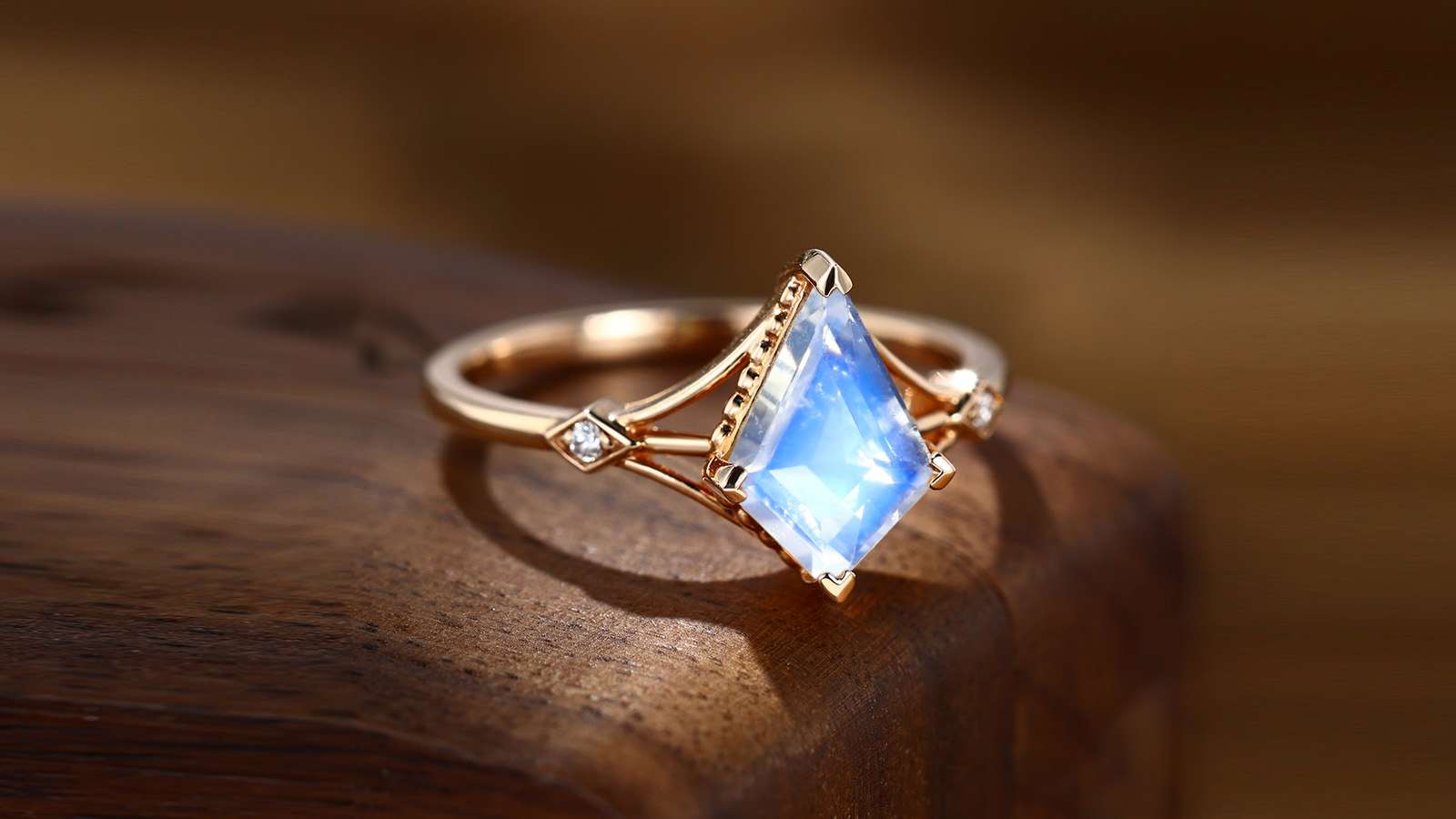
Moonstone is a gemstone known for a soft, floating glow that seems to move just beneath its surface. Unlike gemstones valued primarily for intense color or sharp brilliance, moonstone is admired for adularescence—a luminous optical effect that can appear blue, white, silver, or rainbow-like as the stone moves in the light.
That distinctive glow has made moonstone a popular choice for rings, pendants, earrings, and other jewelry, as well as a meaningful June birthstone. But moonstones can look dramatically different from one another. Color, transparency, inclusions, cut, size, and the strength of the adularescence all affect how a stone looks and how desirable it may be.
This guide explains what moonstone is, how its glow works, how to judge quality, how to choose moonstone jewelry, and how to care for it—so you can make a more informed choice before buying.
What Is Moonstone?
Moonstone is a member of the feldspar mineral group. Its defining characteristic is not simply its body color, but the glowing optical phenomenon known as adularescence.
A moonstone may have a colorless, white, gray, peach, green, brown, or other body color, while the light floating through the stone may appear blue, white, silver, or rainbow-like. This is why two moonstones with similar dimensions can have very different appearances. One may look relatively ordinary in direct light, while another seems to have a bright blue glow suspended inside the stone.
Moonstone is also a traditional June birthstone, alongside pearl and alexandrite. Its association with the moon has contributed to centuries of symbolism surrounding intuition, femininity, love, and new beginnings.
For a deeper look at these symbolic associations, see OVEELA's guide to Moonstone Ring Meaning: Symbolism, Love & New Beginnings.
What Makes Moonstone Glow? Understanding Adularescence
Adularescence is the feature that makes moonstone immediately recognizable.
Rather than producing the sharp flashes associated with a faceted diamond, moonstone creates a softer visual effect. Light enters the stone and interacts with its internal structure, producing a glow that appears to float beneath the polished surface. The effect can change as you move the stone or change the angle of the light. This movement is part of what makes moonstone jewelry feel different from conventional sparkling gemstones.
The strongest and most attractive examples often show a distinct, well-defined sheen rather than a dull or barely visible haze. Blue adularescence is particularly sought after, although white, silver, and rainbow effects can also be beautiful.
When evaluating moonstone, therefore, do not judge it only by its body color. Look at how the light behaves inside the stone.
Moonstone Colors: White, Blue, Gray, Peach & More
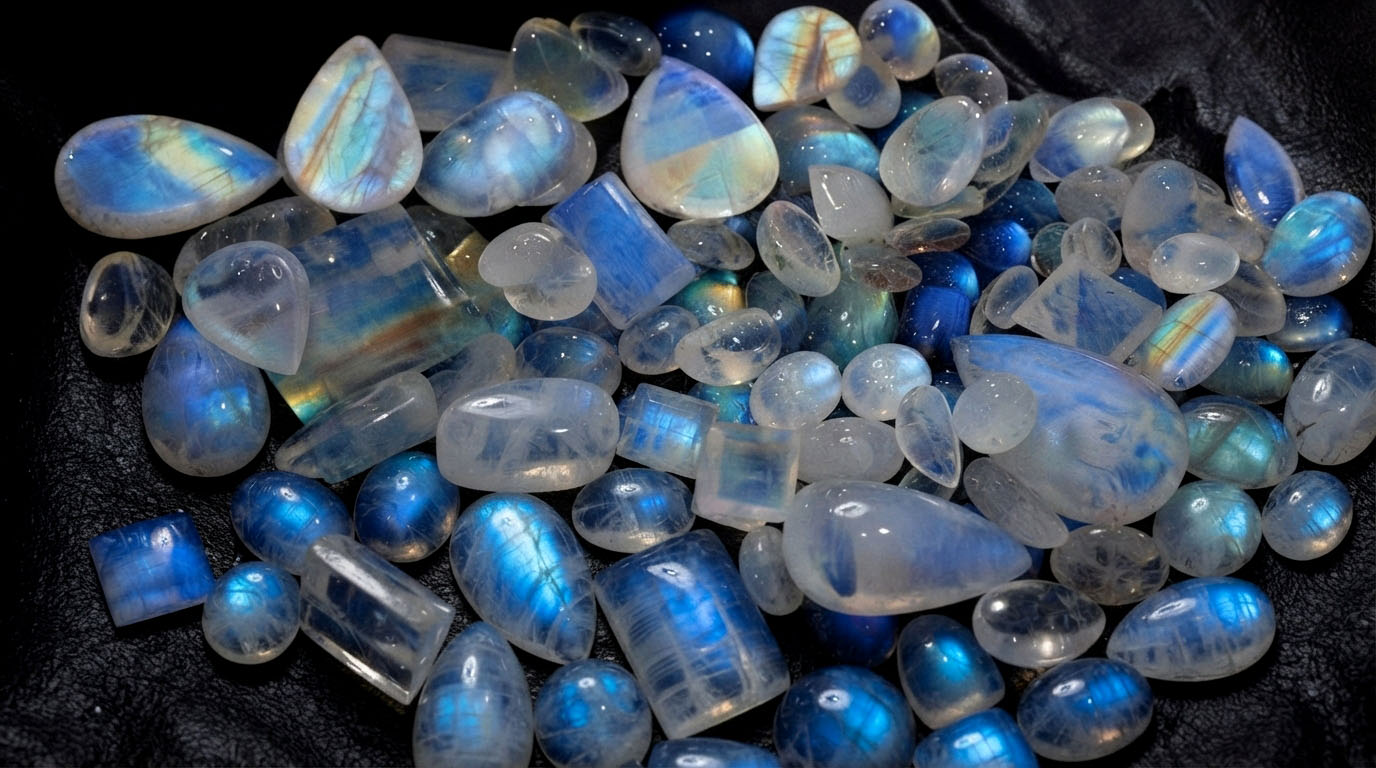
Moonstone does not come in just one color.
Common body colors include:
- Colorless or nearly colorless
- White
- Gray
- Peach
- Yellow
- Green
- Brown
The body color and adularescence should be considered separately. A white or nearly colorless body with a strong blue sheen is traditionally among the most desirable combinations. However, a peach or gray moonstone with an attractive glow can still be an excellent choice, especially if its color complements the jewelry design.
This distinction is important when shopping online. A product described simply as a “blue moonstone” may refer to the body color, the adularescence, or a combination of both. Instead of choosing based on the color name alone, look closely at the product photographs and determine whether the stone has the type of glow you actually prefer.
How Moonstone Quality Is Judged
Moonstone does not have a simple grading system equivalent to the standardized 4Cs commonly used for diamonds. Its quality is better understood by looking at several characteristics together.
1. Adularescence
The strength, color, and distribution of the sheen are among the most important factors. A strong, attractive blue sheen is especially desirable. The effect should ideally appear reasonably centered and visible across the stone rather than disappearing completely with a slight change in viewing angle.
2. Transparency
Higher-quality moonstones are often relatively transparent or translucent, allowing light to travel through the stone and create a stronger optical effect. Completely opaque material can still be attractive, particularly in casual or artistic jewelry, but it generally does not display the same depth as a more transparent stone.
3. Inclusions
Natural moonstone commonly contains internal characteristics. A few inclusions do not automatically mean that a stone is poor quality. The more important question is whether those inclusions interfere with transparency, durability, or the visibility of the adularescence.
For moonstone, overall visual appearance matters more than simply trying to find a completely flawless stone.
4. Body Color
Color should complement the optical effect rather than compete with it. Colorless or lightly colored material can make a blue sheen particularly easy to see, while gray, peach, green, and other body colors create a different aesthetic.
5. Cut and Polish
The shape should allow the moonstone's optical effect to be displayed effectively. A well-polished surface and balanced proportions are particularly important for cabochon stones.
6. Size
Moonstone is often evaluated by its measurements in millimeters as well as by carat weight. Two stones with the same carat weight can have different face-up dimensions depending on their proportions. For jewelry, compare the actual length and width rather than assuming that a higher carat weight automatically means a visibly larger stone.
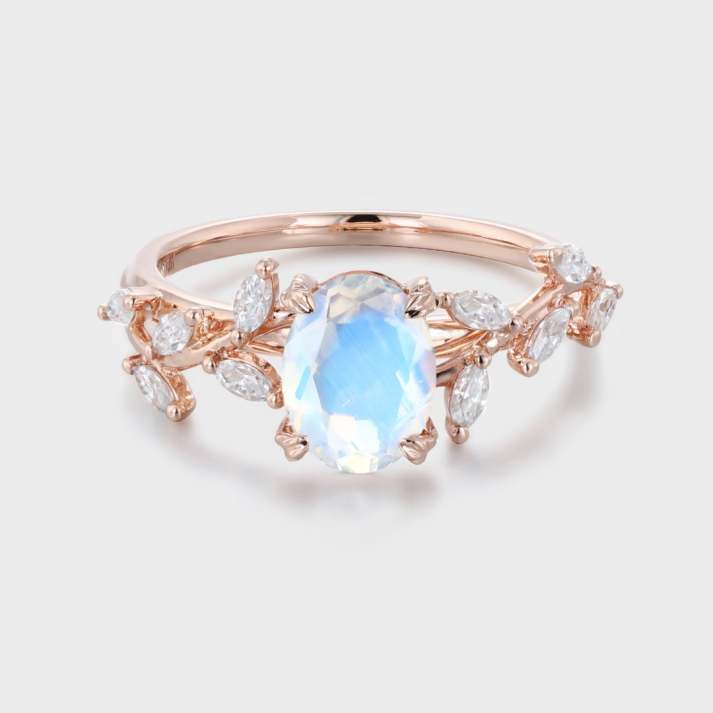
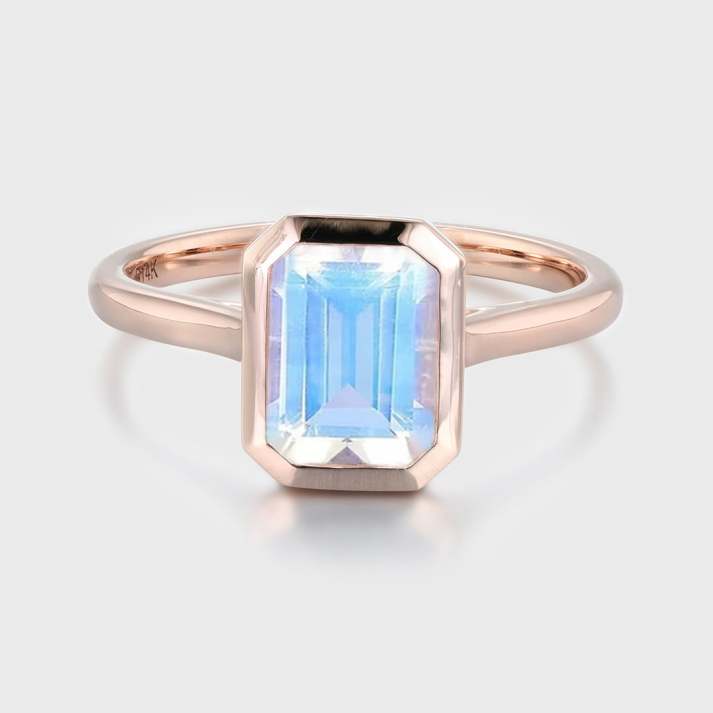
Moonstone Cuts: Why Cabochons Are So Common
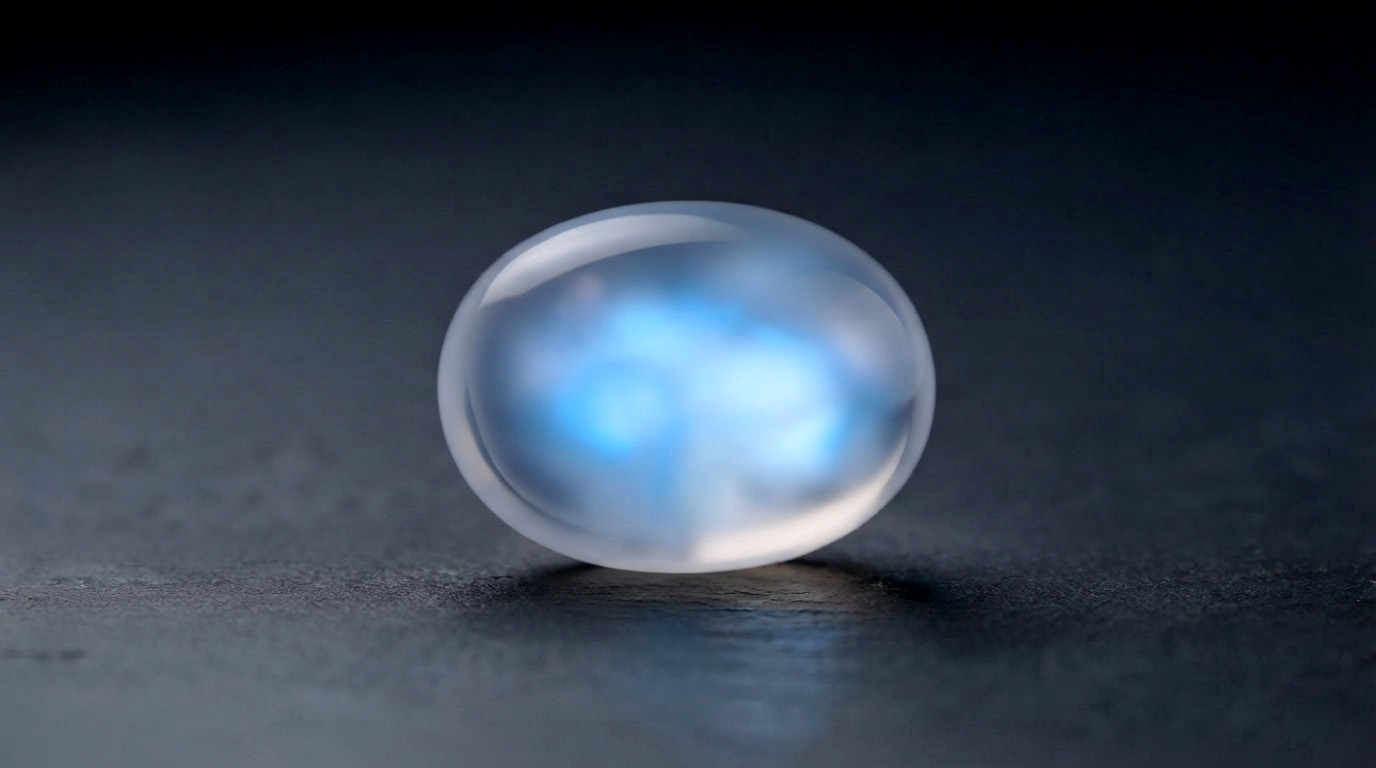
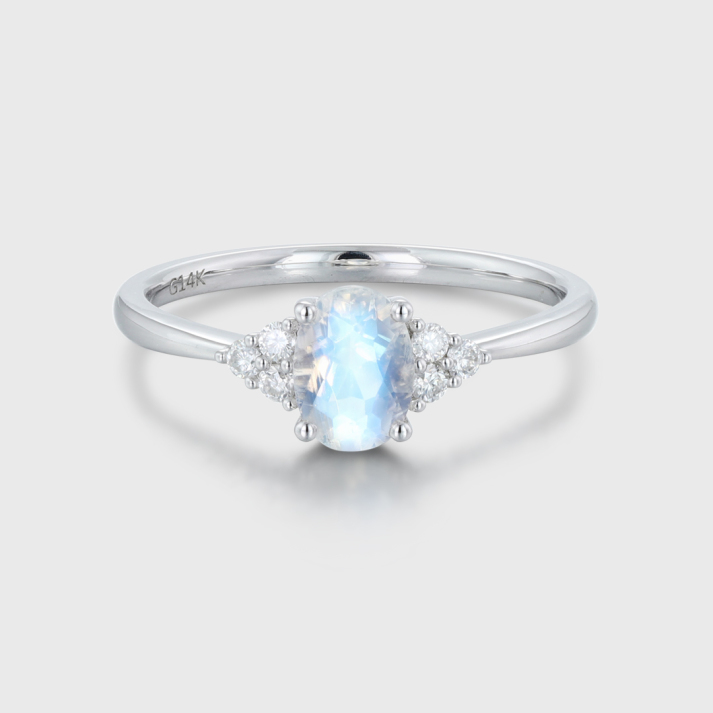
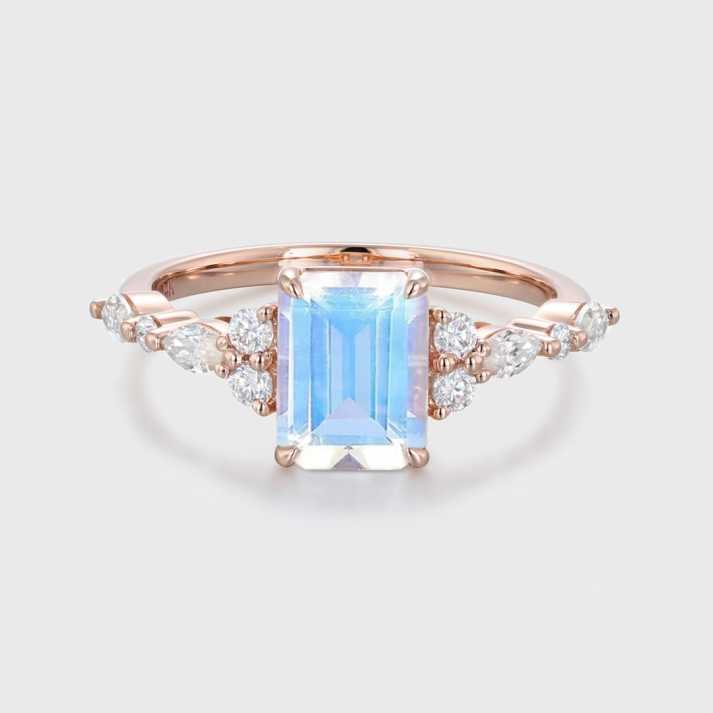
The classic moonstone cut is the cabochon: a polished stone with a smooth, curved surface rather than traditional facets. This shape is particularly effective because the rounded dome allows the adularescence to move across the surface and creates the characteristic moonlit appearance.
Oval and round cabochons are especially common, although moonstone can also be shaped into cushions, squares, pears, and other forms. Faceted moonstone exists as well, but it creates a different look. Facets can add sparkle and geometric definition, while a cabochon emphasizes the stone's soft internal glow.
For a traditional moonstone design, the quality of the dome, symmetry, polish, and visible sheen can matter more than maximizing facet brilliance.
Is Moonstone a Good Stone for Jewelry?
Moonstone can be an excellent jewelry gemstone when its strengths and limitations are understood.
Its biggest advantage is visual character. The soft adularescence gives moonstone a subtle, atmospheric appearance that works especially well with romantic, vintage-inspired, celestial, and nature-inspired designs.
Its main limitation is durability. Moonstone generally falls around 6 to 6.5 on the Mohs hardness scale, making it softer than sapphire, ruby, and diamond. It can therefore be scratched or damaged more easily, particularly when exposed to hard impacts or abrasive materials.
That does not make moonstone unsuitable for jewelry. It simply means that the jewelry should be chosen and worn with its durability in mind.
Moonstone for Engagement Rings: What You Should Know
Moonstone engagement rings appeal to people who want something more distinctive than a traditional diamond-centered design. The stone's soft glow can create a romantic and understated appearance, especially when paired with yellow gold, white gold, or nature-inspired settings.
However, an engagement ring receives more daily wear than many other types of jewelry. Because moonstone is relatively soft, the setting should provide appropriate protection, and the wearer should be comfortable taking the ring off during activities that could expose it to impact, scratching, or harsh chemicals.
If you are specifically considering moonstone for an engagement ring, OVEELA's detailed guide Is Moonstone Good for an Engagement Ring? Pros, Cons & Buying Tips goes deeper into the advantages, limitations, and practical considerations.
Moonstone Meaning, Symbolism & June Birthstone
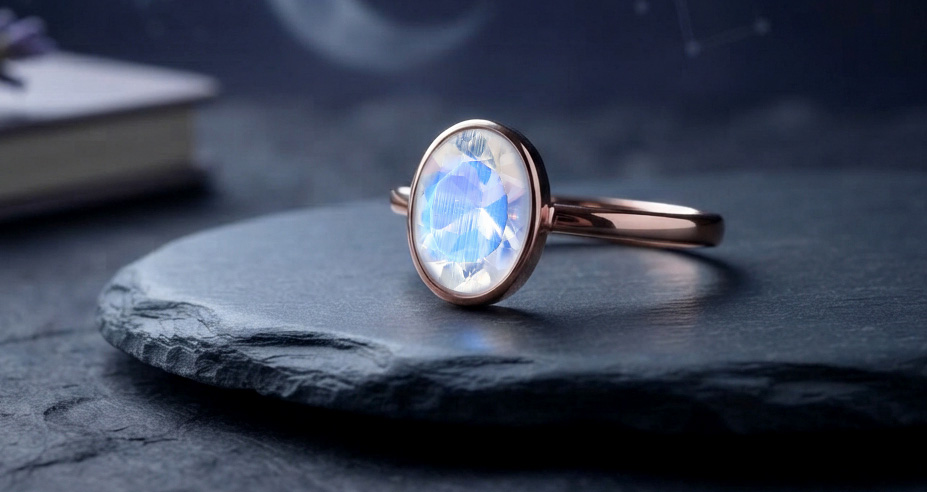
Moonstone is one of the traditional birthstones for June — but its appeal goes far beyond birthstones. For centuries, the stone's shifting glow has been linked to the moon, inspiring associations with intuition, femininity, emotion, and inner reflection.
Today, moonstone is a popular choice in jewelry symbolizing love, new beginnings, and emotional connection — making it a meaningful gift for anniversaries, new chapters in life, or someone starting a new journey. These meanings are cultural and symbolic, not scientific properties of the stone. Whether or not you connect with the symbolism, its long history can add personal significance to a piece of jewelry.
For a more detailed discussion of moonstone symbolism and its connection with relationships and new beginnings, see OVEELA's Moonstone Ring Meaning guide.
How to Choose a Moonstone: A Practical Buying Checklist
If you are comparing moonstones, start with the stone's appearance rather than its size or price.
First, look at the adularescence. Is the glow obvious and attractive, or is it barely visible? Does it appear blue, white, silver, or rainbow-like?
Second, check transparency. A more transparent stone can allow the light effect to appear deeper and more dimensional.
Third, examine inclusions. Natural inclusions are not necessarily a problem, but avoid stones where internal fractures or heavy cloudiness significantly reduce the visual effect.
Fourth, consider body color. Choose the color that works with your personal taste and the metal and design of the jewelry.
Fifth, check the measurements. Compare the actual dimensions rather than relying only on carat weight.
Finally, consider the setting and seller. This is particularly important for moonstone rings because the stone is more vulnerable to scratches and impact than harder engagement-ring gemstones. A reputable seller should provide clear product photographs, accurate material information, reasonable policies, and enough information for you to understand what you are purchasing.
The goal is not to find the “perfect” moonstone according to one universal grading scale. It is to find a stone whose glow, color, transparency, proportions, and setting work together.
How to Care for Moonstone Jewelry
Moonstone requires more care than harder gemstones. Remove moonstone jewelry before activities that could expose it to hard impact, abrasive surfaces, or household chemicals. Avoid storing it directly against harder gemstones, which can scratch its surface.
For routine cleaning, use lukewarm water, mild soap, and a very soft cloth or brush. Rinse carefully and dry the jewelry completely before storing it.
Keep moonstone pieces separately in a soft pouch or lined jewelry box, particularly if you own diamond, sapphire, or other harder gemstone jewelry.
If your moonstone ring is worn regularly, periodically inspect the setting as well as the gemstone. A secure setting is an important part of protecting a relatively delicate center stone.
For a more detailed explanation of scratching, everyday wear, and cleaning, read OVEELA's Does Moonstone Scratch Easily? A Complete Guide to Moonstone Ring Durability & Care.
Moonstone Jewelry Styles to Consider
Moonstone's soft optical effect gives designers considerable freedom.
A solitaire moonstone ring keeps attention on the stone itself and allows the adularescence to become the focal point.
A nature-inspired setting can emphasize moonstone's connection with organic forms, leaves, flowers, vines, and celestial motifs.
A vintage-inspired design works particularly well with cabochon moonstone because the stone's appearance recalls earlier jewelry styles that favored unusual colored gems and soft, luminous effects.
Moonstone also works beautifully in pendants and earrings, where the gemstone is less exposed to repeated impact than it may be in a ring.
For shoppers who want a moonstone piece with a more personal design, customization can also allow the stone shape, metal color, setting, and surrounding details to work together rather than treating the gemstone as an isolated element.
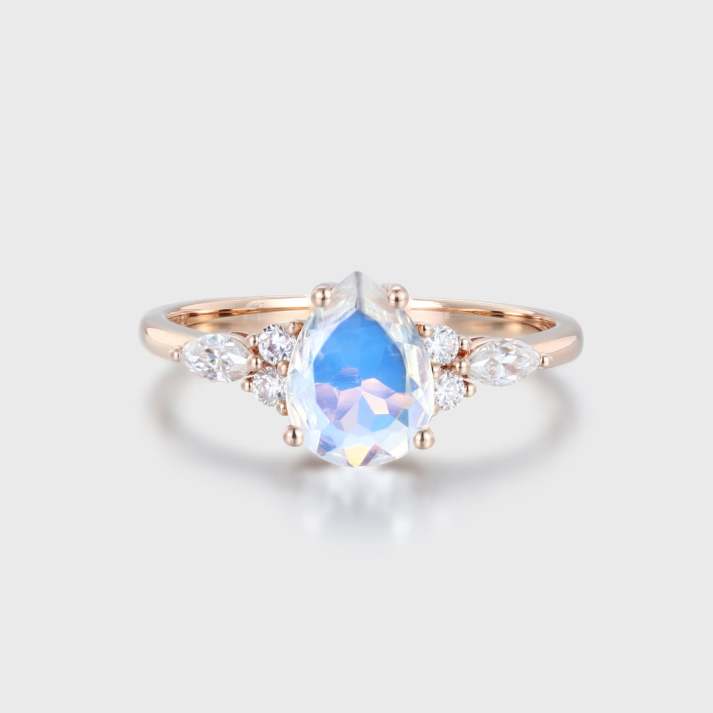
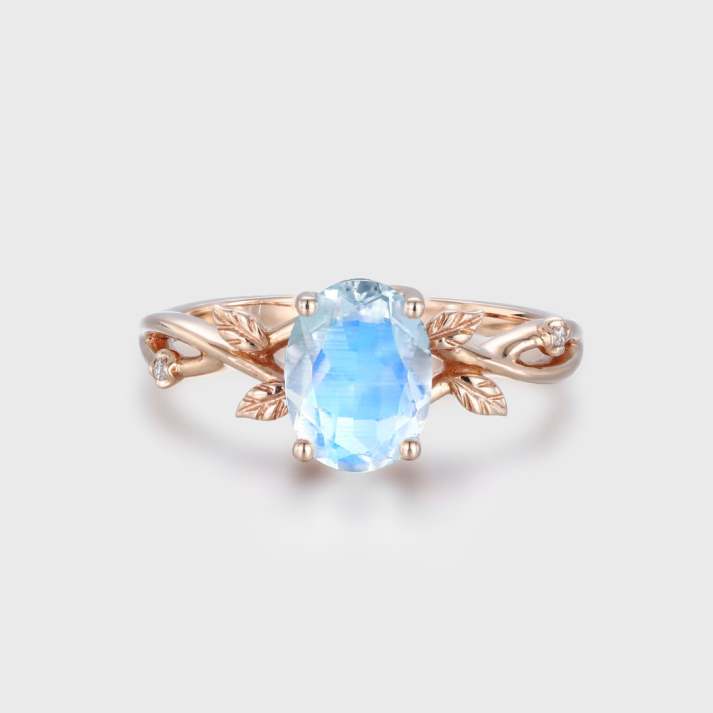
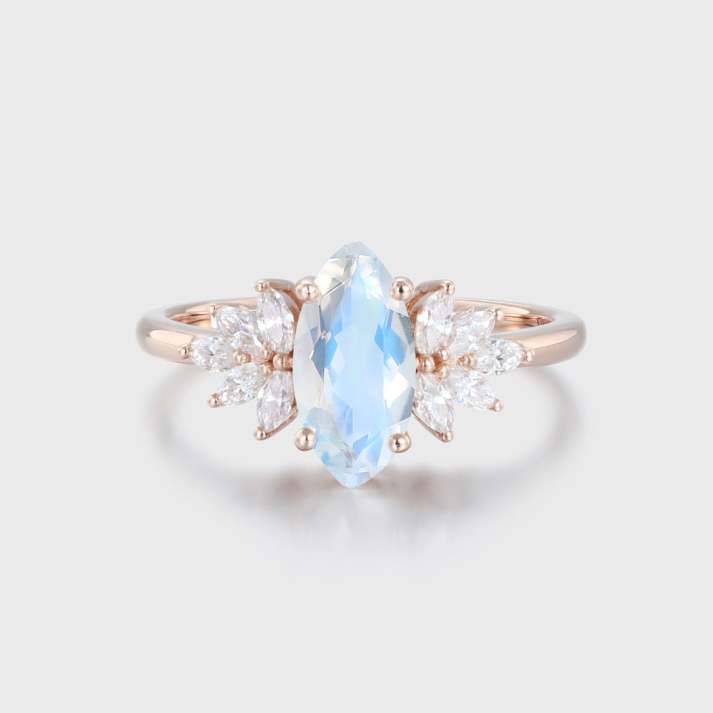
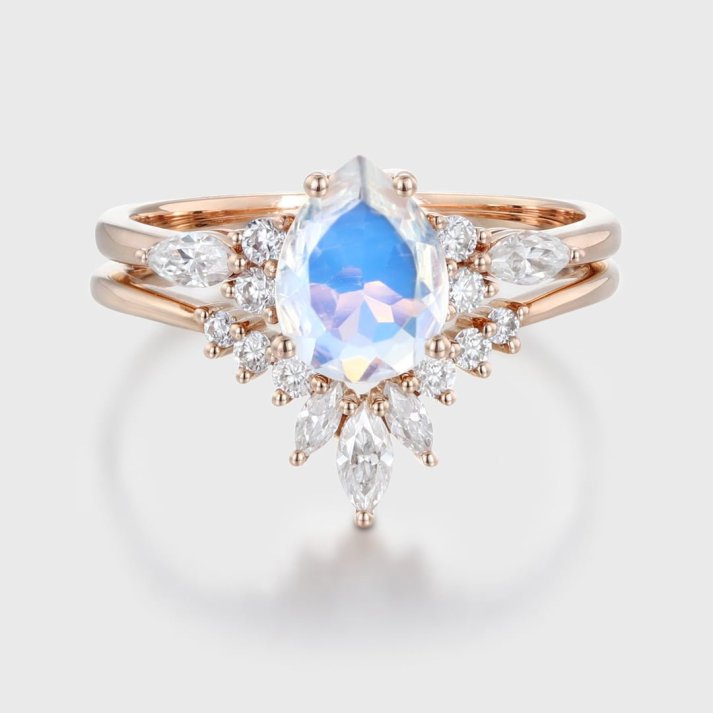
Final Thoughts
Moonstone stands apart because its beauty is not based on maximum sparkle or intense color. Its appeal comes from the way light seems to move inside the stone.
When choosing one, look beyond labels such as “blue moonstone” or “high quality.” Pay attention to the strength and placement of the adularescence, transparency, inclusions, body color, proportions, and overall condition.
And if you are considering moonstone for a ring, remember that its relatively modest hardness is part of the buying decision. With the right setting and thoughtful care, however, moonstone can become a distinctive piece of jewelry with an appearance that feels personal rather than conventional.
Frequently Asked Questions About Moonstone
Yes. Moonstone is a natural feldspar gemstone recognized for its characteristic adularescence.
Colorless or lightly colored moonstone with a strong blue adularescence is generally among the most desirable. However, quality depends on several factors, including the strength of the sheen, transparency, inclusions, body color, and overall appearance.
Yes. Moonstone is traditionally recognized as one of the birthstones associated with June.
Moonstone can be worn regularly, but it requires more care than harder gemstones because its Mohs hardness is around 6 to 6.5. Pendants and earrings generally experience less impact than rings.
It can. Moonstone is softer than diamond, sapphire, and ruby, so it should be protected from abrasive surfaces and stored separately from harder gemstones.
It can be a beautiful choice for someone who values an unusual, soft, luminous gemstone and is willing to take extra care with the ring. The setting and lifestyle of the wearer are important considerations.
The effect is called adularescence. Light interacts with the stone's internal structure and creates a soft sheen that appears to float beneath the surface.
No. Moonstone can have different body colors, including white, gray, peach, green, yellow, and brown. Its adularescence can also appear in different colors, including blue, white, silver, and rainbow-like effects.