
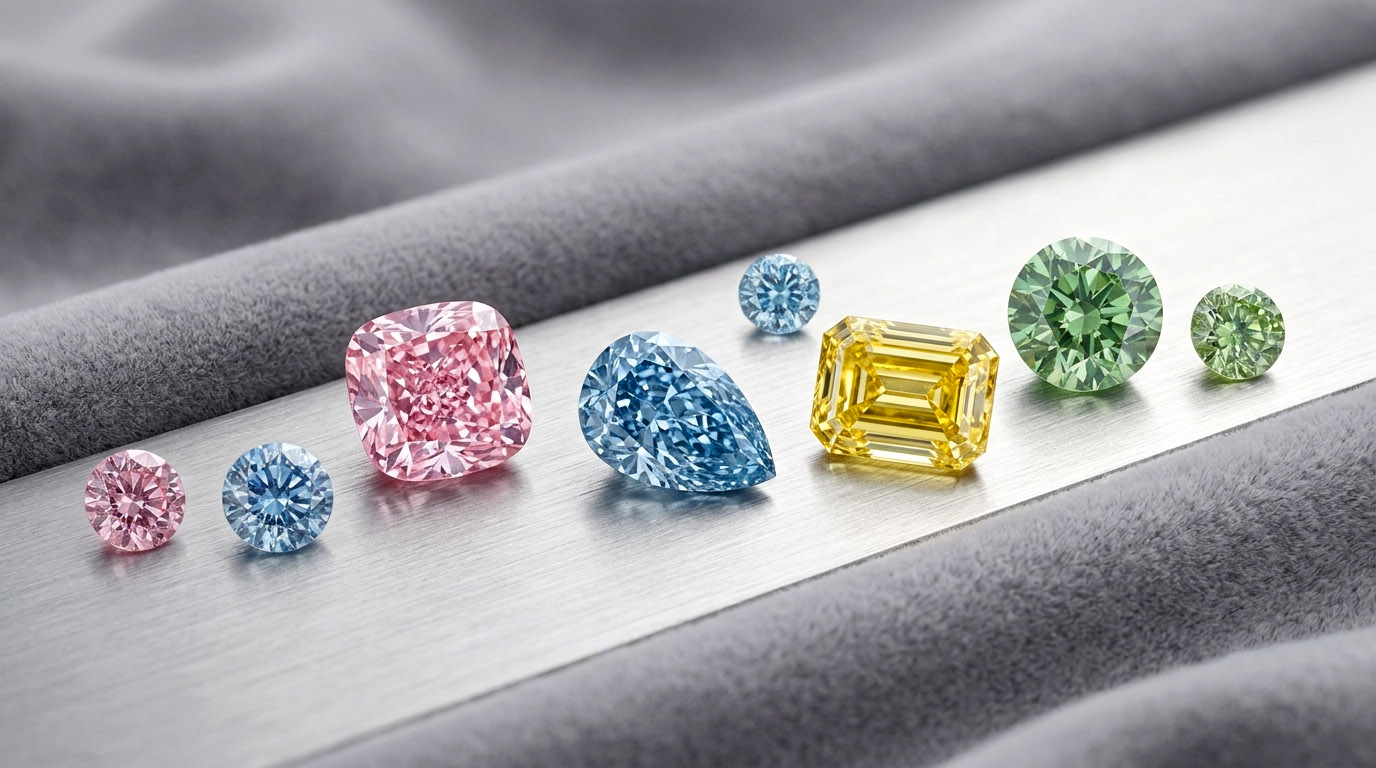
A high-quality colored lab-grown diamond generally does not fade over time under normal wear and care conditions. Lab-grown diamonds have the same crystal structure and durability as natural diamonds, and their color is typically stable. However, some colored diamonds may have treatments that require extra care, and extreme conditions such as intense heat or improper handling can affect certain treated stones.
Before buying a colored lab diamond, the most important steps are checking the certification, understanding how the color was created, and confirming whether any treatments were applied.
Are Colored Lab Diamonds Real Diamonds?
Yes. Colored lab diamonds are real diamonds created in controlled laboratory environments. They are not colored glass, cubic zirconia, or synthetic imitations. Like natural diamonds, they are made of carbon arranged in a diamond crystal structure.
The difference is their origin:
- Natural colored diamonds:Form underground over geological periods.
- Lab-grown colored diamonds:Created using technology that replicates diamond growth conditions.
Lab-grown diamonds can be produced in many colors, including:
- Yellow
- Pink
- Blue
- Green
- Red
- Black
The color may come from trace elements, growth conditions, or additional treatments depending on the diamond.
Do Colored Lab Diamonds Fade?
For most colored lab diamonds, the answer is no. Diamond is one of the hardest natural materials, and its crystal structure is highly stable. A properly made and certified colored lab diamond should maintain its appearance for many years.
Unlike some gemstones that can fade from prolonged sunlight exposure, diamonds generally do not lose their color simply because they are worn daily. However, buyers should understand that not every colored diamond gets its color in the same way.
The long-term stability depends on factors such as:
- How the color was created
- Whether the diamond was treated
- The type of treatment used
- Exposure to extreme heat or chemicals
This is why certification and disclosure are important.
Why Some Colored Lab Diamonds Have Color
Colored diamonds get their appearance from changes within the diamond crystal structure.
Natural-Looking Growth Color
Some lab-grown diamonds develop color during the growth process.
For example:
- Nitrogen-related factors can create yellow or brown colors.
- Growth conditions can influence pink, blue, or other shades.
- Structural differences can affect how light interacts with the stone.
These colors are generally considered stable because they are part of the diamond itself.
Post-Growth Treatments
Some diamonds may receive treatments after growth to enhance or modify color. Treatments can include processes designed to change the appearance of the diamond. A treated colored diamond is still a diamond, but buyers should know what treatments were performed because they may affect care requirements and value.
Treated vs Naturally Colored Lab Diamonds
Not all colored lab diamonds are created the same way.
|
Type |
How Color Appears |
Color Stability |
|
Growth-colored lab diamond |
Color develops during diamond creation |
Generally stable |
|
Treated colored lab diamond |
Color enhanced after growth |
Depends on treatment |
|
Coated diamond |
Surface layer adds color |
Requires special care |
A buyer should always ask:
- Is the color natural to the diamond growth process?
- Has the diamond been treated?
- Does the certificate mention any enhancements?
A transparent seller should provide clear answers.
What Can Cause a Diamond’s Color to Change?
Although diamonds are durable, certain extreme situations may affect some colored stones.
Extreme Heat
Very high temperatures, especially during jewelry repair, can potentially affect treated diamonds. Before resizing, repairing, or resetting a colored diamond, always tell the jeweler that the stone is lab-grown and colored.
Harsh Chemicals
Common household chemicals usually do not change a diamond’s internal color, but chemicals can affect coatings, settings, or other jewelry materials.
Avoid exposing valuable jewelry unnecessarily to:
- Strong cleaning chemicals
- Industrial solvents
- Unknown substances
Surface Treatments
Diamonds with surface-applied color treatments may require more careful handling because the color layer can be damaged. This is different from a diamond whose color comes from inside the crystal structure.
How Certification Helps Verify Color Stability
A diamond grading report provides important information about the stone you are buying.
For colored lab diamonds, look for:
- Diamond origin information
- Color description
- Treatment disclosure
- Laboratory name
- Report number
A reputable grading laboratory can help confirm whether the diamond is laboratory-grown and whether treatments are disclosed. Certification is especially important for colored diamonds because appearance alone does not always reveal how the color was produced.
How to Care for Colored Lab Diamonds
Proper care helps keep any diamond jewelry looking its best.
Follow these tips:
1. Clean Regularly
Use gentle cleaning methods recommended for diamond jewelry.
A soft brush, mild soap, and warm water are commonly used for many diamond pieces.
2. Avoid Extreme Conditions
Remove jewelry before activities involving:
- High heat
- Strong chemicals
- Heavy impact
3. Schedule Professional Inspections
A jeweler can check:
- Loose settings
- Damage
- Wear on the mounting
4. Store Jewelry Properly
Keep colored lab diamond jewelry separate from other pieces to avoid scratches or damage to the setting.
Common Myths About Fading Lab Diamonds
Myth 1: All Colored Lab Diamonds Fade
False. Properly created colored lab diamonds are generally color stable.
Myth 2: Lab Diamonds Are Less Durable
False. Lab-grown diamonds have the same hardness and durability characteristics as natural diamonds.
Myth 3: Bright Colors Mean Artificial Stones
False. Lab-grown diamonds can have genuine diamond properties while displaying vivid colors.
Myth 4: Sunlight Will Change Diamond Color
Normal sunlight exposure does not typically fade a diamond’s color.
The important factor is whether the stone has treatments that require special care.
Colored Lab Diamond Buying Checklist
Before purchasing a colored lab diamond, check:
|
Question |
Why It Matters |
|
Is it certified? |
Confirms diamond details |
|
Is it lab-grown? |
Confirms origin |
|
Is the color treated? |
Helps determine care needs |
|
What laboratory graded it? |
Adds credibility |
|
Does the report match the diamond? |
Prevents mistakes |
|
What care instructions are recommended? |
Protects your purchase |
A beautiful colored diamond should come with information, not uncertainty.
Conclusion
Colored lab diamonds generally do not fade over time when they are properly made, certified, and cared for. Their color is usually stable because it is connected to the diamond’s internal structure or controlled creation process.
A colored lab diamond can be a beautiful and durable choice when you understand what you are purchasing. Certification, transparent information, and thoughtful design all play an important role in making the right decision.
For couples searching for a personalized engagement ring or wedding band, choosing a brand that combines customization with accessible pricing can make the experience more meaningful. OVEELA Jewelry provides customized diamond jewelry options designed for customers who want a balance between personal expression, quality, and value.
FAQs About Colored Lab Diamond Color
Certified pink lab diamonds are generally color stable. However, buyers should verify whether the color comes from growth conditions or treatment.
Normal sunlight exposure does not typically fade a properly made colored lab diamond.
No. Colored lab diamonds are diamonds and have the same basic hardness as other diamonds.
Extreme heat, especially during jewelry repair, may affect some treated colored diamonds. Always inform a jeweler about treatments before repairs.
The best way is through a grading report from a recognized gemological laboratory that discloses treatments.
They can be a good choice for buyers who want unique colors, diamond durability, and documented origin. Value depends on factors such as quality, rarity, certification, and market demand.
Black lab diamonds are generally stable, but buyers should confirm whether the color comes from natural characteristics, treatment, or surface enhancement.
The answer depends on why the color changed. A professional gemologist can evaluate whether the issue is related to treatment, damage, or another factor.