
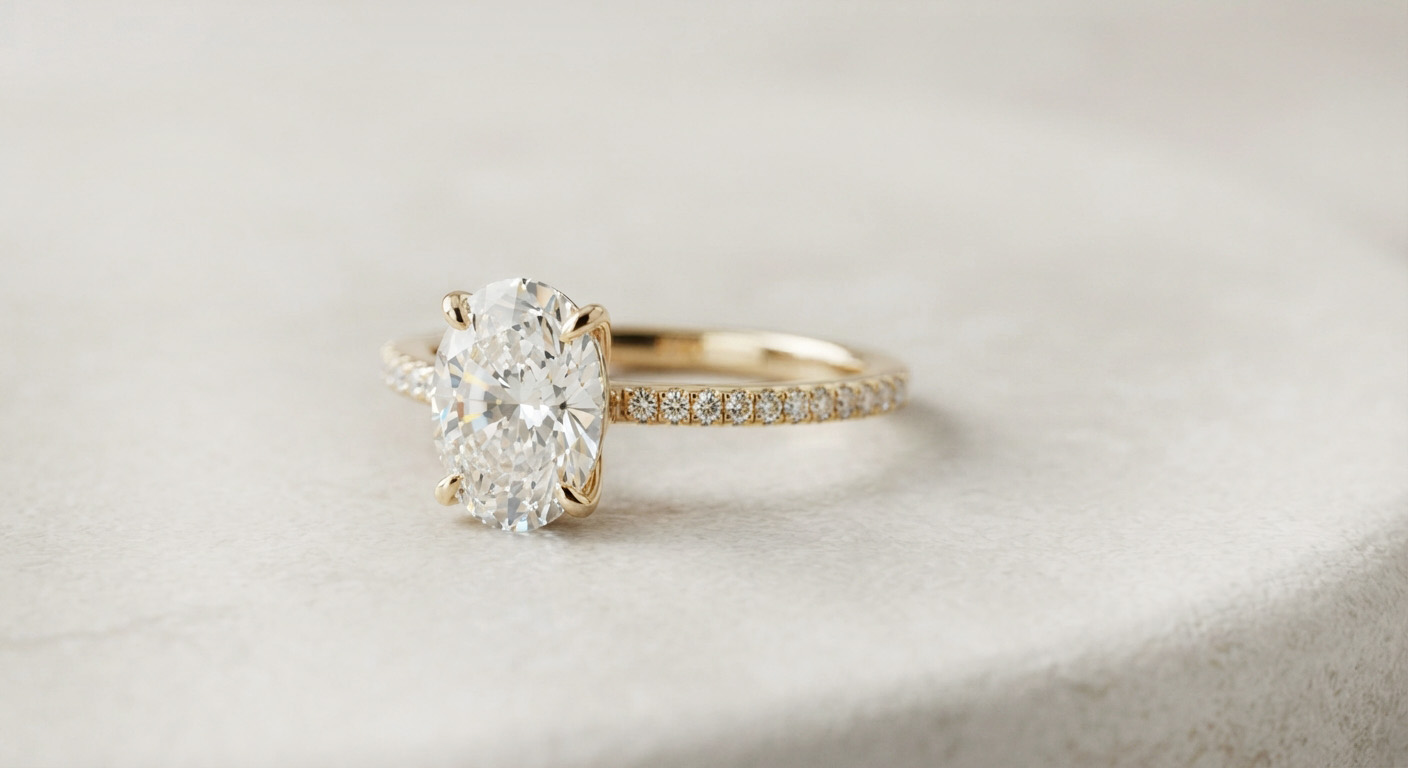
A moissanite engagement ring can offer impressive brilliance, strong everyday durability, and more flexibility in stone size and ring design than many traditional engagement-ring options. But choosing moissanite is not simply about finding the largest stone for your budget. You also need to consider the stone's cut, color, clarity, millimeter size, setting, metal, and how its optical appearance differs from diamond.
This guide explains what moissanite is, how it compares with natural and lab-grown diamonds, how much a moissanite engagement ring can cost, and what to look for before you buy.
What Is Moissanite?
Moissanite is a gemstone made of silicon carbide (SiC). It is a distinct gemstone from diamond, which is made of carbon. Gem-quality moissanite used in jewelry is generally lab-created because natural moissanite is extremely rare.
Moissanite is popular in engagement rings because it has a high refractive index and strong dispersion. In practical terms, that means it can produce intense brilliance as well as noticeable rainbow-colored fire. Its refractive index is approximately 2.65–2.69, while its Mohs hardness is about 9.25.
Because moissanite is a different gemstone, it should not be described as a lab-grown diamond or as a type of diamond. It is better understood as a gemstone with its own appearance and characteristics.
Is Moissanite Good for an Engagement Ring?
For many couples, yes. Moissanite is hard enough for everyday jewelry and offers a combination of durability, brilliance, and size that makes it well suited to engagement rings.
Its Mohs hardness of approximately 9.25 makes it highly resistant to scratching, although diamond remains harder at 10. The more important question is whether you like the way moissanite handles light. Compared with diamond, moissanite has higher dispersion, which creates more visible rainbow fire. Some people love this lively appearance, while others prefer the more restrained optical character of diamond.
Your setting also matters. A secure solitaire, bezel, halo, three-stone, or pavé design can all work with moissanite, but the right choice depends on your lifestyle and preferred look.
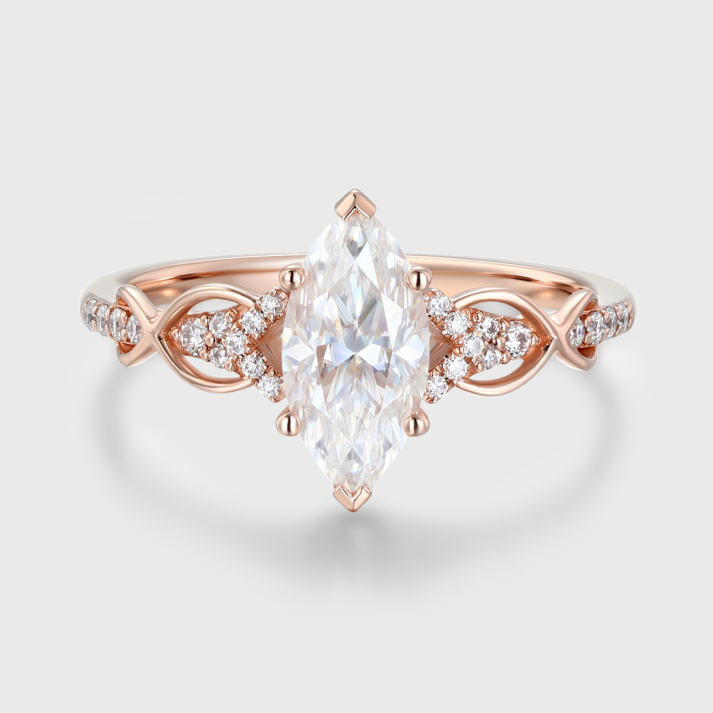
Moissanite vs. Natural Diamond vs. Lab-Grown Diamond
The first thing to understand is that lab-grown diamond and moissanite are not the same material.
A natural diamond is crystallized carbon formed in the Earth. A lab-grown diamond is also diamond, with essentially the same chemical composition and crystal structure, but it is grown in a controlled laboratory environment. Moissanite, by contrast, is silicon carbide. GIA classifies synthetic moissanite as a diamond simulant because it resembles diamond visually without having diamond's chemical and physical properties.
|
Feature |
Moissanite |
Natural Diamond |
Lab-Grown Diamond |
|
Material |
Silicon carbide |
Carbon |
Carbon |
|
Mohs hardness |
About 9.25 |
10 |
10 |
|
Optical character |
Strong brilliance and fire |
Diamond-like brilliance |
Diamond-like brilliance |
|
Rainbow fire |
More pronounced |
More restrained |
More restrained |
|
Diamond 4Cs |
Not a strict diamond grading system |
Yes |
Yes, with grading practices depending on laboratory |
|
Origin |
Generally lab-created for jewelry |
Natural |
Laboratory-grown |
This means the decision is not simply “real versus fake.” Moissanite is a real gemstone; it is simply a different gemstone from diamond.
Explore: Moissanite vs. Lab Diamond: A Sparkling Choice for Your Next Jewelry Piece
How Much Does a Moissanite Engagement Ring Cost?
There is no single standard price for a moissanite engagement ring.
The total cost depends on the stone size, cut, metal, setting complexity, side stones, and craftsmanship. Because the center moissanite generally costs less than a comparable diamond, a larger portion of the budget can go toward the ring's metal, setting, design, or a larger center stone.
A simple solitaire in 10K or 14K gold will generally cost less than an intricate vintage design with pavé, multiple accent stones, or a more complex gallery. Platinum will also typically cost more than gold because of its material value and properties.
At OVEELA, moissanite engagement rings span a broad range of designs, from simple solitaires to vintage, nature-inspired, bezel-set, three-stone, and bridal-set styles.
How to Choose Moissanite Quality: Cut, Color, Clarity & Size
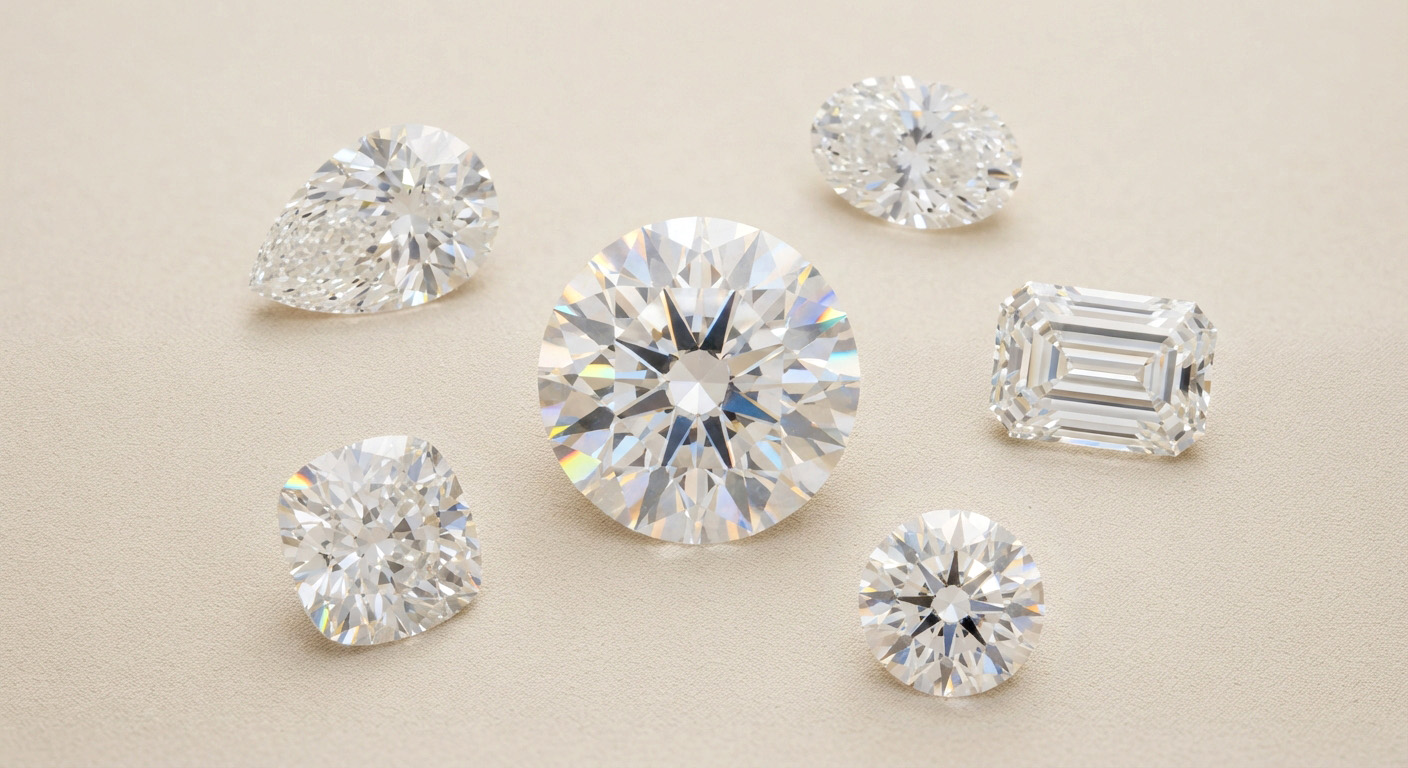
The diamond 4Cs—cut, color, clarity, and carat—can provide a useful starting point for evaluating moissanite, but they should not be treated as an identical grading system.
Cut should be a priority. Good proportions, symmetry, and polish strongly affect how efficiently a moissanite returns light. Charles & Colvard similarly emphasizes that cut refers to proportions, symmetry, and polish rather than simply the stone's shape.
Color affects the overall tone. Colorless grades are generally chosen when you want a crisp white appearance, while near-colorless stones can have a slightly warmer or softer look. The appearance of color can also interact with the metal of the ring.
Clarity matters, but eye appearance matters more than chasing a label. A well-cut stone with no obvious inclusions visible to the naked eye can be a practical choice.
Finally, size should be evaluated in millimeters, not only by a carat-equivalent number.
Moissanite Size: Carat Equivalent vs. Millimeters
Moissanite is less dense than diamond, so two stones with the same face-up dimensions will not necessarily have the same actual weight.
For this reason, moissanite is commonly discussed using millimeter dimensions and diamond-equivalent weight (DEW). For example, a round moissanite around 6.5 mm in diameter is approximately comparable in face-up size to a 1-carat diamond, while an 8 mm round is around the visual size of a 2-carat diamond. Exact proportions vary by shape and cut.
When shopping, ask for the stone's actual dimensions rather than relying only on phrases such as “2 carat moissanite.” This is especially important for elongated shapes such as oval, pear, and marquise, where length-to-width ratio can dramatically change how large the stone looks on the finger.
Which Moissanite Cut Should You Choose?
The shape you choose changes the personality of the entire engagement ring.
Round: A classic choice with strong brilliance and fire. It works particularly well in solitaire, pavé, and halo designs.
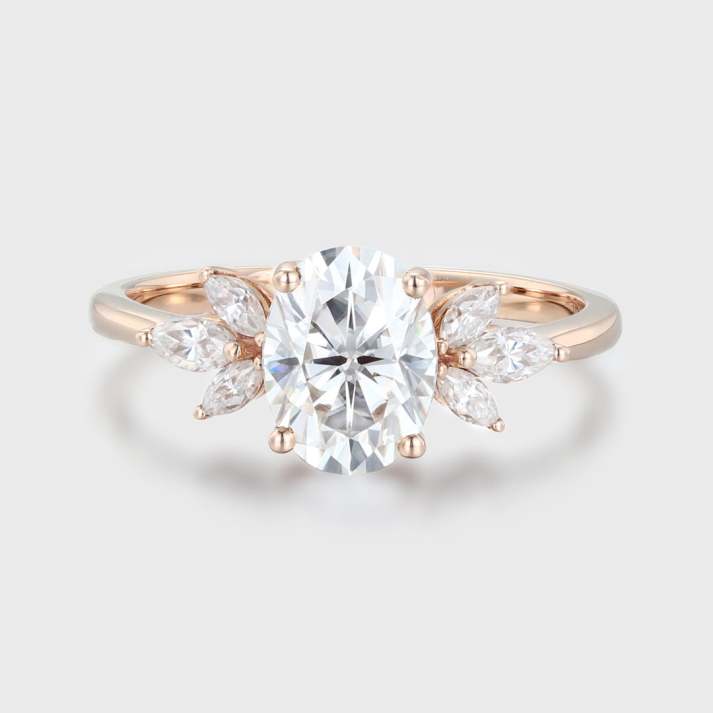
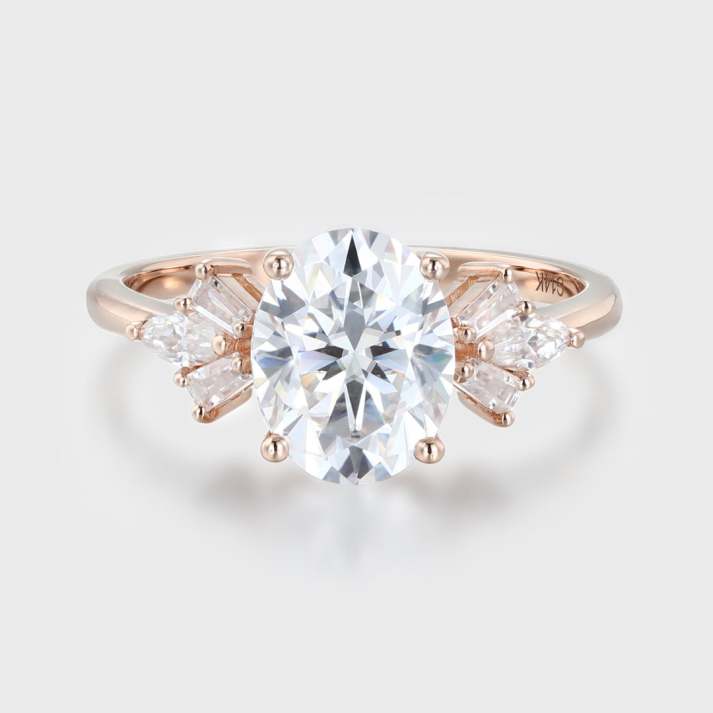
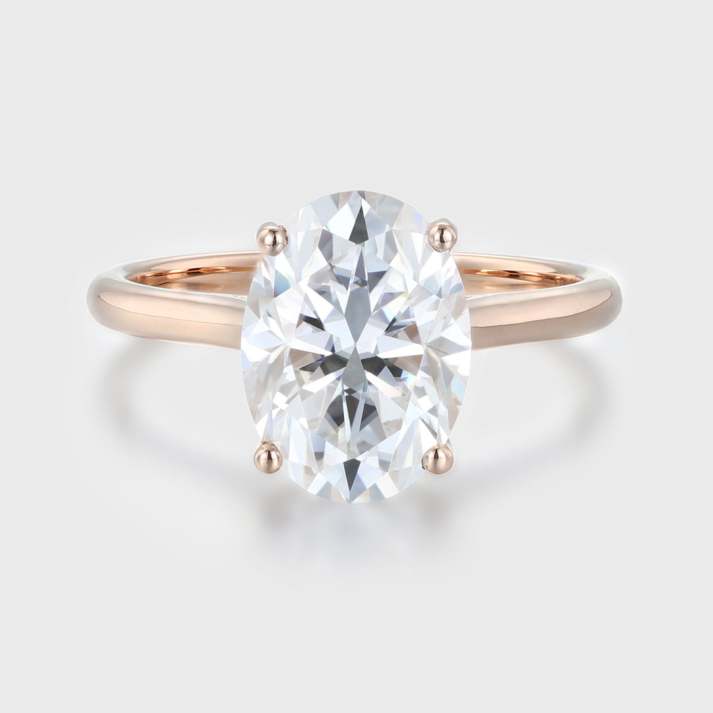
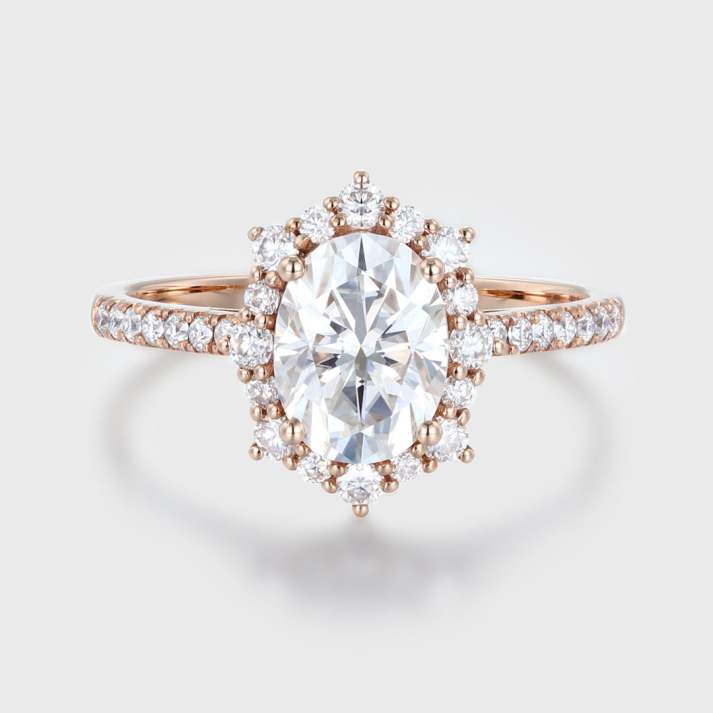
Oval: An elongated shape that can create a larger-looking face-up appearance while retaining plenty of brilliance. Ovals work especially well with vintage, solitaire, and nature-inspired designs.
Pear: A distinctive combination of rounded and pointed lines. Pear-shaped moissanite can create an elegant, elongated appearance, but the pointed end should be securely protected by the setting.
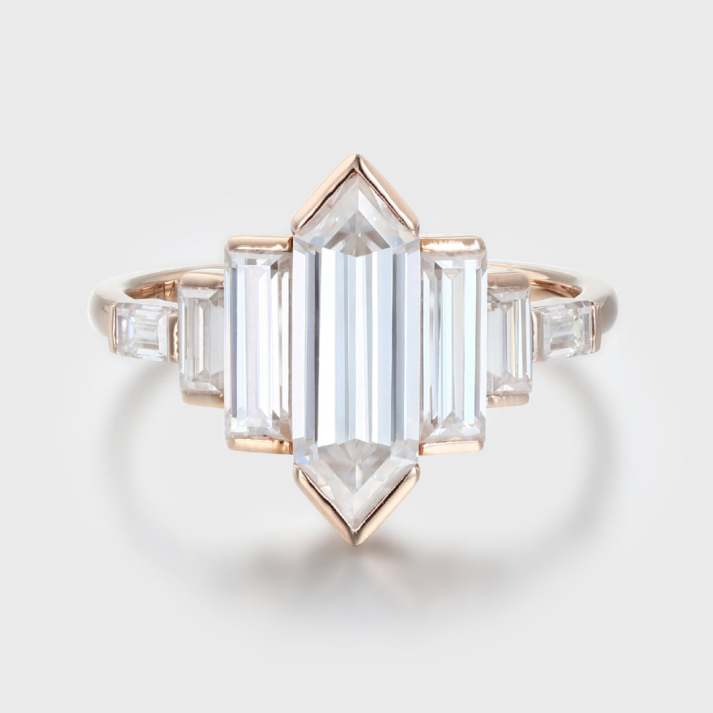
Emerald: A step-cut shape with broad, clean facets and a more structured optical appearance. It emphasizes clarity and symmetry rather than intense crushed-ice sparkle.
Marquise: The long, pointed silhouette can visually elongate the finger and create a distinctive vintage or Art Deco appearance.
Cushion: Softer corners give cushion cuts a balance between classic geometry and a more romantic silhouette.
Kite: A less conventional shape that works especially well for modern, geometric, vintage, and nature-inspired designs.
OVEELA's current moissanite collection includes these major shapes as well as designs built around bezel settings, three-stone arrangements, vintage details, and nature-inspired elements.
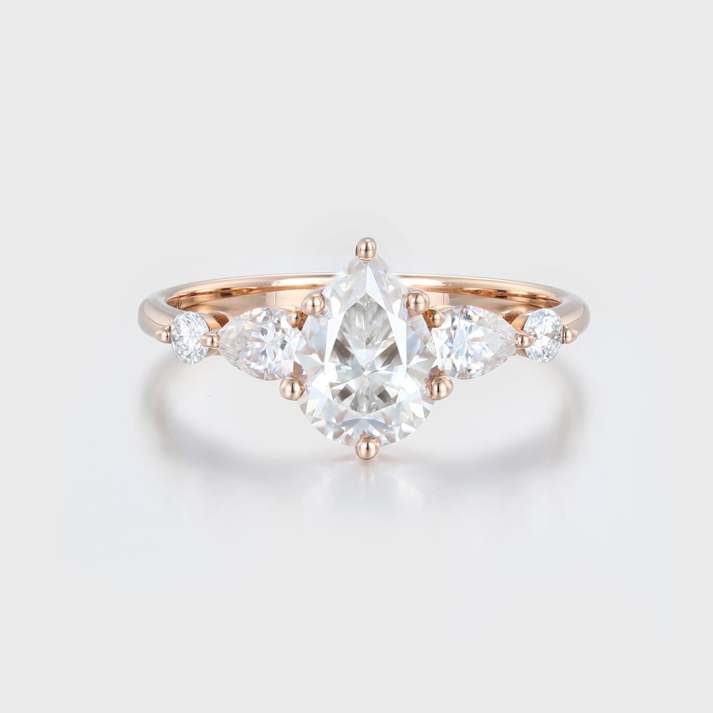
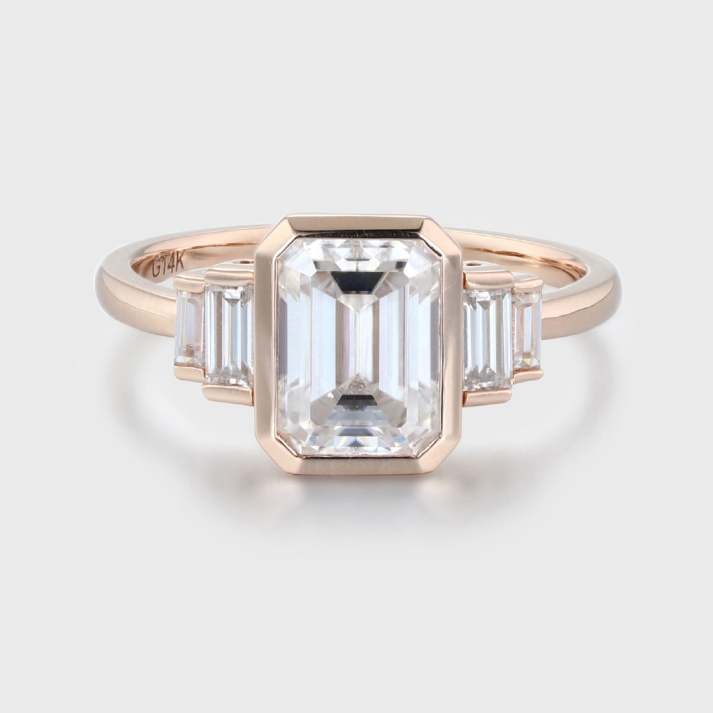
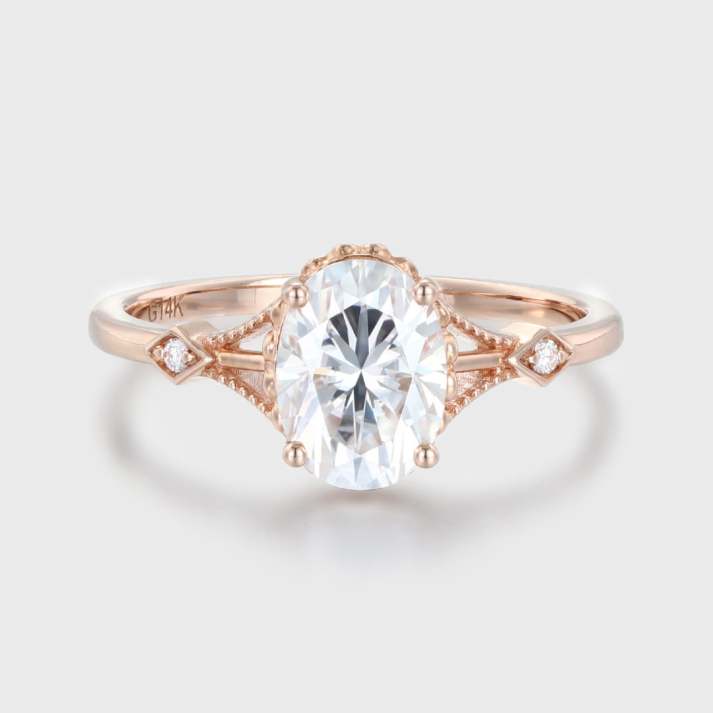
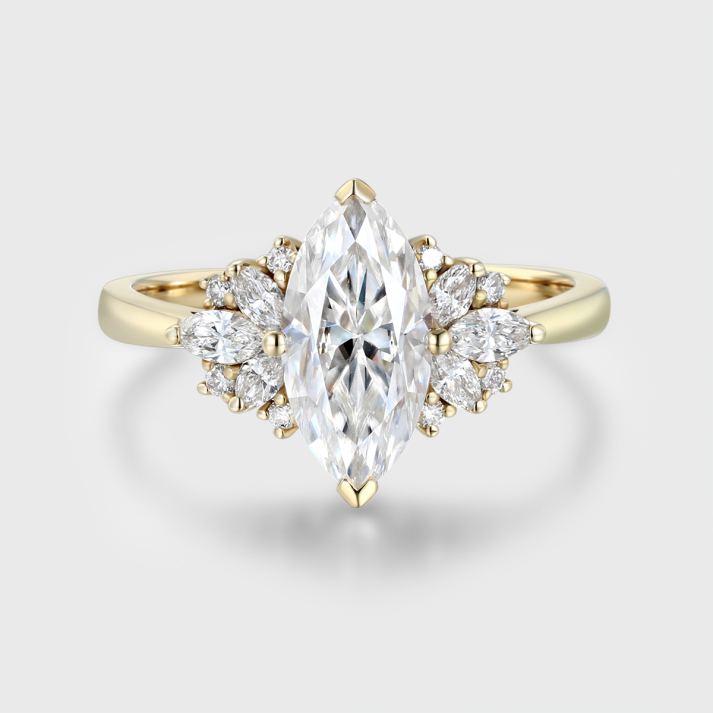
Choosing the Right Setting and Ring Style
The setting does more than hold the center stone. It determines how the ring looks, how much metal surrounds the stone, how exposed the gemstone is, and how easily the ring fits into everyday life.
A solitaire keeps attention on the center moissanite and is usually one of the cleanest choices.
A halo surrounds the center with smaller stones, adding visual detail and making the center appear more prominent.
A pavé setting adds continuous sparkle along the band but has more small stones and therefore requires more attention during wear and cleaning.
A bezel setting surrounds the gemstone with metal and gives the ring a more protected, low-profile appearance.
A three-stone ring adds side stones for a more substantial look, while a bridal set coordinates the engagement ring with a matching wedding band.
For a less traditional engagement ring, OVEELA also offers nature-inspired, vintage, Toi et Moi, geometric, and other distinctive moissanite designs.
Explore: 5 Most Beautiful Moissanite Engagement Ring Styles Brides Love in 2026
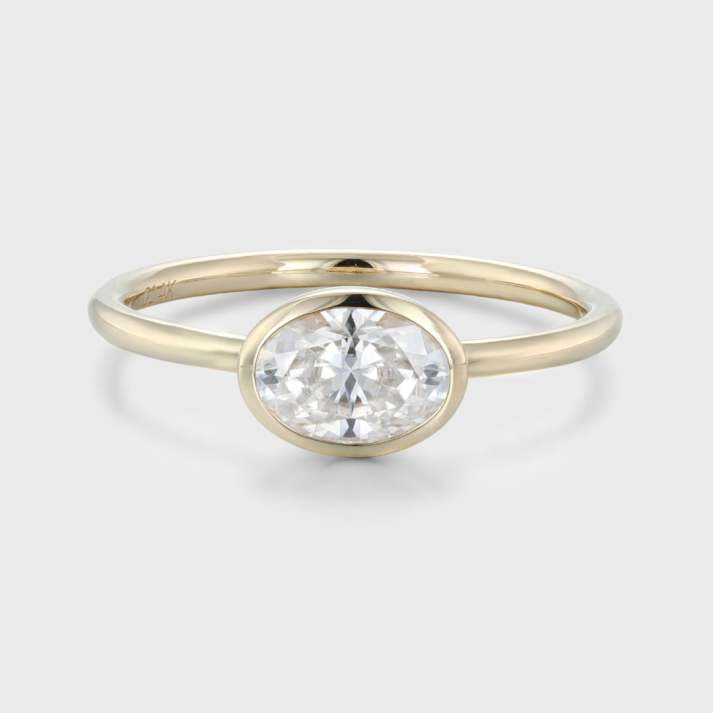
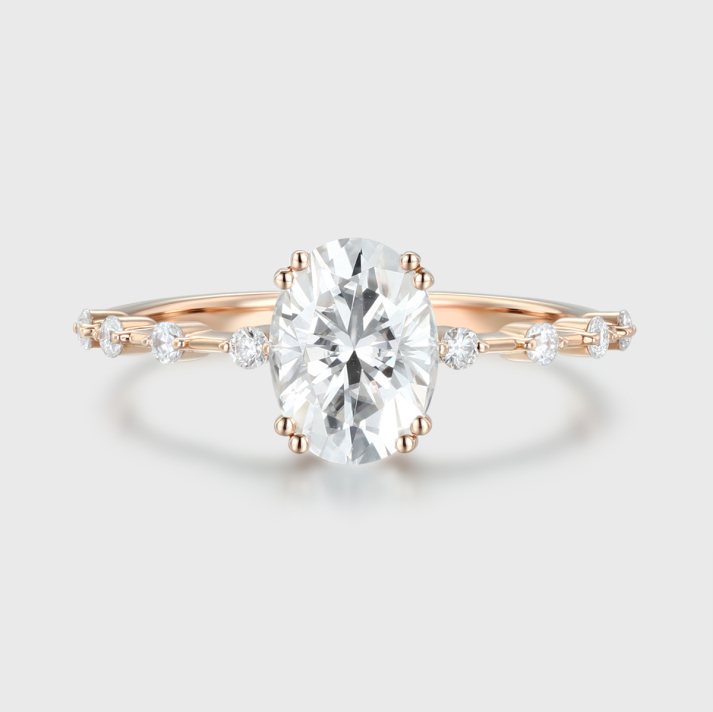
Which Metal Is Best for a Moissanite Engagement Ring?
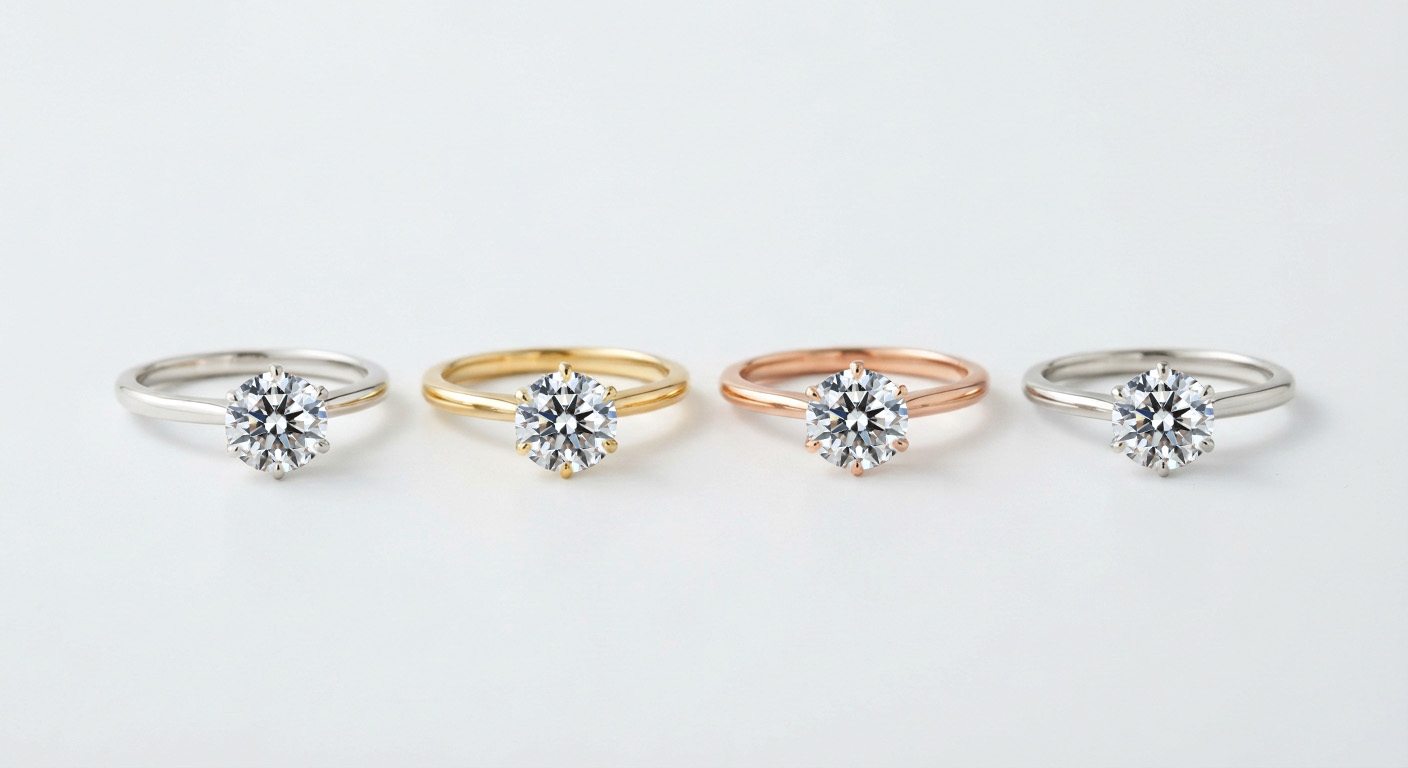
There is no single best metal. The right choice depends on color, durability, budget, and personal style.
White gold and platinum create a cool, bright appearance and pair naturally with colorless moissanite.
Yellow gold provides warmer contrast and works especially well with vintage and nature-inspired designs.
Rose gold creates a softer, romantic look and can complement both classic and distinctive moissanite shapes.
For long-term wear, the choice should also consider metal purity, construction, band thickness, and how the setting is made—not just color. At OVEELA, Moissanite engagement ring designs are available across different gold colors and metal options, allowing the gemstone, setting, and metal to be considered as one complete design.
Explore: Best Metal for Moissanite Rings: What Actually Changes the Look?
How to Care for a Moissanite Engagement Ring
Moissanite is durable, but the entire ring still needs regular care. Clean the ring periodically with mild soap, warm water, and a soft brush to remove oils and everyday buildup. Avoid exposing the ring unnecessarily to harsh chemicals, and inspect the setting regularly for loose or damaged prongs.
The gemstone is resistant to scratching, but the metal and setting can still wear over time. If the ring needs professional repair or heat treatment, tell the jeweler that the center stone is moissanite so the appropriate precautions can be taken.
Explore: How to Clean a Moissanite Ring: A Complete Care Guide for Lasting Sparkle
Choosing a Moissanite Engagement Ring: Final Thoughts
Choosing a moissanite engagement ring ultimately comes down to more than the size or sparkle of the center stone. Start by deciding whether you prefer moissanite's distinctive combination of brilliance and noticeable fire, then compare the stone's cut, color, clarity, and millimeter dimensions. From there, consider how the shape works with the setting, which metal suits the design, and whether the ring's construction and after-sales policies meet your expectations.
A well-chosen moissanite ring should feel cohesive as a complete piece of jewelry: the gemstone, proportions, setting, metal, and design should all work together. Whether you prefer a classic round solitaire, an elongated oval or pear, an emerald-cut design, or something more distinctive such as a kite-shaped, vintage, or nature-inspired ring, understanding these factors makes it easier to choose a ring that fits both your style and everyday needs.
Frequently Asked Questions About Moissanite Engagement Rings
Yes. Moissanite is a distinct gemstone made of silicon carbide. Jewelry-grade moissanite is generally lab-created because natural gem-quality material is extremely rare.
No. Moissanite and diamond are different materials. Moissanite is silicon carbide, while diamond is carbon.
Yes, if you like its optical appearance and want a durable gemstone with strong brilliance and noticeable fire. Its Mohs hardness of approximately 9.25 makes it suitable for everyday jewelry wear.
Moissanite itself does not normally become permanently cloudy simply from age. Oils, soap, and residue can reduce its brilliance, so regular cleaning is important.
Moissanite can show more visible rainbow fire because its dispersion is higher than diamond's. Whether that looks better is a matter of personal preference.
There is no universally best shape. Round is a classic option for maximum traditional brilliance, while oval, pear, marquise, emerald, cushion, and kite shapes offer different proportions and visual styles. Choose based on the wearer's preferred look, finger proportions, and setting.