
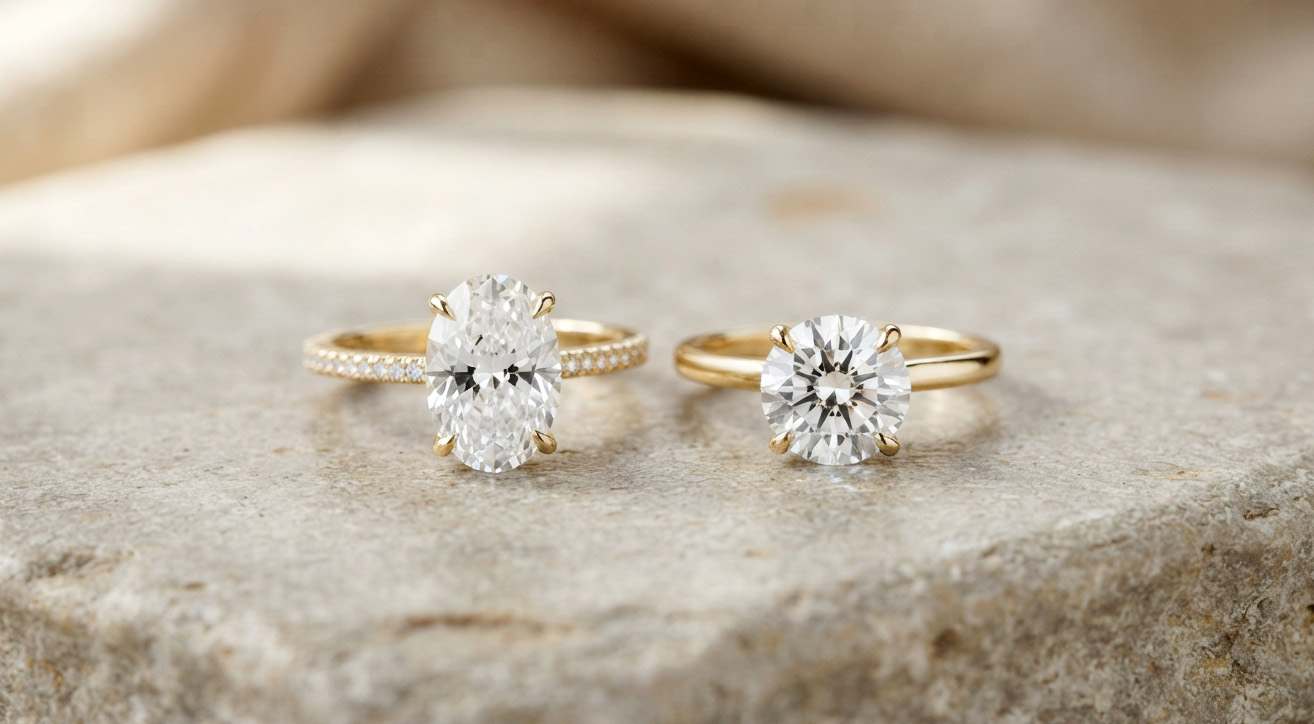
If you have already decided that moissanite is right for your engagement ring, the next question is often much more specific: Should you choose an oval or round moissanite?
Both shapes can deliver strong brilliance and fire, but they create very different visual effects. Round moissanite has a compact, symmetrical outline and a classic brilliant-cut appearance. Oval moissanite stretches the stone lengthwise, giving the ring more finger coverage and a more elongated silhouette.
The right choice depends on what matters most to you: sparkle pattern, visual size, finger coverage, setting style, or overall design. Here is how the two compare before you make the final decision.
Oval vs Round Moissanite: The Key Differences at a Glance
|
Feature |
Oval Moissanite |
Round Moissanite |
|
Shape |
Elongated, curved outline |
Circular, symmetrical outline |
|
Visual size |
Often appears larger face-up |
More compact appearance |
|
Sparkle |
Lively brilliance with more variation across the stone |
More even, concentrated brilliance |
|
Finger effect |
Creates a stronger vertical, lengthening effect |
Creates a centered, balanced look |
|
Style |
Elegant, graceful, slightly more distinctive |
Classic, traditional, highly versatile |
|
Bow-tie |
May show a darker center area |
Does not have the same elongated bow-tie issue |
|
Best for |
More finger coverage and an elongated silhouette |
Symmetry and classic brilliance |
These are general visual tendencies rather than absolute rules. The proportions and quality of an individual moissanite can change how the finished stone looks, which is why comparing the actual stone—not just the shape name—is important.
Round vs Oval Moissanite: Which One Sparkles More?
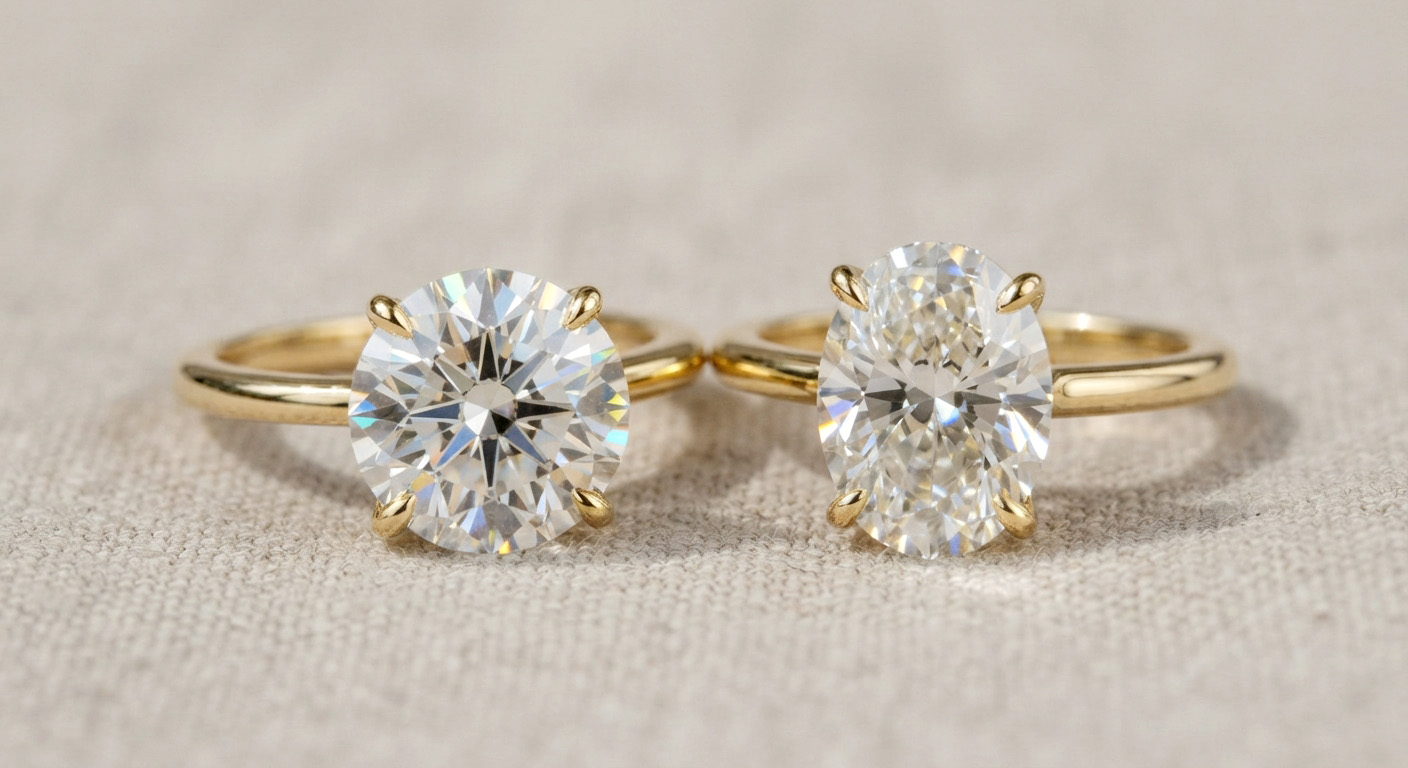
If maximum brilliance is your first priority, Round Brilliant is usually the more straightforward choice.
A round brilliant has a highly symmetrical facet arrangement designed to return light efficiently and evenly. This creates the concentrated, lively sparkle that many people associate with a classic engagement ring. Moissanite itself is known for strong brilliance and noticeable fire, so a well-cut round can produce an especially intense light display.
Oval moissanite can also be extremely bright. However, its elongated shape changes how the facets interact with light, and the visual performance can vary more from one stone to another. Proportions, symmetry, facet arrangement and the presence of a bow-tie all matter.
If you want to understand how different moissanite shapes interact with light, OVEELA's Moissanite Cut Guide: Best Shapes for Color, Brilliance & Personal Style provides a broader comparison.
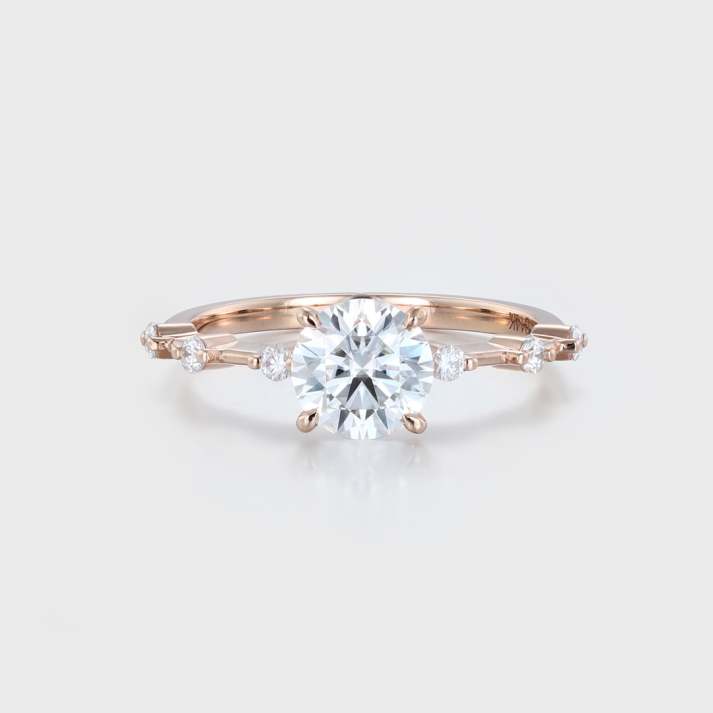
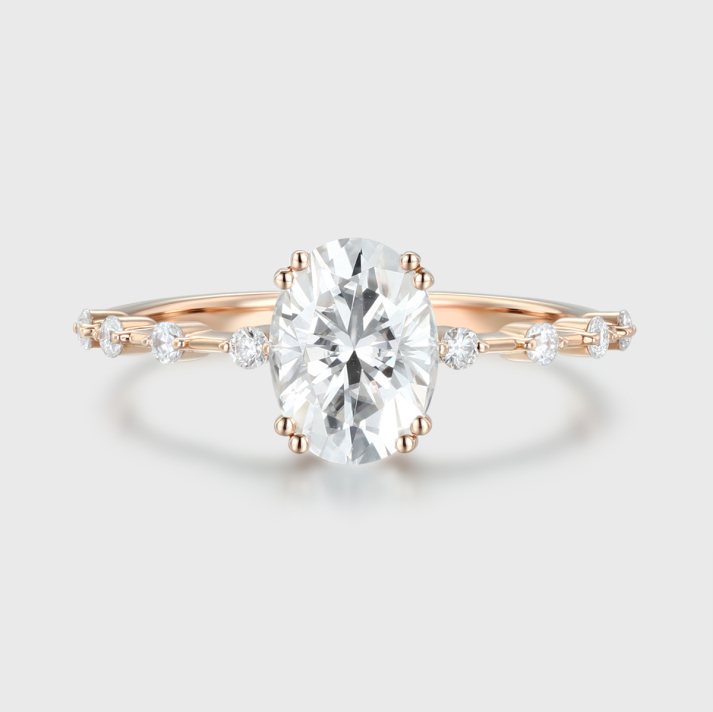
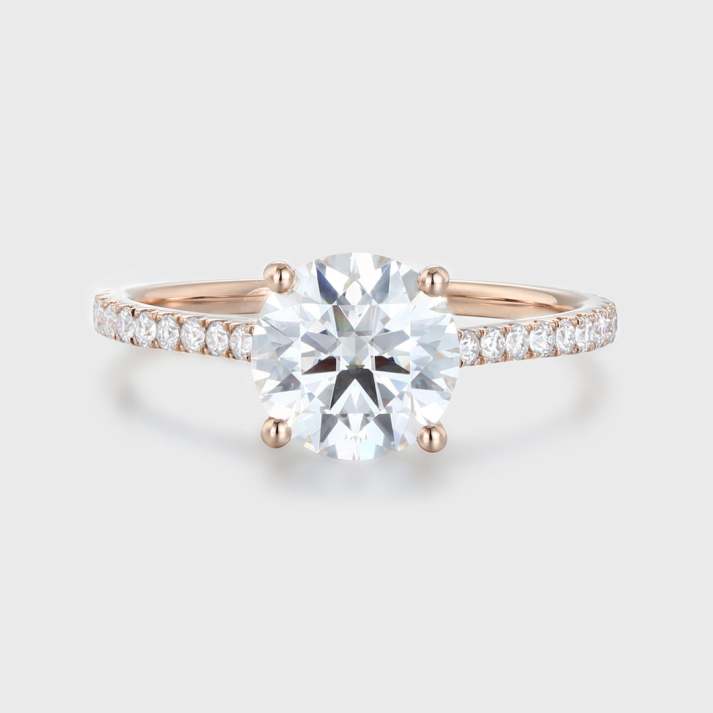
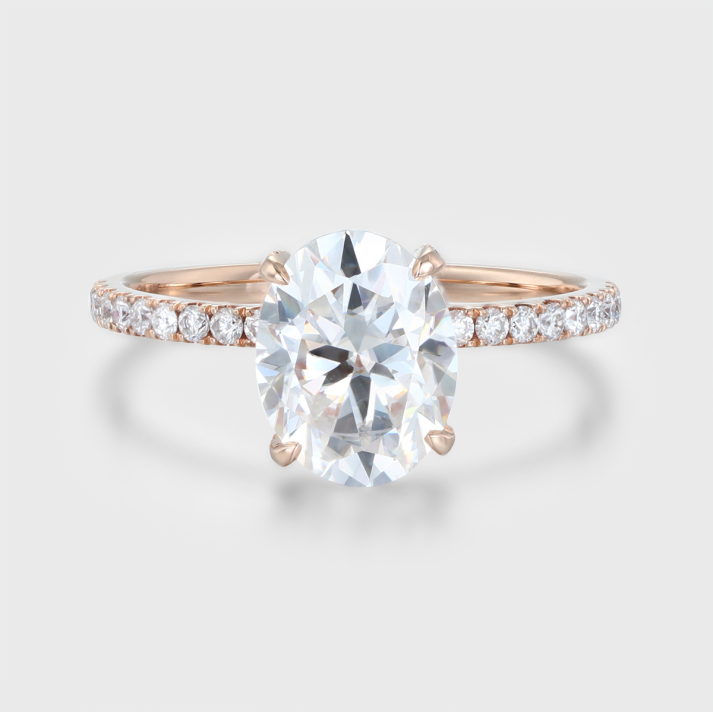
Which Looks Bigger: Oval or Round Moissanite?
For the same carat weight, oval moissanite often looks larger face-up than round moissanite.
The reason is simple: carat measures weight, not the exact amount of surface you see from above. An oval distributes its weight across a longer outline, creating more visual coverage along the finger. A round concentrates its outline into a compact circle.
This is why a 1-carat oval and a 1-carat round should not be judged by carat weight alone. Their actual millimeter dimensions can be quite different, and those dimensions have a direct effect on how large each stone appears on the hand. However, avoid relying on a fixed percentage such as “an oval is always 10–15% larger.” The difference depends on the individual stones and their proportions. When comparing size, look at the actual length × width measurements.
If visible size is important to you, an oval can provide more finger coverage without requiring a heavier center stone. If you prefer a compact center with strong visual focus, the round shape may feel more balanced.
Oval Moissanite and the Bow-Tie Effect: What Should You Look For?
One detail deserves special attention when buying an oval moissanite: the bow-tie effect.
A bow-tie is a darker area that can appear across the center of an elongated brilliant-cut stone. It results from the way certain facets interact with incoming light, and its visibility can vary significantly from one oval to another. A subtle bow-tie is not automatically a problem. What matters is whether the darker area becomes so prominent that it interrupts the overall brightness of the stone. This is one reason shopping for an oval should involve more than looking at a single front-facing photograph. If possible, check:
- The stone from several angles
- Video or moving images
- Different lighting conditions
- Overall symmetry
- Whether the center remains lively rather than noticeably dark
Round moissanite does not have this same elongated bow-tie consideration, which makes its appearance somewhat easier to evaluate visually. For oval buyers, therefore, the individual stone matters more than the shape label alone.
How Oval and Round Moissanite Look on the Finger
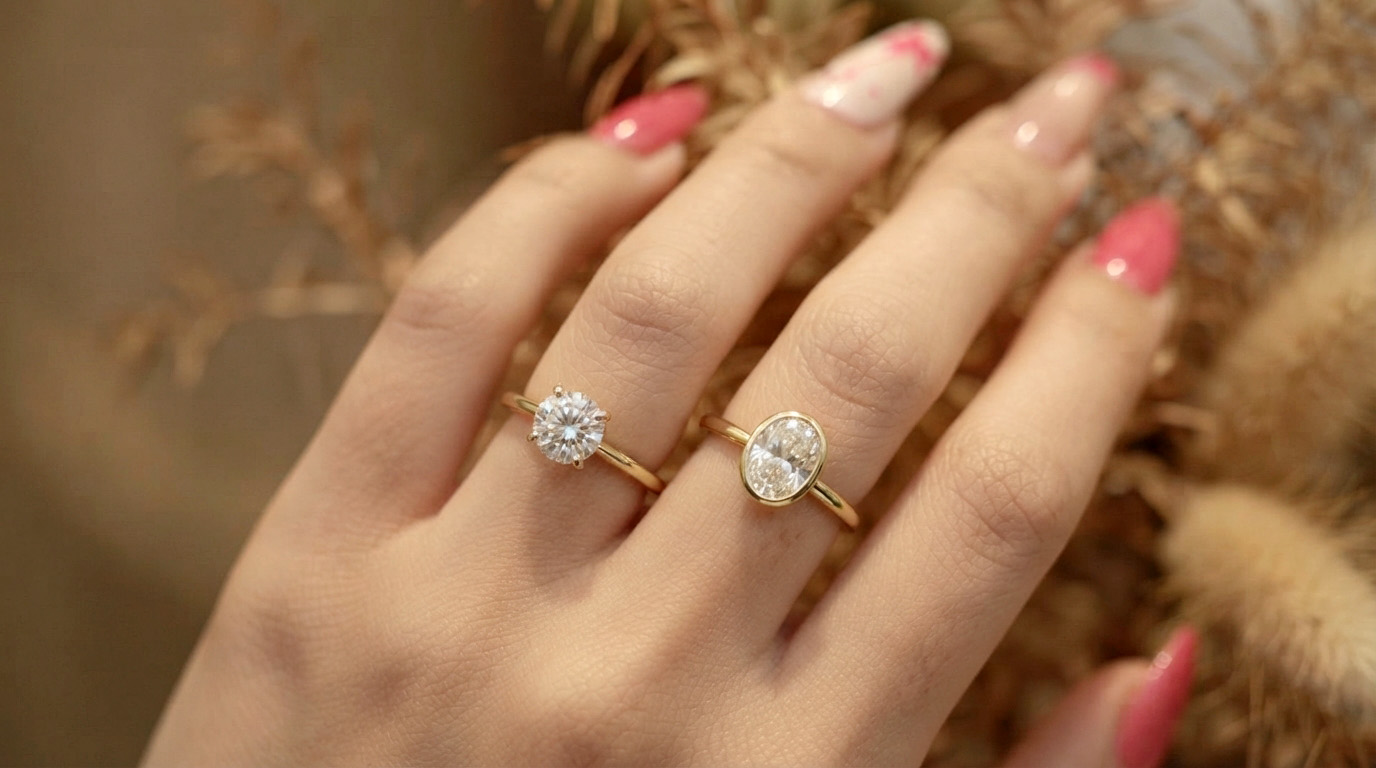
The biggest visual difference between these shapes may not be the sparkle—it may be the silhouette.
An oval creates a longer visual line from top to bottom. Because of this, it can make the center stone appear to extend farther along the finger and create a more elongated overall impression.
A round moissanite has a much more compact visual footprint. Its symmetry creates a clear center point, which can make the ring feel balanced and traditional.
This does not mean that one shape is universally better for a particular hand. Finger length, finger width, stone dimensions and band width all affect the final appearance. A narrow, elongated oval may look very different from a wider oval, just as a small round can look different from a large round.
If you are choosing based on hand appearance, compare the actual proportions of the ring, rather than relying on general rules such as “oval is for short fingers” or “round is for long fingers.” The goal is to find the proportion you like when the complete ring is on the hand.
Which Ring Settings Work Best With Oval and Round Moissanite?
Both shapes are highly versatile, but their outlines lend themselves to slightly different design approaches.
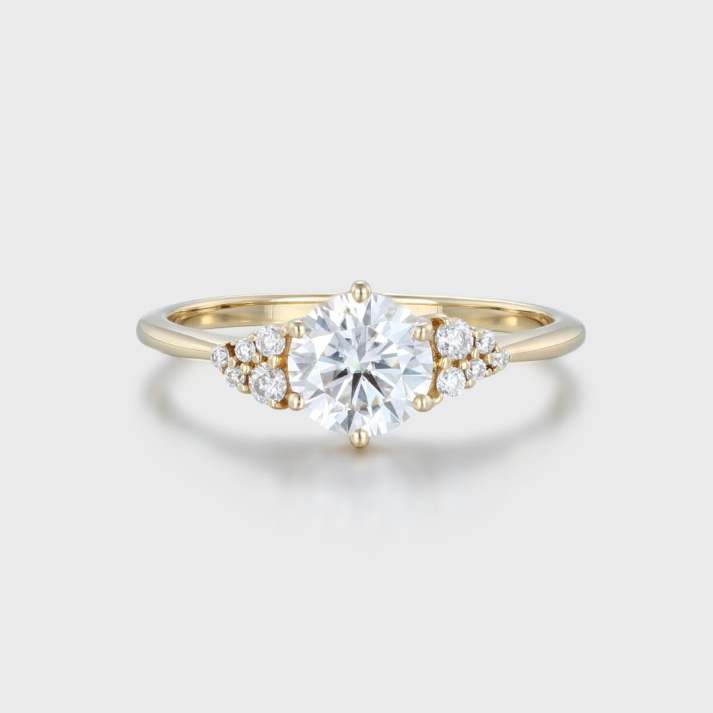
Round moissanite works naturally in classic solitaire settings, halo designs, pavé bands and three-stone rings. Its circular outline is easy to balance with other round or symmetrical elements, making it a flexible starting point for both traditional and contemporary designs.
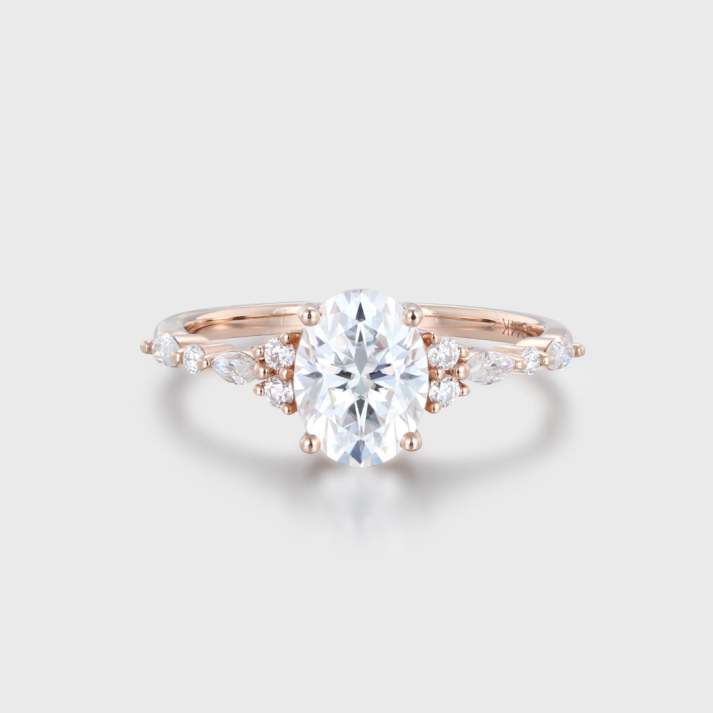
Oval moissanite is especially effective in solitaire settings because the elongated center stone becomes the main visual feature. It also works beautifully with halos, three-stone arrangements, vintage-inspired details and delicate side stones. Its longer outline can create a graceful contrast with curved or botanical elements.
The setting also affects practical wear. A high-set center stone, exposed prongs and raised decorative details can make a ring more likely to catch on clothing, regardless of whether the center is oval or round. OVEELA explains these factors in Which Kind of Ring Is Likely to Get Caught on Clothes?, which is worth reading if daily comfort is part of your decision.
Your wedding band matters, too. A center stone's shape is only one part of the equation; the setting height and basket design determine how closely a straight or curved band can sit beside it.
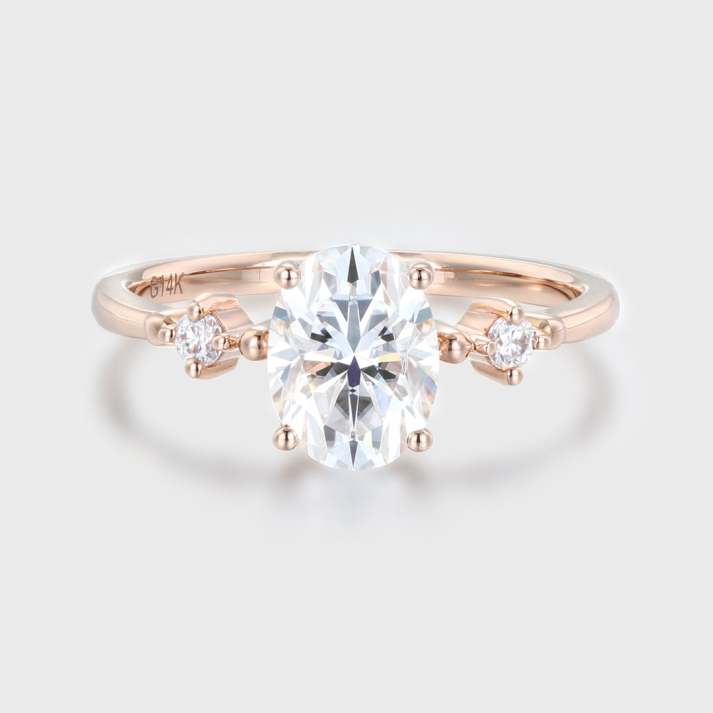
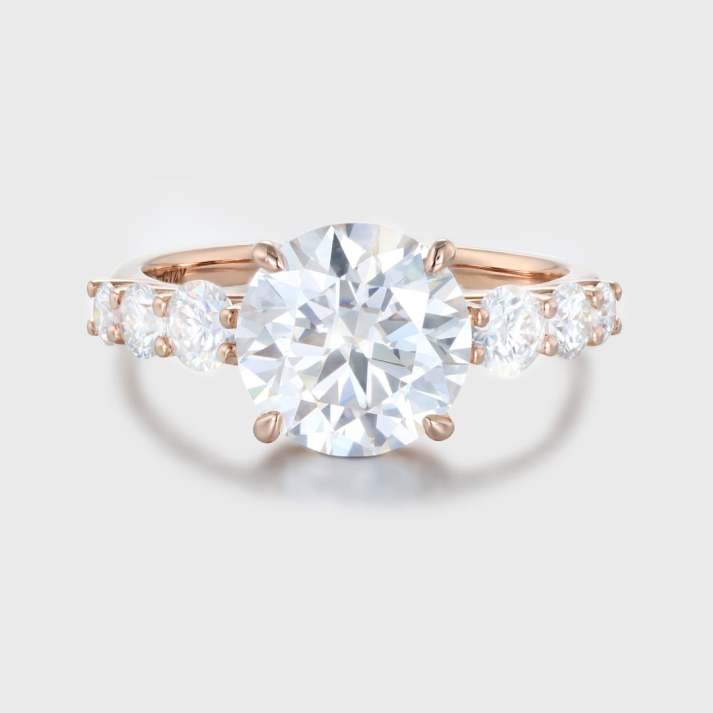
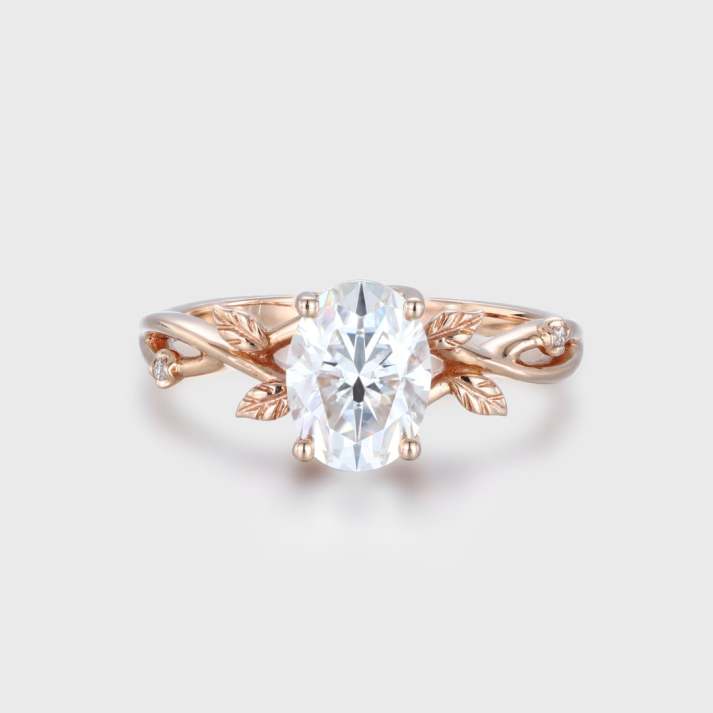
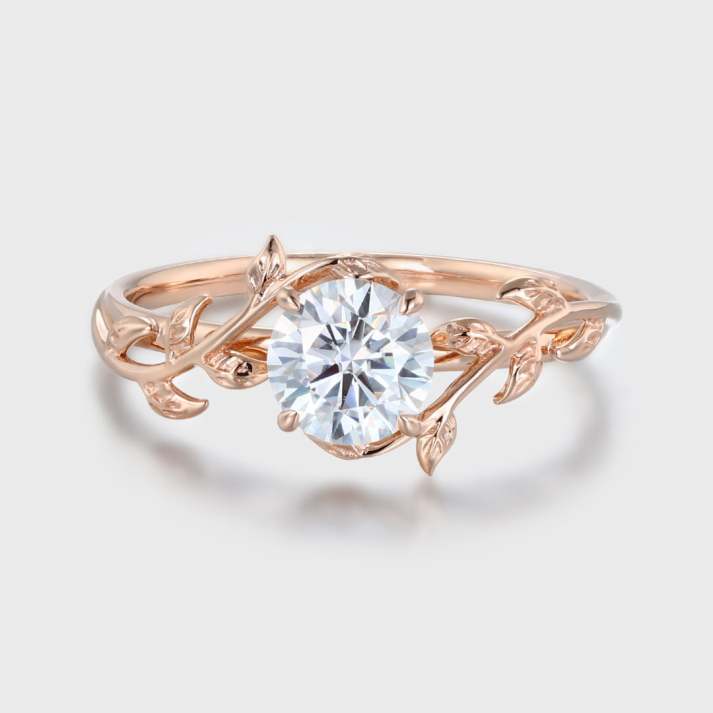
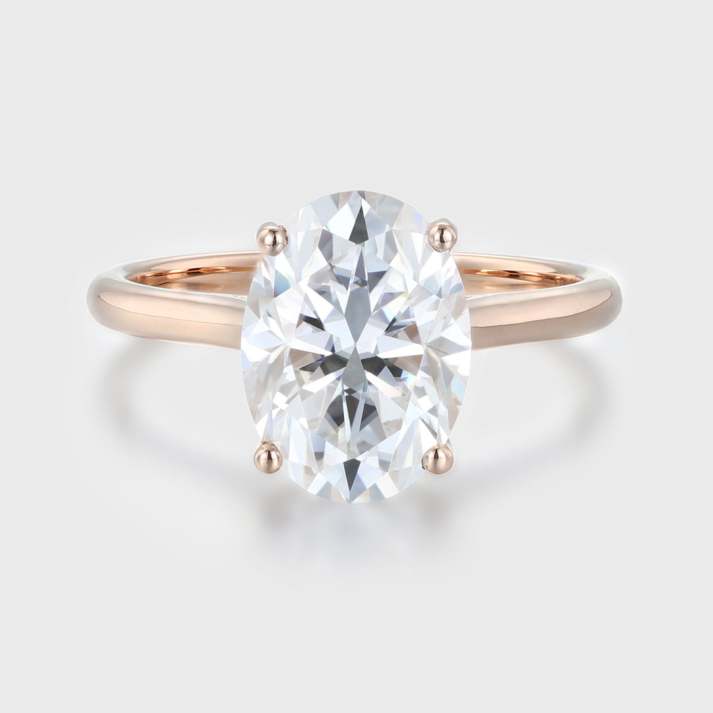
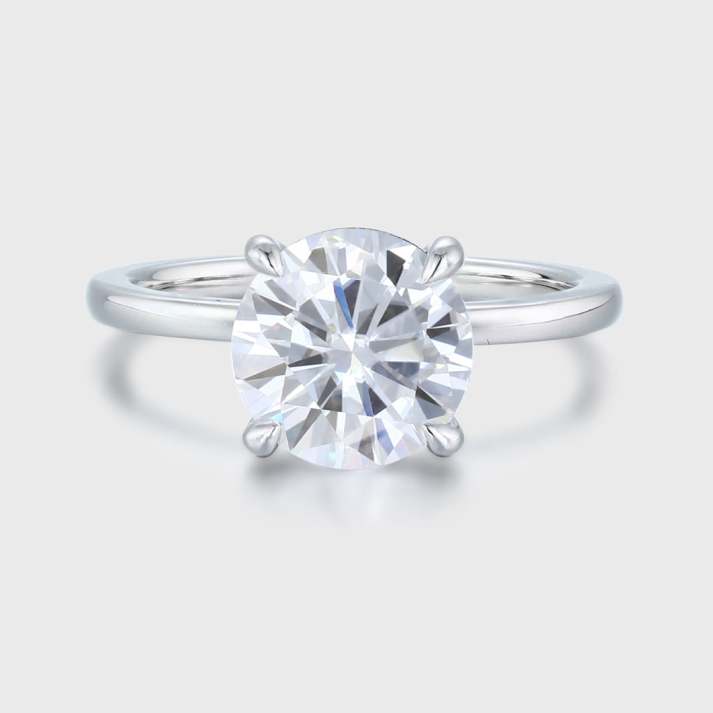
How to Compare a Round and Oval Moissanite Before You Buy
Instead of comparing “oval” and “round” only as categories, compare the actual stones you are considering.
1. Compare millimeter dimensions
Look at length and width, not just carat weight. This gives you a much clearer idea of face-up size.
2. Look at the complete ring
The same stone can look different in a delicate 1.5 mm band versus a wider band. Compare rings with similar band widths when judging shape.
3. Check the Oval's symmetry
The two sides of an oval should look balanced rather than noticeably uneven or lopsided.
4. Watch for the bow-tie
For an oval, look at both still images and movement. A dark center that becomes distracting from multiple angles deserves closer attention.
5. Compare the sparkle pattern
Ask yourself whether you prefer Round's more centered and symmetrical brilliance or Oval's elongated, more directional light pattern.
6. Think about the setting
A solitaire, halo, three-stone or nature-inspired setting can change the personality of the same center shape.
7. Consider the wedding band
Before choosing a ring, check whether the setting allows the type of wedding band you eventually want to wear.
This approach is more useful than simply asking which shape is “better.” Two well-cut stones can both be excellent choices while offering completely different visual experiences.
Oval vs Round Moissanite: Which Style Fits You?
Choose Round moissanite if you prefer:
- A classic circular silhouette
- Strong, concentrated brilliance
- Highly symmetrical design
- Easy pairing with traditional settings
- A centered and balanced appearance
Choose Oval moissanite if you prefer:
- An elongated silhouette
- More visual coverage across the finger
- A graceful, directional shape
- A slightly more distinctive alternative to Round
- Solitaire, halo or vintage-inspired designs
If you genuinely like both, compare an oval and round ring using the same metal, similar band width, similar setting and comparable stone dimensions. This removes much of the styling difference and lets you judge the shape itself.
Final Thoughts
Oval and Round moissanite each offer a distinct balance of brilliance, proportions, and style. Round is a timeless choice with strong symmetry and consistent sparkle, while Oval offers an elongated silhouette and greater visual presence. Neither is universally better—the right choice depends on how you want your engagement ring to look and feel. By considering the stone’s proportions, light performance, setting, and overall design together, you can choose the shape that best fits your personal style and the ring you will love wearing every day.
Frequently Asked Questions About Oval vs Round Moissanite
Usually, yes. Oval moissanite often has greater face-up visual coverage than a round stone of the same carat weight because its elongated outline distributes the stone over a longer area. Actual dimensions should always be compared.
Round Brilliant is generally known for strong, balanced light return because of its symmetrical facet arrangement. Oval can also be highly brilliant, but its appearance varies more with proportions, faceting, symmetry and bow-tie visibility.
The bow-tie effect is a darker area that can appear across the center of an elongated brilliant-cut stone. A subtle bow-tie is not necessarily a quality problem, but a pronounced one may affect the stone's overall appearance.
Either can work. Oval creates a stronger vertical line and may make the finger appear more elongated, while Round creates a compact, centered appearance. Stone dimensions and band width can be just as important as the shape itself.
Compare the actual millimeter dimensions, face-up appearance, symmetry, sparkle, setting height and band width. For an oval, also inspect the stone for a noticeable bow-tie effect and, when possible, view it in motion.