
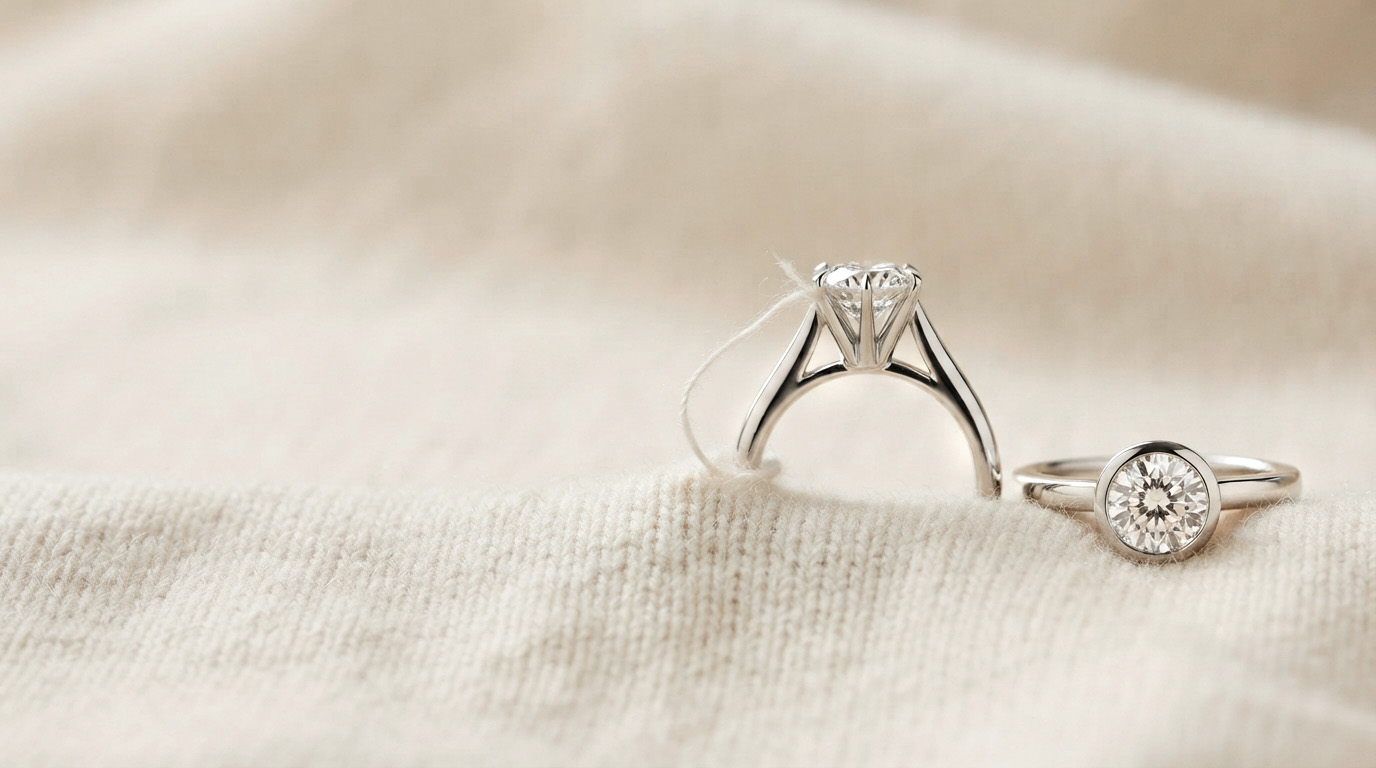
High-set rings with exposed or pointed prongs and raised decorative details are generally more likely to catch on clothing. Low-profile, bezel, flush, and smooth designs are usually less likely to snag.
A beautiful ring should fit comfortably into your everyday life. If it catches on sweaters, scarves, blankets, hair, or delicate fabrics, the problem is usually not the gemstone itself. More often, it comes down to the ring’s setting height, prong design, and exposed details.
This does not mean you need to avoid prong-set or high-set engagement rings. Understanding the design factors behind snagging can help you choose a ring that balances beauty, comfort, and everyday wear.
What Makes a Ring More Likely to Snag?
1. A High-Set Center Stone
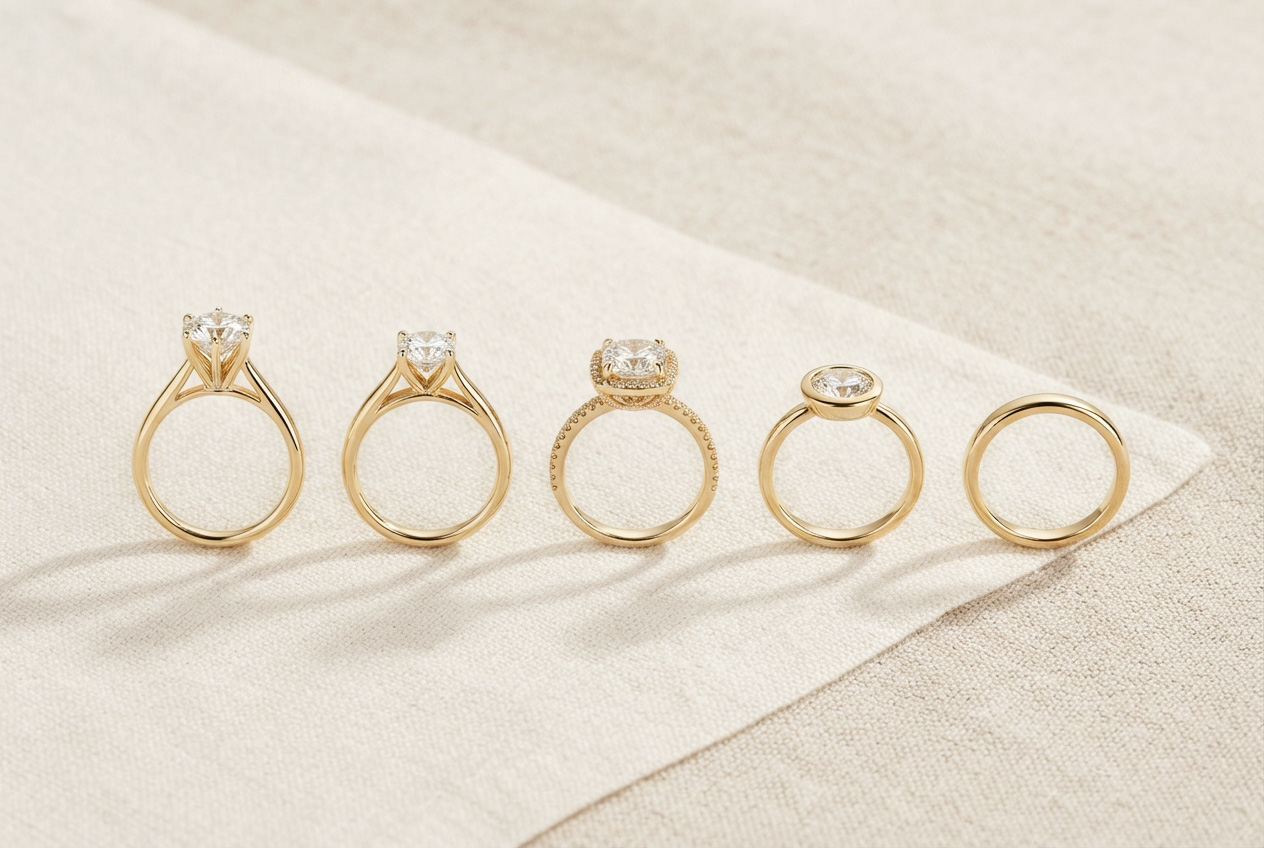
The height of the gemstone is one of the most important factors. When a center stone sits high above the finger, there is more space for fabric, hair, gloves, and towels to catch on the setting.
Tall solitaire and cathedral-style rings are more likely to snag than lower-profile designs. When shopping for an everyday ring, look at the side profile, not just the top view. A ring may look simple from above but sit surprisingly high on the finger.
2. Pointed or Exposed Prongs
Prongs hold the gemstone securely, but sharp, claw-like, uneven, or poorly polished prongs can create small points where fabric catches. Rounded and smoothly finished prongs are generally more comfortable. If a prong becomes bent, lifted, loose, or worn unevenly, snagging may suddenly become worse. This is why craftsmanship and regular inspection matter.
3. Sharp Gemstone Corners
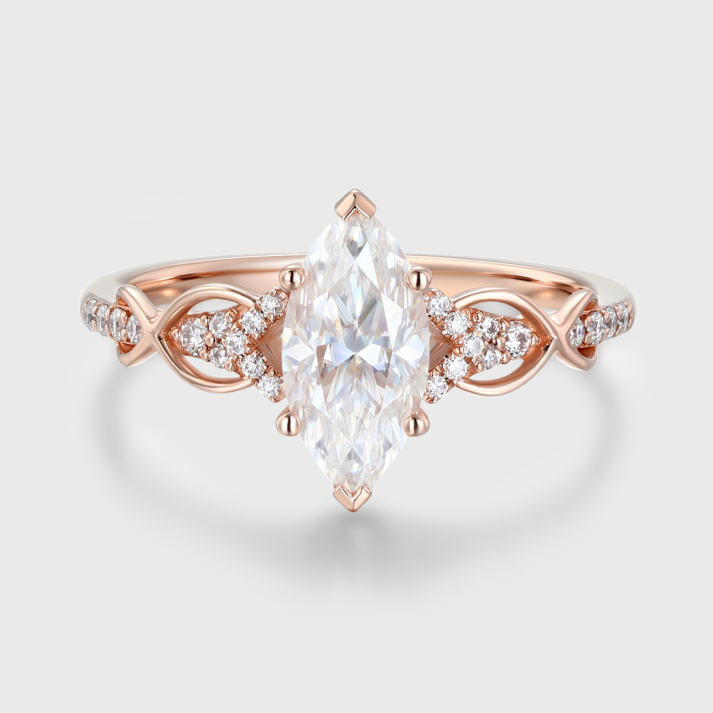
Pear, marquise, and some princess-cut gemstones have pointed corners or ends. When combined with a raised setting, these areas may come into contact with clothing more easily than round or oval stones. However, gemstone shape is not the only factor. A well-designed pear-shaped ring with a secure, smooth setting can be more comfortable than a poorly finished round solitaire with a tall setting.
4. Raised Decorative Details
Vintage-inspired and nature-inspired rings may include leaves, branches, filigree, milgrain, or open gallery work. These details add character, but designs that extend outward from the main structure may have more potential snag points.
If you prefer an intricate ring for everyday wear, pay close attention to its side profile and make sure the metal feels smooth rather than sharp.
Which Ring Settings Snag the Most?
|
Ring Setting |
Snagging Risk |
Main Reason |
|
High-set prong |
Higher |
Raised stone and exposed prongs |
|
Tall cathedral |
Higher |
Elevated center and open structure |
|
Claw prong |
Moderate to high |
Pointed prong tips |
|
High halo |
Moderate |
Multiple raised details |
|
Standard prong |
Moderate |
Depends on height and finishing |
|
Low-profile basket |
Low to moderate |
Keeps the stone closer to the finger |
|
Channel setting |
Low |
Stones sit between metal walls |
|
Flush setting |
Very low |
Stones sit close to the metal surface |
|
Bezel setting |
Very low |
Continuous metal rim creates a smooth edge |
|
Plain band |
Very low |
Few raised elements |
This is a general guide. The actual construction and finishing of each ring matter greatly. A well-made prong ring may snag very little, while a poorly finished low-profile ring can still catch on fabric.
Are Prong-Set and Bezel-Set Rings More Likely to Snag?
Prong-set and bezel-set rings have different levels of exposure around the center stone.
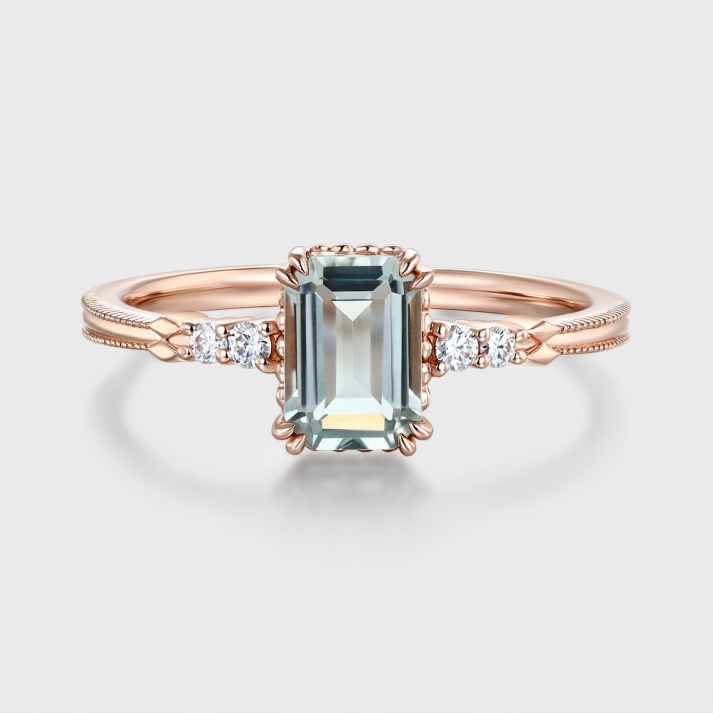
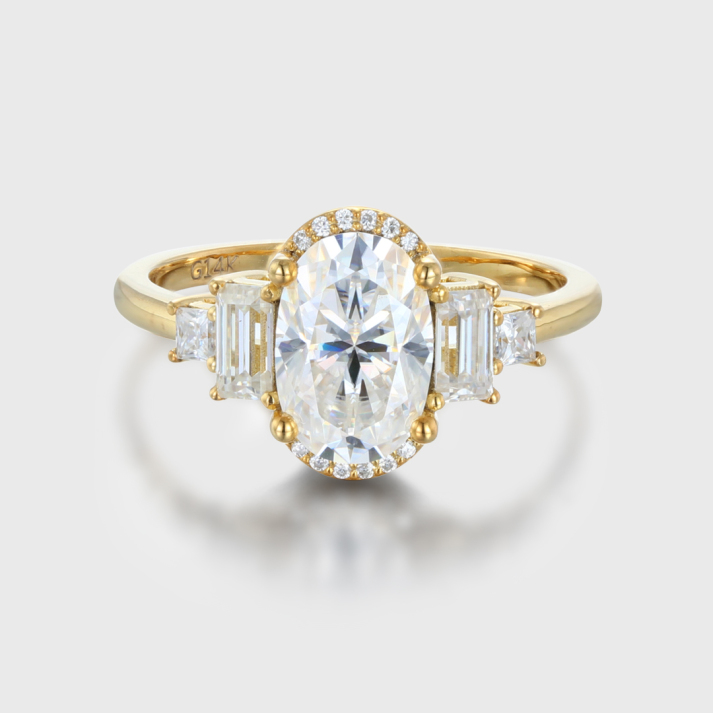
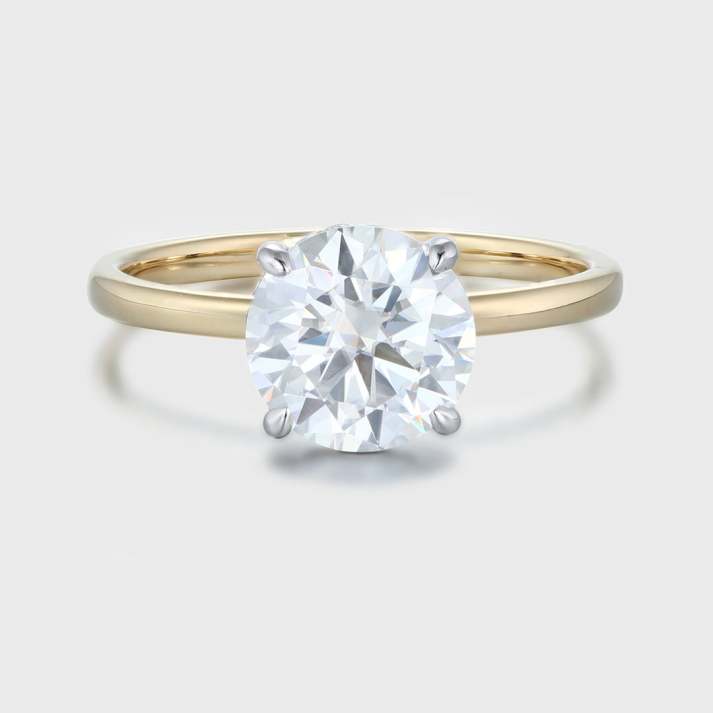
A prong setting holds the gemstone with several small metal claws. Because parts of the stone and setting remain exposed, the prongs can catch on clothing if they are tall, sharp, uneven, or poorly finished. However, prong-set rings are not automatically unsuitable for everyday wear. A low-profile design with rounded, polished prongs can be comfortable and practical.
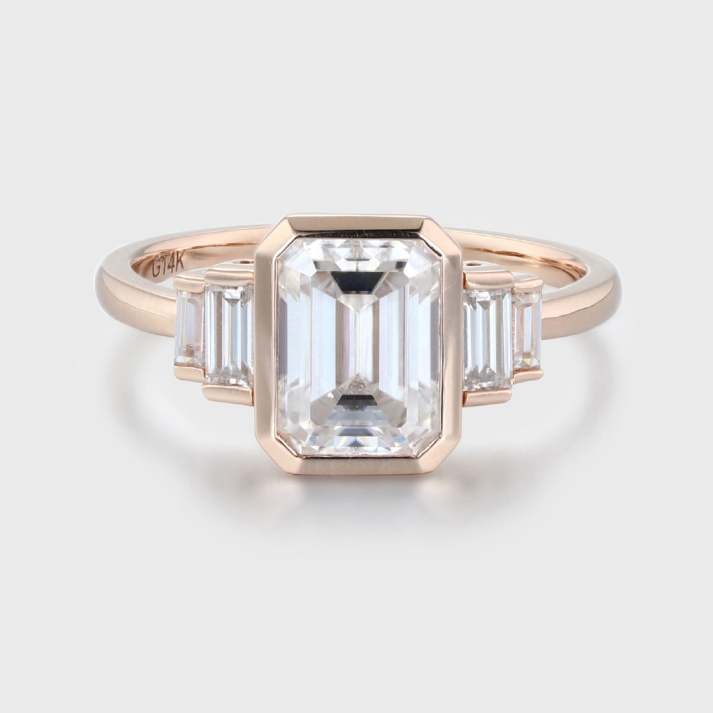
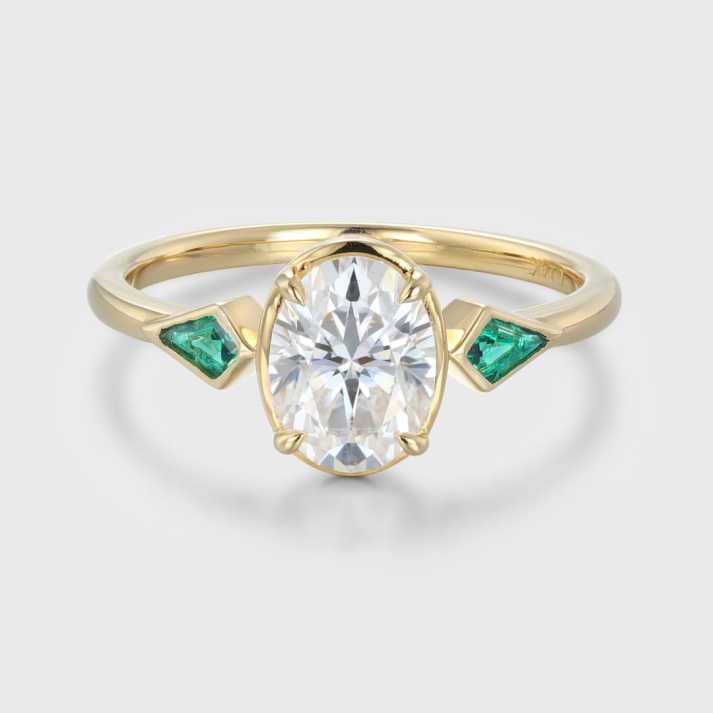
A bezel setting surrounds the gemstone with a continuous rim of metal. This enclosed structure generally creates a smoother outer surface and offers fewer exposed points that can catch on fabric. Bezel-set rings are often a practical choice for people who regularly wear sweaters, knitwear, lace, or other snag-prone clothing.
When comparing the two, inspect the ring from the side and around the stone. For a prong-set ring, look for rounded prongs, a secure basket, and a moderate setting height. For a bezel-set ring, check that the metal rim is smooth, even, and free from sharp edges.
Which Rings Are Least Likely to Catch on Clothes?
Bezel-Set Rings
A bezel setting surrounds the gemstone with a continuous rim of metal. With fewer exposed prong tips and open edges, it creates one of the smoothest profiles and offers additional protection around the stone.
Bezel settings are especially suitable for people who:
- Work with their hands
- Wear knitwear frequently
- Prefer low-maintenance jewelry
- Want a modern or minimalist look
- Need a ring for active everyday wear
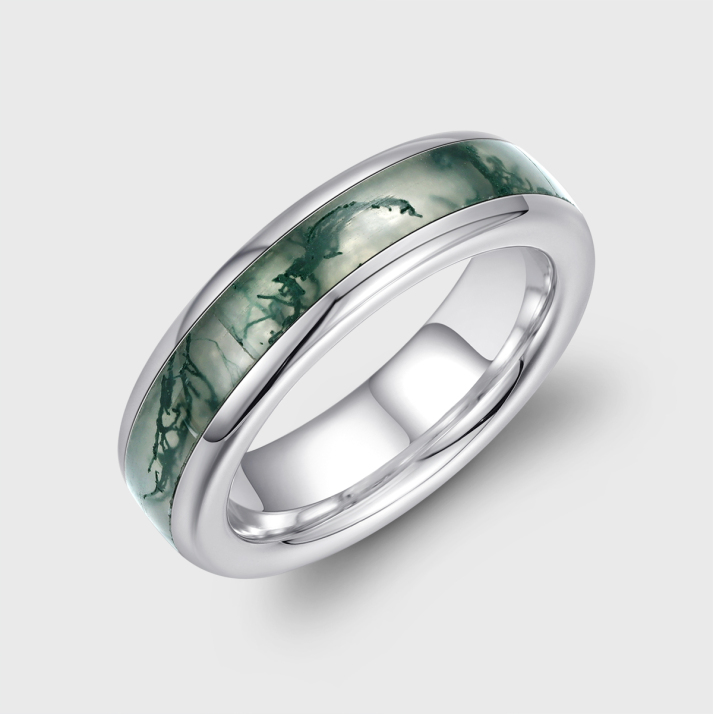
OVEELA offers bezel-set gemstone designs, including moss agate and moissanite rings, combining a smooth profile with distinctive gemstone character.
Flush-Set Rings
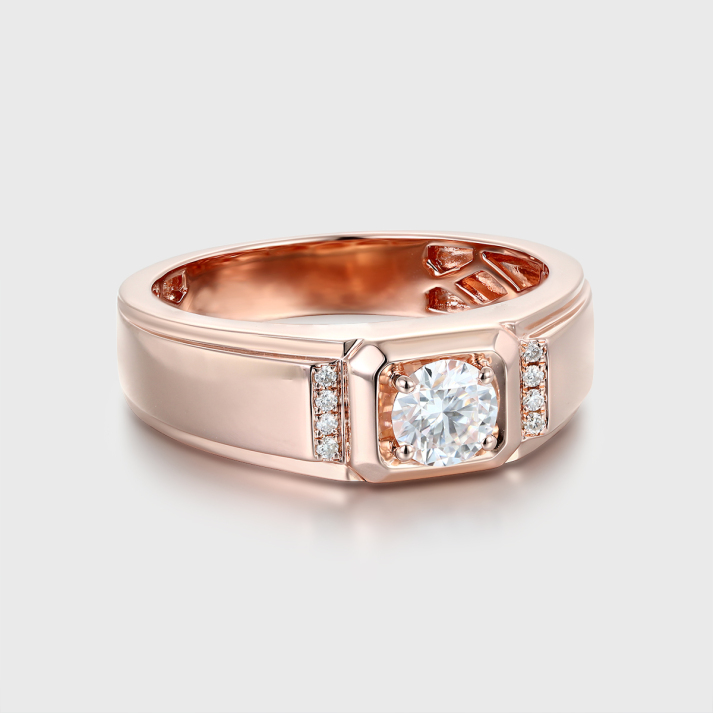
In a flush setting, the gemstone sits closely within the metal surface. With very few exposed elements, this style is naturally resistant to snagging and works well for minimalist rings and wedding bands.
Channel-Set Rings
Channel settings place gemstones between two metal walls, creating a relatively smooth surface without individual prongs projecting upward. They are commonly used for wedding bands and accent sections.
Low-Profile Basket Settings
A low-profile basket can be a good alternative if you prefer the look of a traditional gemstone ring but want less height than a classic solitaire. The stone remains visible while sitting closer to the finger.
Does Moss Agate Snag Easily?
Moss agate itself is not usually the main cause of snagging. The greater risk comes from how the stone is mounted. A low-profile bezel setting surrounds the stone with a smooth metal rim, leaving fewer edges to catch on clothing. By contrast, a high setting with exposed prongs or sharp corners creates more potential snag points, especially on sweaters, lace, and other loosely woven fabrics.
When choosing a moss agate engagement ring, check the ring from the side as well as from the top. Look for:
- How high the stone sits above the band
- Whether the edges are smooth or exposed
- Whether the prongs extend beyond the stone
- Whether the setting has a protective bezel or gallery rail
This principle also applies to moissanite, sapphire, emerald, alexandrite, and other gemstones. For everyday wear, setting height, edge finishing, and prong design usually have more impact on snagging than the gemstone type itself.
Explore OVEELA Engagement Rings
How to Check a Ring Before Buying
Look at the Side Profile
Check how far the gemstone rises above the band, whether there is a large open space underneath, and whether the prongs or side details extend outward.
Feel the Setting
If possible, gently run a finger over the ring. The metal should feel smooth, not sharp or rough. Even a small uneven prong can catch delicate fabric.
Consider Your Wardrobe and Lifestyle
If you frequently wear sweaters, scarves, wool coats, gloves, or delicate fabrics, a low-profile or bezel setting may be more comfortable. If you mostly wear smooth, structured clothing, occasional snagging may be less noticeable.
The best ring is not necessarily the lowest-profile design. It is the one that suits the way you live.
How to Stop Your Ring From Catching
If a ring that was once comfortable suddenly starts snagging, have it inspected. A prong may be bent, lifted, loose, or uneven.
You can also reduce snagging by:
- Removing your ring before putting on chunky knitwear
- Taking it off during gardening, weightlifting, cleaning, or other hands-on activities
- Avoiding pulling delicate fabrics directly over the setting
- Scheduling regular checks for prong-set rings
Repeated snagging should not be ignored, as it may indicate a setting problem that could affect gemstone security.
Final Thoughts
The rings most likely to catch on clothes are generally high-profile designs with exposed, pointed, or poorly finished prongs and raised decorative details.
Bezel, flush, channel, and low-profile settings usually provide a smoother, more snag-resistant design. Still, snagging should not be the only factor in your decision. Comfort, durability, gemstone protection, appearance, and compatibility with your lifestyle all matter.
At OVEELA Jewelry, we believe a ring should be beautiful from every angle and comfortable enough for real life. Whether you prefer a nature-inspired moss agate ring, a sparkling moissanite design, a classic prong setting, or a smooth bezel style, thoughtful construction can help you find a ring you will enjoy wearing every day.
Frequently Asked Questions
Bezel-set, flush-set, channel-set, and low-profile rings generally have fewer exposed areas where fabric can catch. Plain bands are also unlikely to snag.
They can. A high-set stone leaves more of the setting exposed to clothing, hair, and gloves.
Yes. A well-made prong setting with rounded, polished prongs and a reasonable height can be comfortable for daily wear.
They can have more potential snag points because of their pointed end, but the overall setting design matters more than the gemstone shape alone.
Yes. Its smooth metal rim helps reduce snagging and provides additional protection around the gemstone.
A bent, lifted, loose, or uneven prong may be the cause. Have the ring inspected by a professional jeweler.