
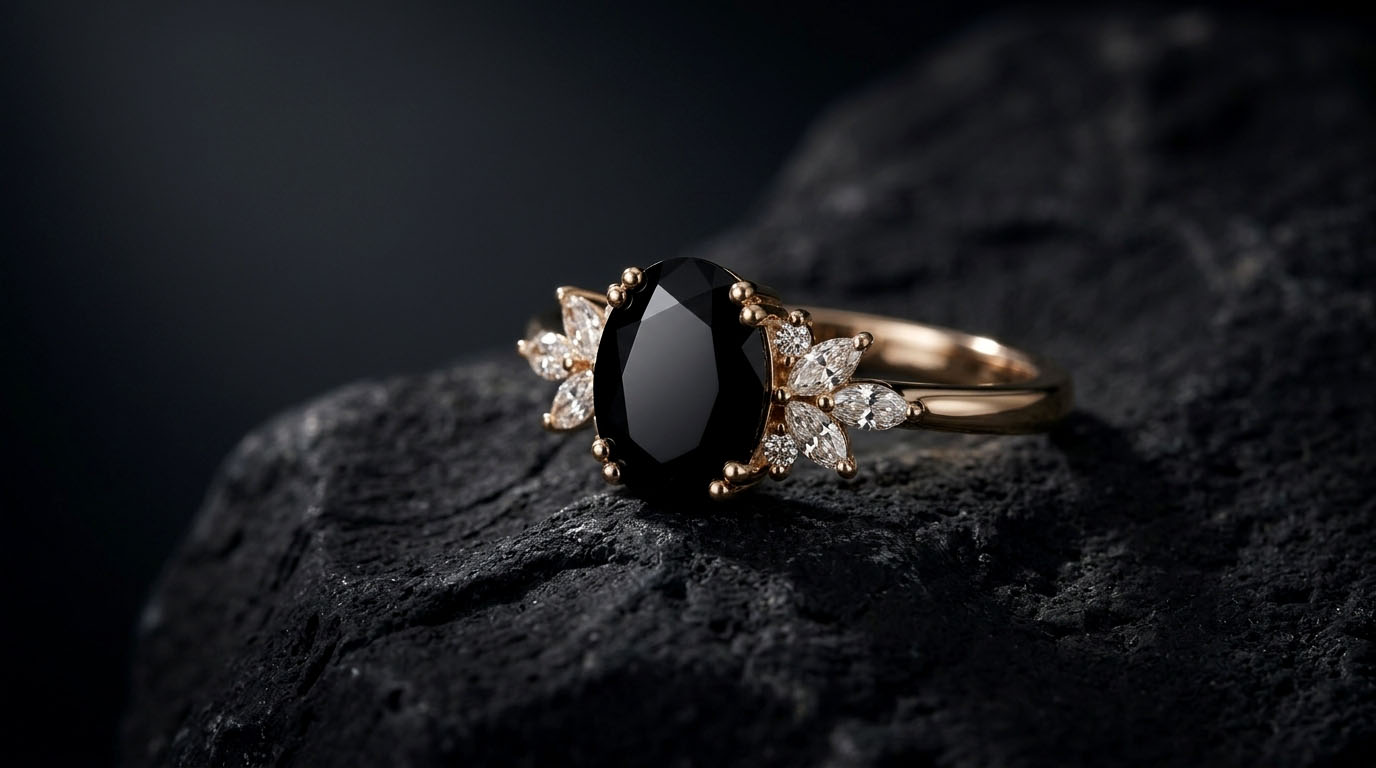
Not every engagement ring needs to sparkle to make a statement. For some couples, a deep black gemstone feels more personal than a traditional diamond, offering a look that is bold, understated, and unmistakably individual. Black onyx brings that distinctive character to engagement jewelry, whether it appears in a minimalist solitaire, a vintage-inspired setting, or a design with contrasting diamond accents.
But appearance is only part of the decision. If you're considering a black onyx engagement ring, it's worth understanding the gemstone's durability, common treatments, setting options, and care requirements before choosing a design. This guide covers what matters most so you can decide whether black onyx is the right stone for your style and everyday life.
What Is Black Onyx? Understanding Its Color and Appearance
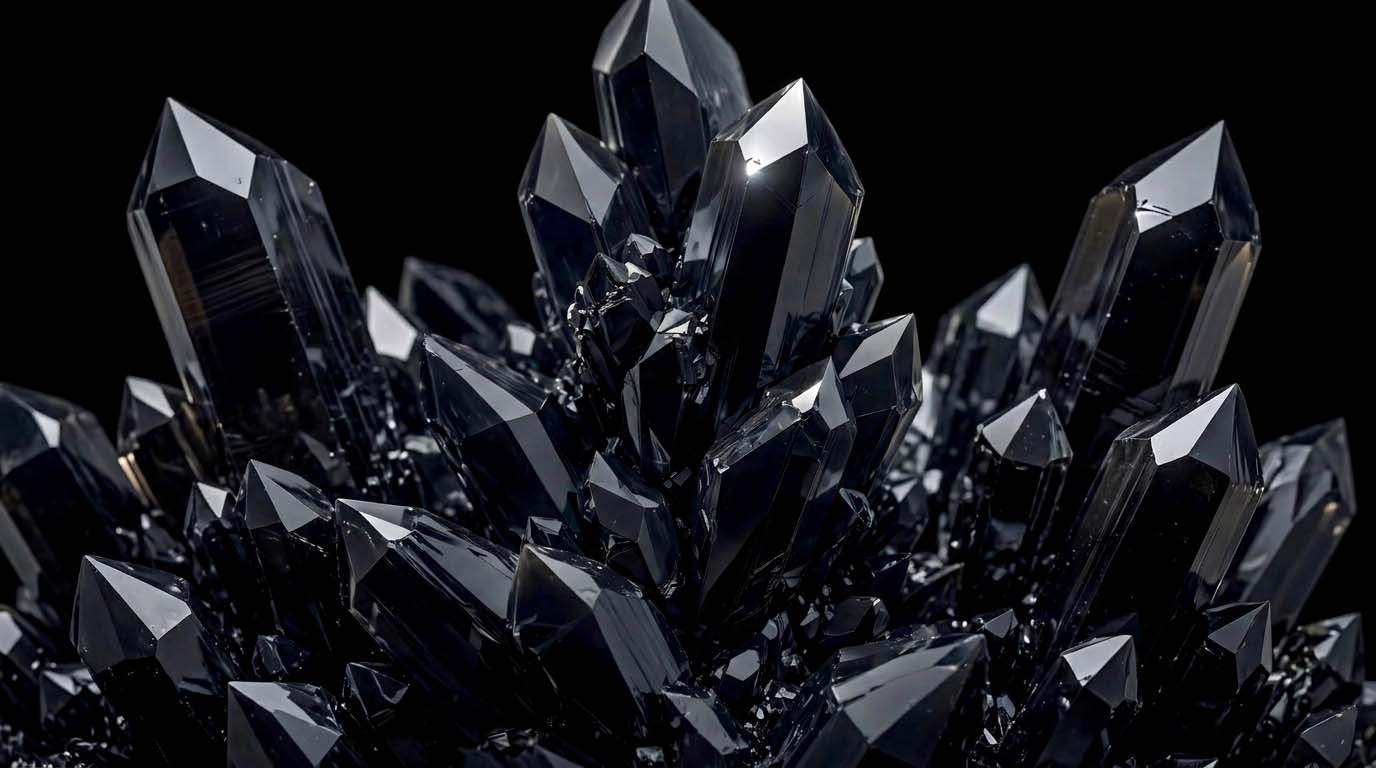
Black onyx is a variety of chalcedony, a microcrystalline form of quartz. It is known for its opaque, deep black appearance and smooth, polished surface. Unlike a diamond, which is valued partly for its brilliance and dispersion, black onyx creates visual impact through its solid color, reflective polish, and strong contrast with surrounding metals.
Traditional onyx has parallel color bands, but the uniformly black material commonly sold as black onyx is often chalcedony that has been dyed to achieve its characteristic appearance. This is a widely used gemstone treatment, not automatically evidence of an imitation stone. Buyers should simply confirm what treatment information the seller provides.
Black onyx also offers considerable design flexibility. A rounded cabochon creates a smooth, understated surface, while a faceted or geometric cut gives the ring a more structured, contemporary appearance. Its dark color can feel minimalist in a simple setting or dramatic when surrounded by intricate metalwork and bright accent stones.
Is Black Onyx a Good Choice for an Engagement Ring?
Yes, black onyx can be a meaningful choice for an engagement ring, particularly for someone who prefers a distinctive gemstone over a conventional diamond. However, whether it is the right choice depends on how the ring will be worn and how much maintenance the wearer is comfortable with.
The main advantages of black onyx include:
- A distinctive appearance:Its opaque black surface creates a strong focal point without relying on traditional diamond sparkle.
- Versatile styling:Black pairs naturally with yellow gold, white gold, rose gold, and platinum.
- Design flexibility:Black onyx works with minimalist, vintage, Art Deco, modern, and alternative engagement ring styles.
- Accessible gemstone material cost:Onyx is generally less expensive as a gemstone than diamonds and many rare colored stones, although the finished ring's price still depends on its metal, craftsmanship, and design.
There are also trade-offs. Black onyx is less scratch-resistant than diamond or moissanite, and its polished surface can become damaged by rough handling. It is not the best option for someone who wants an engagement ring that requires almost no special care.
For the right wearer, however, its visual character and personal significance can outweigh those limitations.
How Durable Is Black Onyx for Everyday Wear?
Black onyx typically measures approximately 6.5–7 on the Mohs hardness scale. This indicates reasonable resistance to scratching, but hardness is not the same as toughness. A gemstone can resist everyday abrasion and still chip or crack when struck against a hard surface.
Because rings are exposed to more knocks and contact than many other types of jewelry, this distinction matters. Black onyx can be worn regularly with sensible precautions, but it should not be treated as indestructible.
For an engagement ring intended for frequent wear, consider three factors:
- The setting:A protective bezel that surrounds the stone's edge can help reduce exposure to direct impacts. Prong settings can show more of the gemstone, but exposed edges may require greater care.
- The wearer's routine:Someone who works with their hands, exercises with weights, or regularly performs physical tasks may need to remove the ring more often.
- The stone's condition:Look for a well-polished surface without visible chips, cracks, or significant scratches.
If durability is a major priority, consider how different gemstones perform under everyday conditions. OVEELA's guide to choosing a sapphire engagement ring explains why sapphire is worth considering for those who want greater scratch resistance. Ultimately, black onyx can be a distinctive choice for an engagement ring, provided you're comfortable giving it the care its material properties require.
How to Choose a Black Onyx Engagement Ring Style
The shape and cut of black onyx influence how the ring looks on the hand. Because the gemstone does not display the same brilliance as a diamond, its outline, surface finish, and surrounding design play especially important roles.
Cabochon vs. faceted cuts
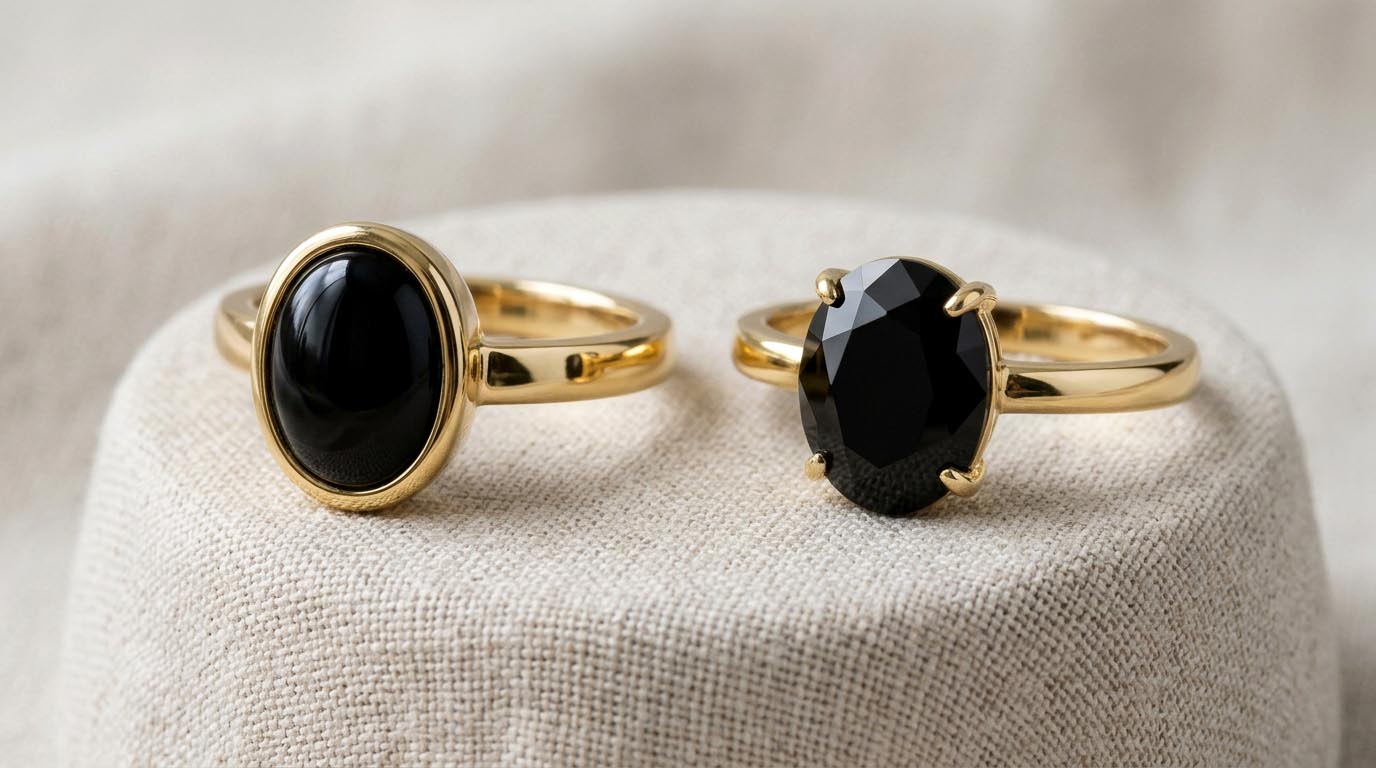
A cabochon has a smooth, rounded or domed top rather than conventional facets. It emphasizes the stone's solid black color and polished surface, making it suitable for signet-inspired, vintage, and understated designs.
Faceted black onyx has multiple flat surfaces that create geometric reflections. It can look sharper and more architectural, particularly in contemporary rings with clean lines.
Popular gemstone shapes
- Round:Balanced and familiar, with a simple silhouette that works well in solitaire and halo settings.
- Oval:Elongated and elegant, creating a softer outline along the finger.
- Cushion:Combines rounded corners with a substantial appearance, making it suitable for vintage-inspired designs.
- Emerald cut or rectangular shapes:Emphasize symmetry and straight lines for a more structured, modern look.
- Pear or marquise:Introduce directional lines and a less conventional silhouette.
There is no universally best shape. Choose according to the overall design you want, the size of the gemstone, and how comfortably the ring sits on the hand.
For a minimalist look, a single black onyx stone with a clean band may be enough. If you prefer a more elaborate design, small diamond or moissanite accents can introduce contrast without taking attention away from the center stone.
Which Metal and Setting Work Best With Black Onyx?
The metal surrounding black onyx changes the ring's overall mood, while the setting affects how securely the gemstone is held.
Yellow gold creates a warm, high-contrast combination with black. It works especially well in vintage-inspired rings, engraved bands, and designs with decorative details.
White gold and platinum produce a cooler, more defined contrast. They suit geometric silhouettes, contemporary designs, and rings with bright accent stones. Platinum is also valued for its durability, although the finished ring's performance still depends on its construction.
Rose gold softens the visual contrast. Its pinkish tone can make a black center stone feel warmer and more romantic, particularly in delicate or nature-inspired designs.
The setting deserves equal attention:
- Bezel setting:Metal surrounds the stone's perimeter, helping protect its edges from direct contact. It creates a clean outline and is worth considering for frequent wear.
- Prong setting:Holds the gemstone with individual metal claws, exposing more of the stone. The design can look lighter and more open, but the exposed edges require care.
- Halo setting:Places smaller accent stones around the center gemstone. It introduces additional sparkle and visual size, although the added details may require more cleaning and maintenance.
A protective setting does not make a ring damage-proof. The stone's fit, the quality of the craftsmanship, and the wearer's habits all contribute to long-term performance.
If you want a ring designed around a particular stone shape or metal combination, OVEELA's custom engagement ring process explains how design preferences can be developed into a finished piece.
What to Check Before Buying a Black Onyx Engagement Ring
Before purchasing, look beyond the overall appearance. A polished black gemstone can look similar in product photographs even when the stone quality, treatment history, and construction differ.
- Color and surface quality
Look for a consistent black appearance that suits your preference, together with a smooth, even polish. Inspect the stone for visible chips, cracks, pits, or scratches. Minor visual characteristics should be assessed in context, rather than assuming that every natural gemstone must look absolutely flawless.
- Treatment disclosure
Ask whether the black onyx has been dyed or otherwise treated. Dyed chalcedony is common in the black onyx market, and the treatment itself does not automatically make the gemstone unsuitable for fine jewelry.
A trustworthy seller should describe the gemstone accurately and disclose relevant treatments when known. If treatment status is important to you, ask for clarification before purchasing rather than relying on appearance alone.
- Cut and proportions
Consider the stone's length, width, outline, and overall balance with the band. A larger center stone may create a stronger statement, while a smaller stone can feel more discreet and easier to incorporate into everyday styling.
- Metal and craftsmanship
Confirm the metal type and purity, the quality of the setting, and whether the gemstone sits securely. Check the ring's dimensions and profile as well as its appearance from above.
- Ring size and purchasing policies
Make sure the ring size is correct and review the seller's resizing, return, warranty, and repair policies. Resizing can be more complicated for rings with intricate settings or continuous accent stones, so it is best to clarify the available options beforehand.
Avoid relying on simple home tests, such as touching the stone to judge its temperature or deliberately scratching it to test hardness. These methods cannot reliably establish gemstone identity and may damage the jewelry. If authenticity or treatment status is a major concern, seek appropriate documentation or an independent gemological assessment.
How to Clean and Care for a Black Onyx Ring
Black onyx does not require an elaborate cleaning routine, but gentle handling helps preserve its polished surface.
For routine cleaning, use a soft cloth and, when appropriate, lukewarm water with a small amount of mild soap. Gently clean the gemstone and metal, rinse away any residue, and dry the ring thoroughly with a soft cloth.
Avoid abrasive cleaners, harsh chemicals, and unnecessary scrubbing. Because black onyx is often dyed, it is sensible to avoid aggressive cleaning methods that could affect the stone or its treatment. Do not assume that ultrasonic or steam cleaning is suitable; ask a qualified jeweler about the specific stone and setting first.
A few additional habits can help protect the ring:
- Remove it before heavy exercise, manual work, or activities involving repeated impacts.
- Avoid wearing it while handling household cleaning products.
- Store it separately from harder gemstones that could scratch its polished surface.
- Check the setting periodically for loose stones, worn prongs, or other signs of damage.
If the ring is intended for everyday wear, regular care and occasional professional inspection are particularly worthwhile.
Is a Black Onyx Engagement Ring Right for You?
A black onyx engagement ring is worth considering if you love deep, opaque color, prefer a modern or alternative aesthetic, and want a ring that expresses your personality rather than following tradition.
It may be especially appealing to someone drawn to minimalist jewelry, vintage details, Art Deco geometry, or dramatic black-and-gold contrast. Its distinctive appearance can make an engagement ring feel personal without requiring an elaborate design.
However, black onyx is not the ideal choice for everyone. If you want maximum scratch resistance, intense sparkle, or a gemstone that demands very little attention, a diamond, moissanite, or sapphire may better suit your priorities.
The best engagement ring balances appearance, durability, comfort, and personal meaning. By understanding black onyx's characteristics and choosing an appropriate setting, you can make a more informed decision about whether this distinctive gemstone belongs in your story.
Frequently Asked Questions
Yes. Black onyx can work well in engagement rings for people who value its distinctive black color and individual style. Choose a secure setting and understand its care requirements before committing to everyday wear.
You can wear it regularly with reasonable care, but black onyx is not scratch-proof or impact-proof. Remove it during activities that could expose the gemstone to hard knocks or abrasion.
Much of the uniformly black onyx sold commercially is dyed chalcedony. This is a common treatment, not automatically a sign of imitation. Ask the seller to disclose the gemstone's identity and known treatments.
Yellow gold creates a warm, dramatic contrast; white gold and platinum produce a cooler, modern look; and rose gold softens the overall appearance. The best choice depends on your preferred style and the rest of your jewelry.
Use a soft cloth and mild soapy water when appropriate, then dry it gently. Avoid abrasive products and aggressive cleaning methods, particularly when the stone's treatment history is unknown.
Neither is universally better. Black onyx is valued for its opaque, polished appearance and is generally more affordable as a gemstone material. Black diamonds have different material properties and may have their own treatment considerations. Choose based on appearance, durability, budget, and the specific ring design.
A bezel setting is worth considering if you want additional protection around the stone's edges. Prong and halo settings offer different visual effects but require appropriate construction and care. The best setting balances the appearance you want with how you plan to wear the ring.