
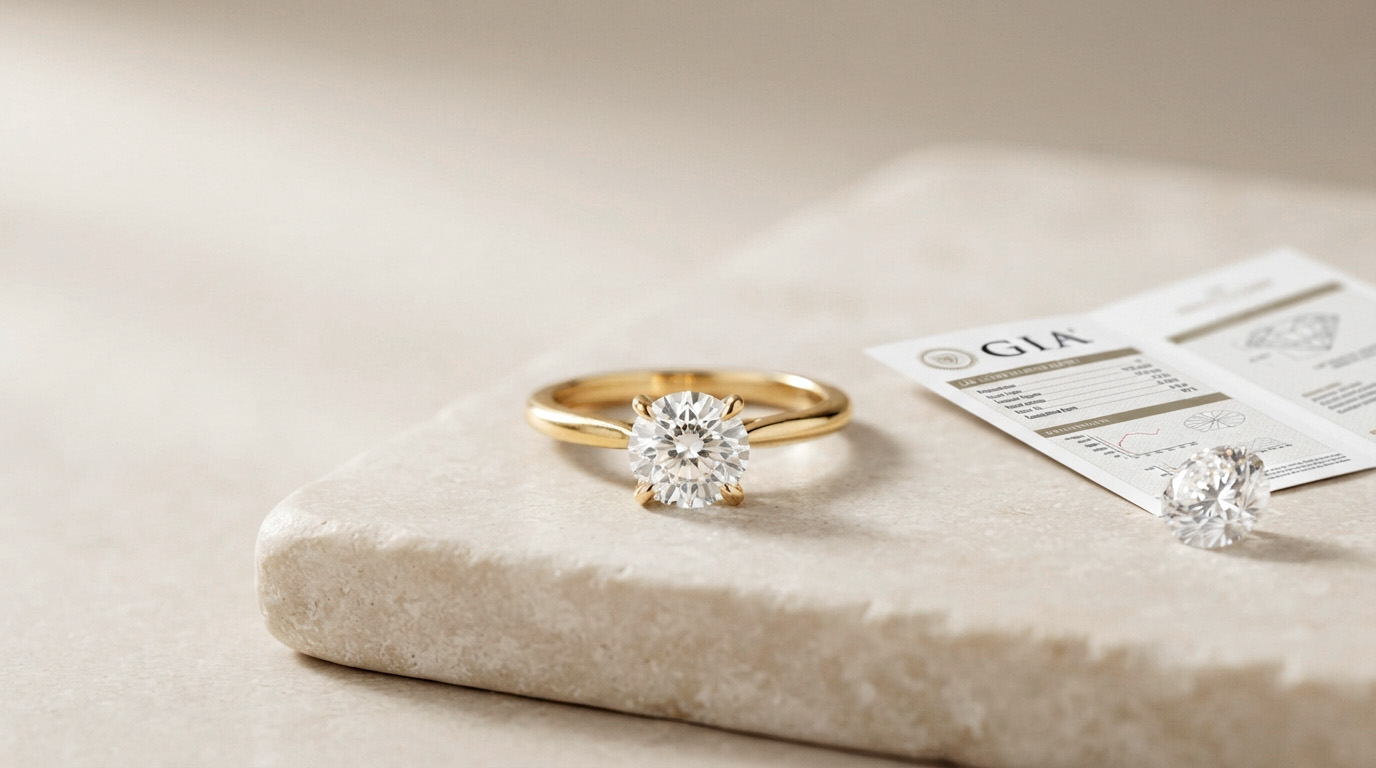
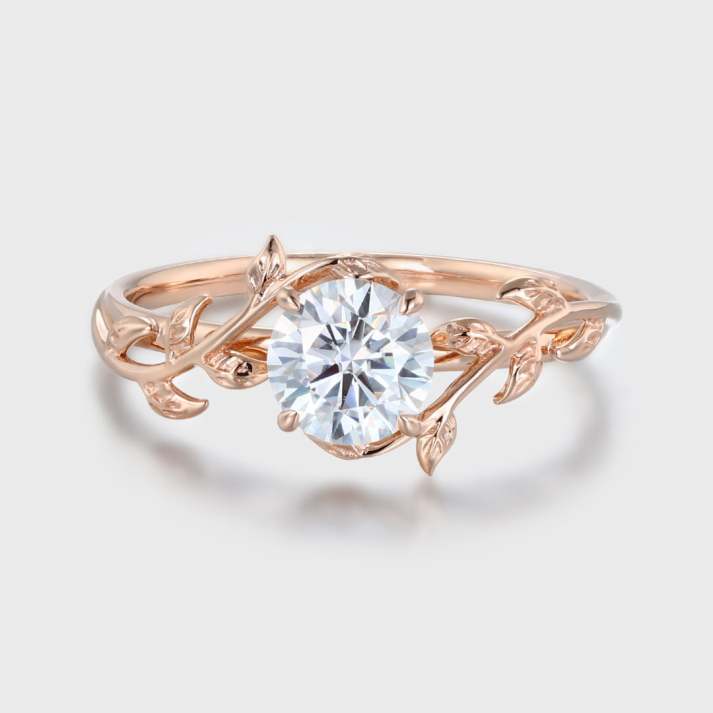
A lab grown diamond ring can offer the look, durability, and diamond characteristics many buyers want while giving them more flexibility when planning a ring budget. But choosing one still requires more than comparing carat weights and prices.
From diamond quality and certification to shape, setting, metal, and overall value, several factors affect the final ring. This guide explains what to look for when buying a lab grown diamond ring, so you can compare your options with greater confidence.
What Is a Lab Grown Diamond?
A lab grown diamond is a diamond created in a controlled laboratory environment rather than formed naturally beneath the earth. It is a real diamond, not a diamond simulant such as moissanite or cubic zirconia.
Lab grown diamonds have essentially the same chemical composition and fundamental physical and optical properties as natural diamonds. The primary distinction is their origin: one grows in nature, while the other is produced using modern diamond-growing technology.
For buyers, this means the important questions are not simply whether a lab grown diamond is “real,” but how well it is cut, how it looks, how its characteristics are documented, and how it fits into the finished ring.
How Are Lab Grown Diamonds Made?
The two main methods used to grow diamonds are High Pressure High Temperature (HPHT) and Chemical Vapor Deposition (CVD). HPHT recreates conditions associated with natural diamond formation by using high pressure and high temperature around a diamond seed. CVD uses a controlled chamber containing carbon-rich gases, allowing carbon atoms to build onto a diamond seed layer by layer.
Both methods can produce gem-quality diamonds. A grading report may identify the laboratory-grown origin and, depending on the laboratory and report type, provide information about growth method or treatments. For most shoppers, the growth method is only one part of the buying decision. The finished diamond’s characteristics, appearance, documentation, and price should all be considered together.
Are Lab Grown Diamonds Real Diamonds?
Yes. Lab grown diamonds are genuine diamonds rather than imitations. Because their properties are so similar to natural diamonds, visual inspection alone is not a reliable way for most consumers to determine whether a diamond was laboratory-grown or mined. Professional gemological testing and documentation provide a more dependable way to establish origin.
If you want to learn how professionals identify laboratory-grown diamonds, see our guide to How to Tell If a Diamond Is Lab Grown: Certification, Testing & Identification.
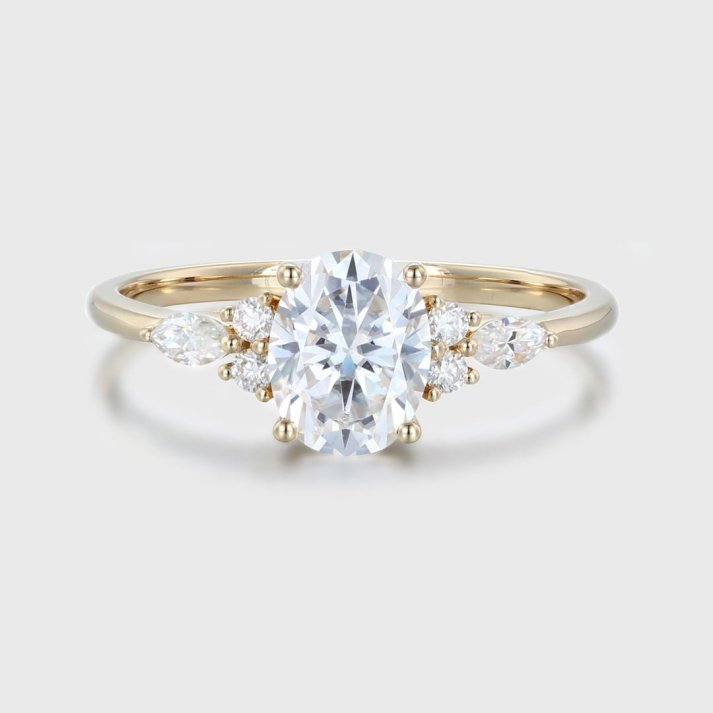
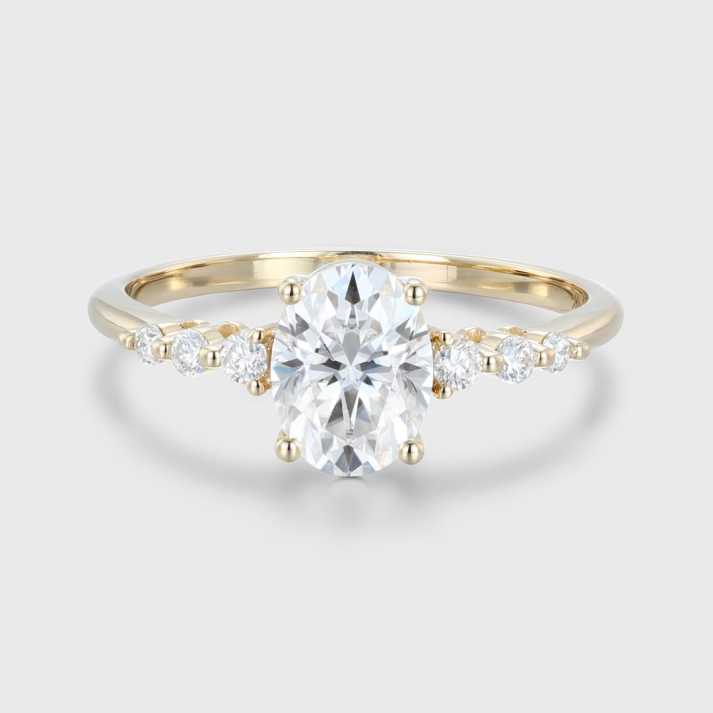
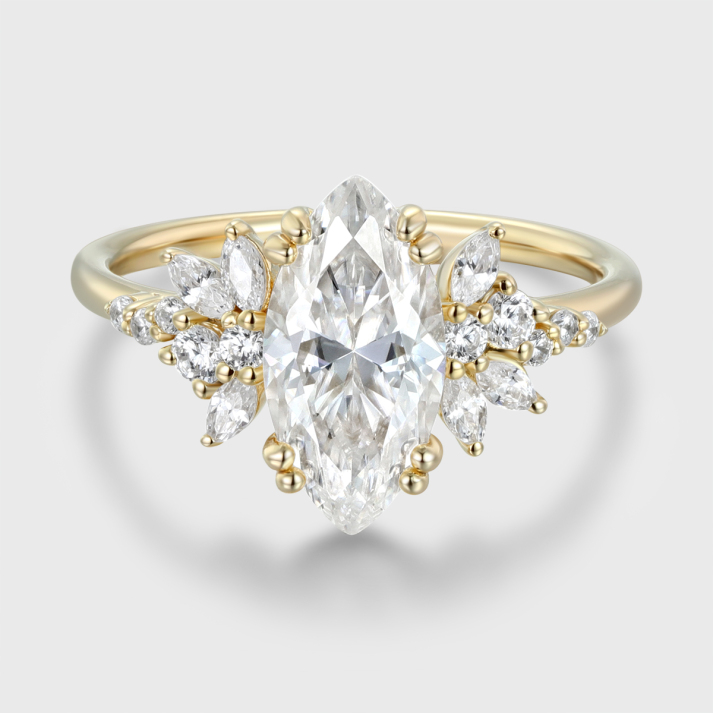
How to Evaluate Lab Grown Diamond Quality: The 4Cs
When comparing lab grown diamonds, you will often encounter the traditional 4Cs: Cut, Color, Clarity, and Carat Weight. These characteristics help describe and compare diamonds, but they should not be treated as four completely separate boxes to check.
Cut
Cut describes how effectively a diamond’s proportions and facets interact with light. It has a major influence on brightness, fire, and scintillation.
Do not confuse cut with shape. Round, oval, emerald, pear, and radiant describe the diamond’s shape, while cut concerns how the stone has been fashioned and how it performs visually.
When comparing two diamonds with similar color, clarity, and carat weight, pay close attention to how they actually look rather than choosing based on a single grade alone.
Color
For traditional colorless-to-near-colorless diamonds, color is commonly described using a D-to-Z scale. Diamonds toward the D end show less body color, while lower grades may display more warmth.
The ideal color depends partly on the metal and the look you want. A diamond does not necessarily need the highest color grade to appear bright and attractive in a finished ring.
Clarity
Clarity refers to internal characteristics, called inclusions, and surface characteristics, called blemishes. Higher clarity grades generally contain fewer or less noticeable characteristics, but the highest grade is not automatically the best choice for every buyer. What matters is how visible those characteristics are and whether they affect the diamond’s overall appearance.
Our Lab Grown Diamond Clarity Guide explains how to compare clarity grades and why an eye-clean diamond can sometimes make more sense than simply choosing the highest available grade.
Carat Weight
Carat measures a diamond’s weight, not its visible dimensions. Two diamonds with the same carat weight can look different in size because their proportions and shapes are different. This is especially important when comparing elongated shapes such as oval, pear, and marquise diamonds. For that reason, check the diamond’s measurements as well as its carat weight when comparing stones.
Why Cut Quality Matters More Than Many Buyers Expect
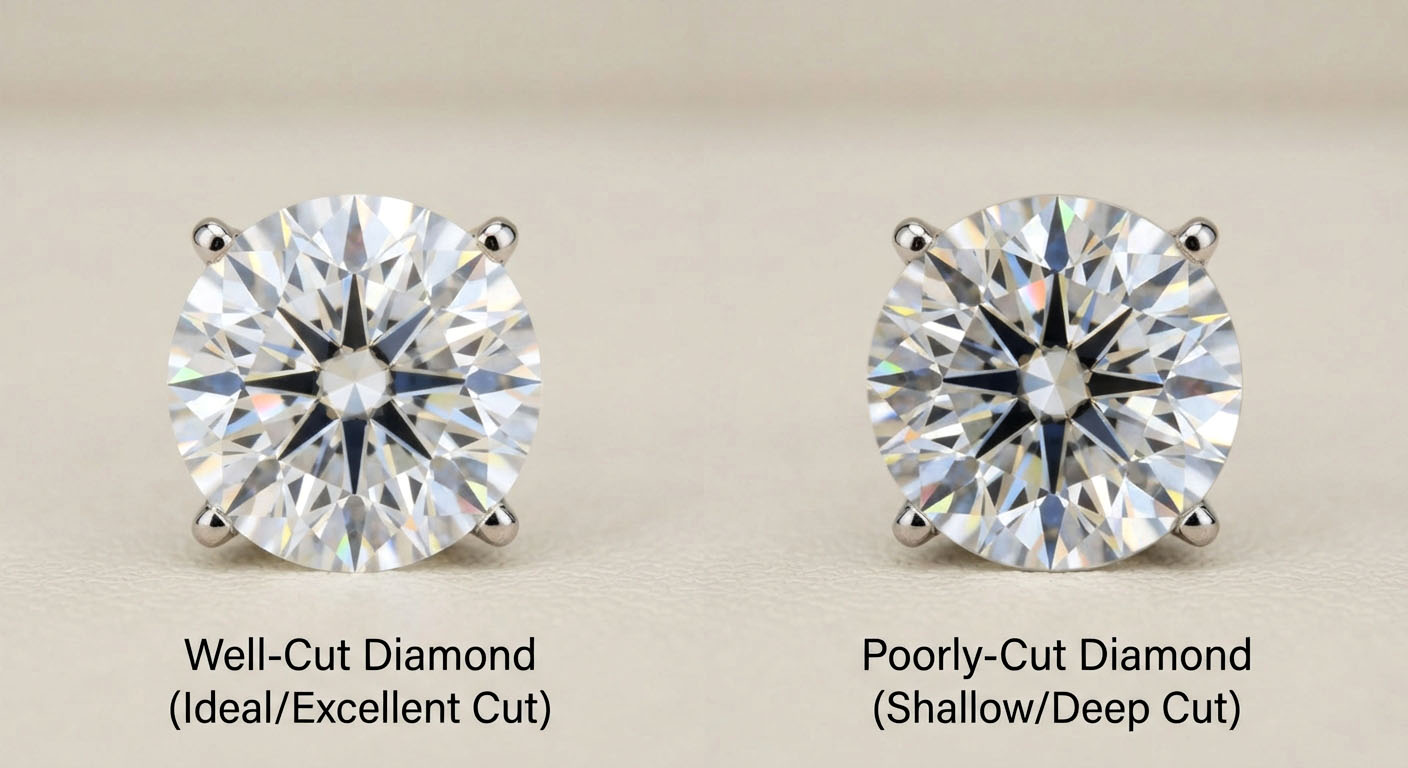
It is easy to focus on carat weight because it is one of the most obvious numbers on a diamond listing. However, a larger diamond does not automatically look better. A well-cut diamond can return light effectively and appear lively and bright, while a poorly proportioned stone may look less impressive even when it has a higher clarity or carat grade. This is why it is useful to compare the actual diamond, its proportions, grading information, and available images or videos rather than shopping by the 4Cs alone.
How Much Do Lab Grown Diamond Rings Cost?
The price of a lab grown diamond ring depends on much more than the carat weight of its center stone. The diamond’s cut, color, clarity, shape, measurements, and certification can all affect its price. The ring itself also contributes to the final cost through the setting design, metal type, accent stones, craftsmanship, and customization.
Lab grown diamonds are generally less expensive than comparable natural diamonds, but there is no single fixed price difference that applies to every stone. Market conditions and available supply can also change over time. Instead of asking only, “How much does a 2-carat lab grown diamond cost?”, compare the complete specifications of the diamonds you are considering. A lower-priced stone may have different color, clarity, cut, shape, measurements, or documentation.
For an engagement ring, it can also be useful to decide your total ring budget first, then determine how much of that budget you want to allocate to the center diamond versus the setting and design.
Lab Grown Diamond Certification: What Should You Look For?
A grading report gives buyers independent documentation of a diamond’s characteristics and laboratory-grown origin.
When reviewing a report, check the:
- Diamond origin designation
- Carat weight
- Color
- Clarity
- Cut or overall quality assessment, depending on the laboratory and report type
- Measurements
- Shape and cutting style
- Treatment or growth information when provided
- Report number and laser inscription when applicable
Certification systems can differ between laboratories. For example, IGI provides laboratory-grown diamond reports documenting origin, shape, measurements, and 4Cs information. GIA’s current laboratory-grown diamond services for qualifying colorless-to-near-colorless stones use an overall Premium or Standard quality assessment rather than applying the natural-diamond nomenclature in the same way. The important point is to understand what the report actually documents and verify that the report corresponds to the diamond you are purchasing. A laser inscription can provide another way to match the physical diamond with its report. IGI, for example, uses laser inscription to connect a laboratory-grown diamond with its report information.
What Diamond Shape Is Best for a Lab Grown Engagement Ring?
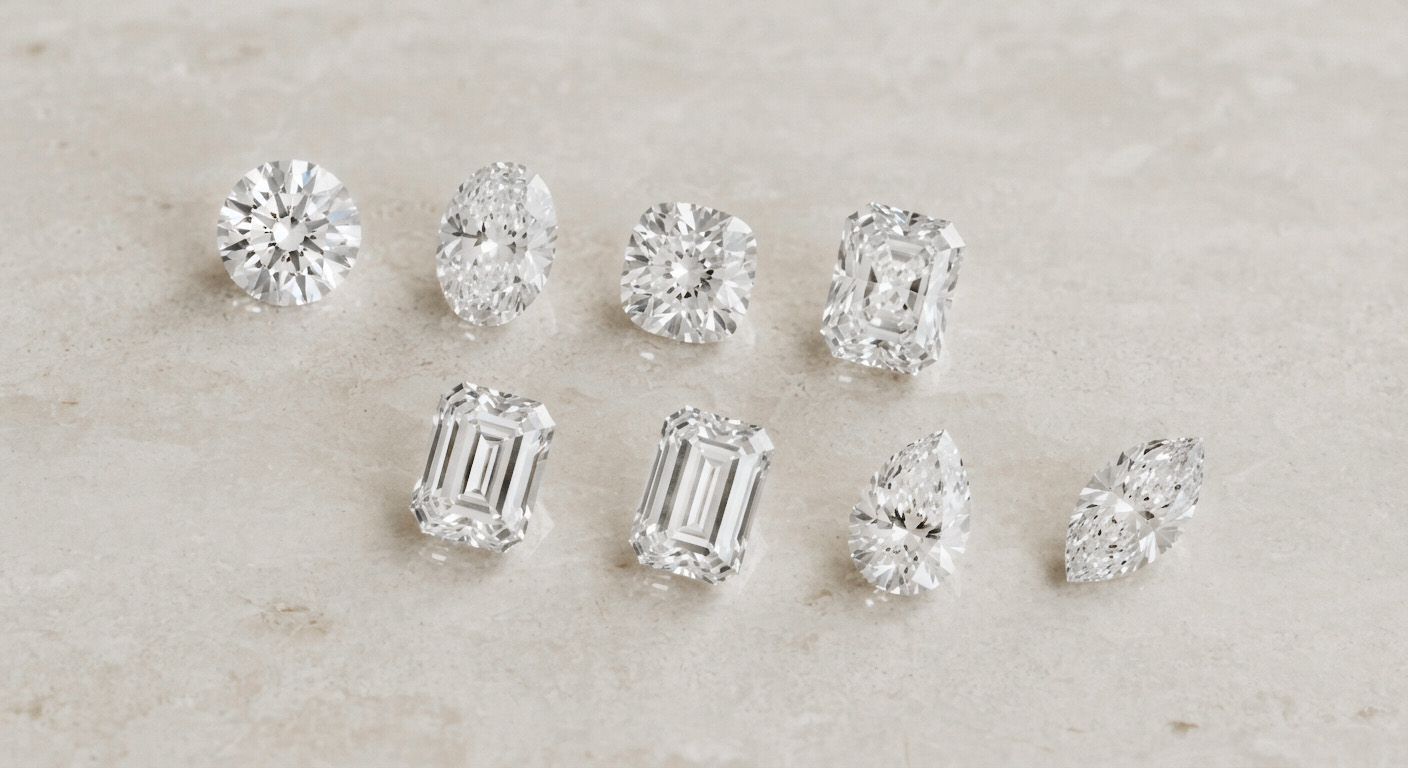
There is no single best diamond shape. The right choice depends on the look you want and how the diamond will work with the ring design.
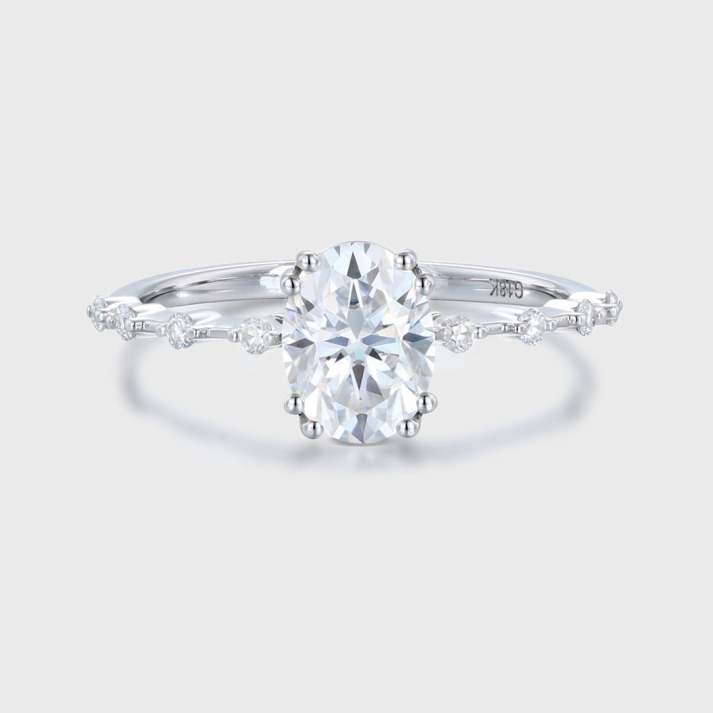
Round is a classic choice for strong brilliance and a traditional appearance. Oval offers an elongated silhouette and can provide substantial visual coverage for its carat weight. Emerald and Asscher cuts use step-cut facets that create broader, more understated reflections and generally make clarity more noticeable.
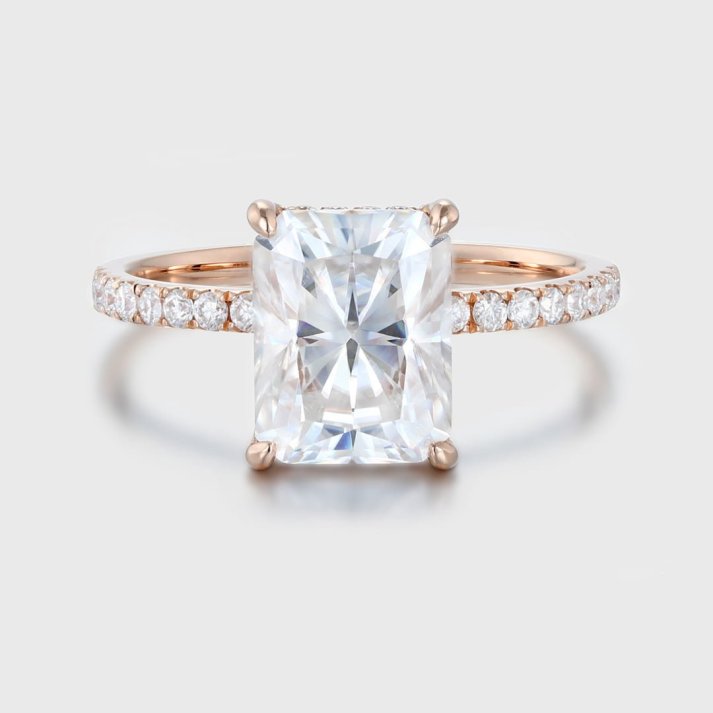
Cushion offers softer corners and a romantic appearance, while radiant combines a rectangular or square outline with brilliant-style faceting. Pear and marquise create distinctive silhouettes and can visually elongate the finger.
When choosing a shape, think beyond the loose diamond. The proportions of the stone should also work with the setting, band, and overall style of the ring.
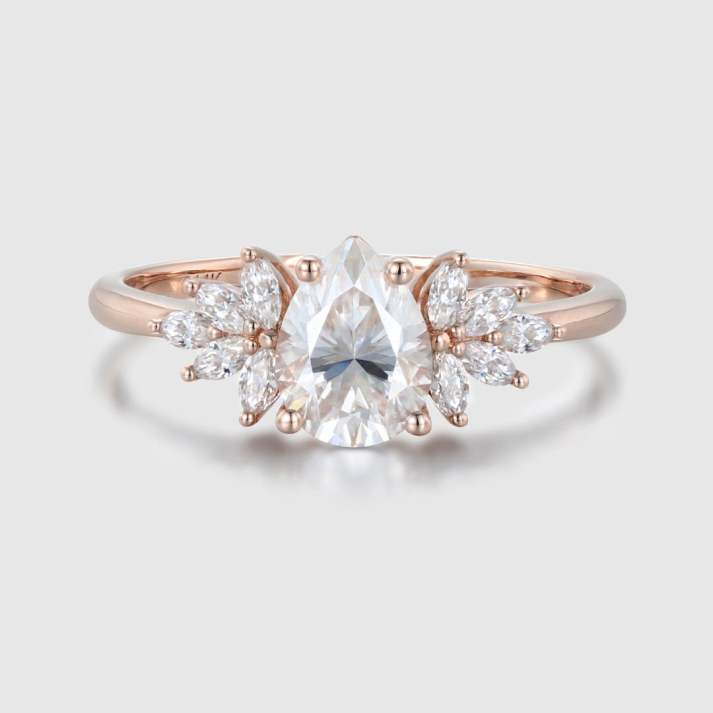
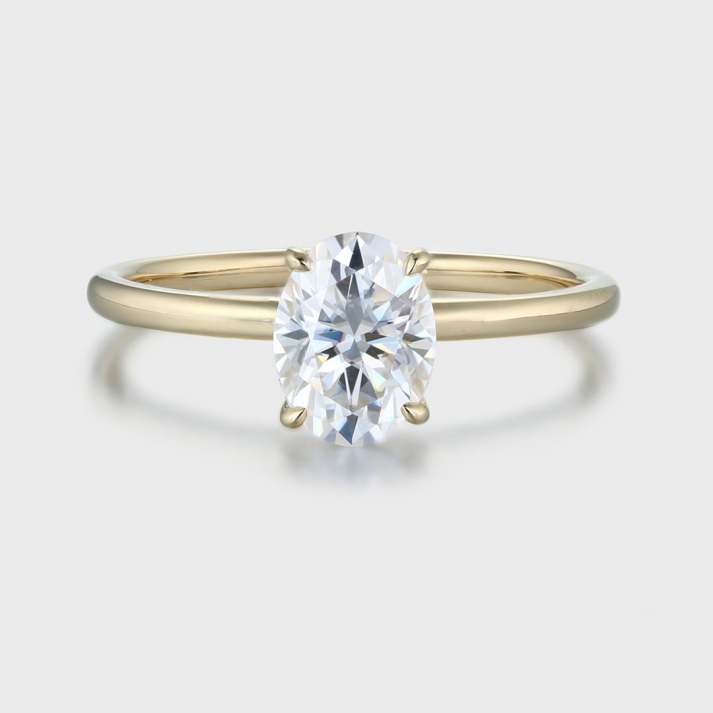
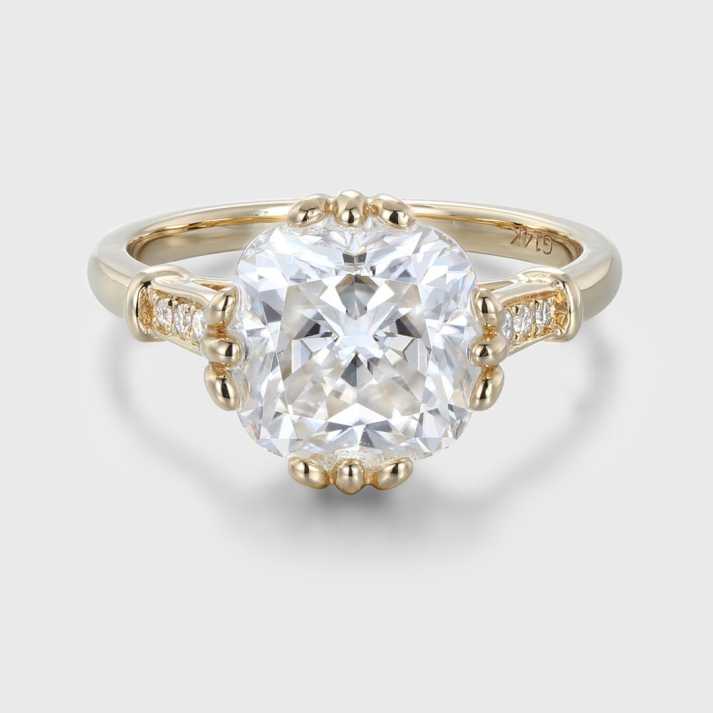
How to Choose the Right Setting and Metal
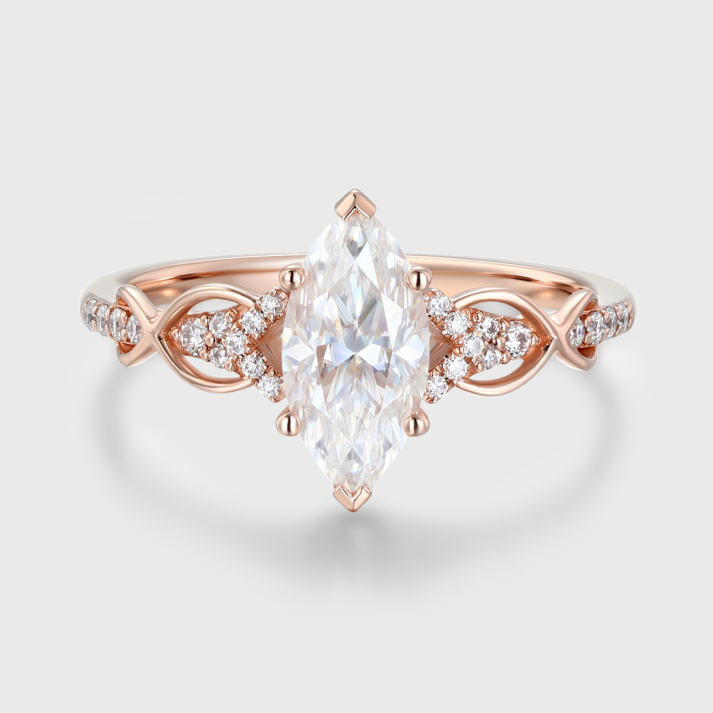
The center diamond is only one part of a lab grown diamond ring. The setting determines how the stone is held, how much of it is visible, and how the overall ring looks when worn.
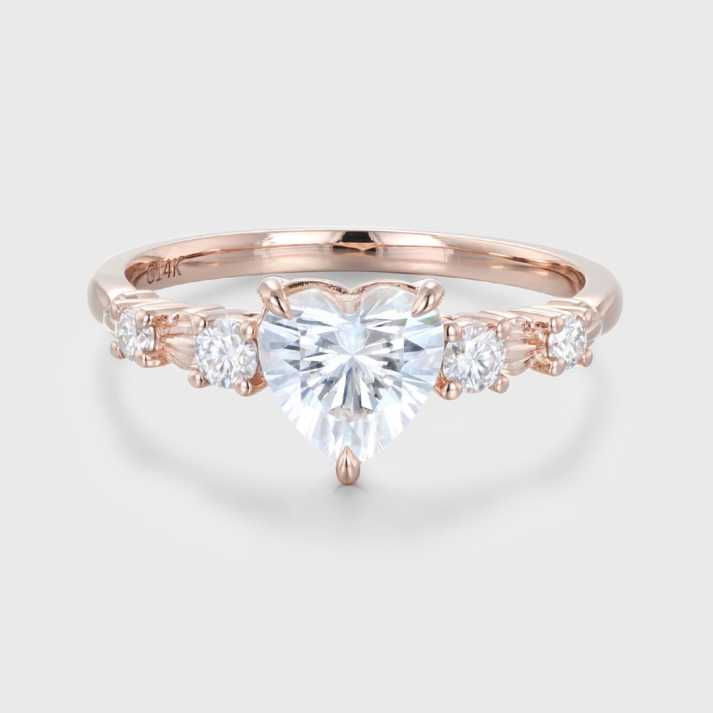
A solitaire keeps attention on the center stone. Halo settings add surrounding stones, while three-stone and side-stone designs create additional visual detail. Prong and bezel settings also offer different approaches to stone security and appearance.
Metal is another important choice. OVEELA offers solid 10K, 14K, and 18K yellow, white, and rose gold, as well as platinum for its jewelry designs. The right option depends on your preferred color, durability requirements, budget, and overall design.
If you are considering a customized ring, the diamond should be selected with the setting in mind rather than treating the two decisions separately.
Lab Grown Diamond Ring Buying Checklist
Before placing an order, use this checklist to compare the complete ring rather than focusing on one specification:
- Set your total ring budget.
- Choose a diamond shapethat matches your preferred style.
- Prioritize cut and overall visual performance.
- Compare color and claritybased on appearance rather than automatically choosing the highest grade.
- Check carat weight and measurementsto understand the diamond’s actual proportions.
- Review the grading reportand confirm the laboratory-grown designation.
- Match the report information to the physical diamondwhen possible.
- Evaluate the setting, metal, and accent stonesas part of the total ring.
- Check customization optionsif you want changes to the stone, metal, size, or design.
- Review production, shipping, return, and warranty policiesbefore ordering.
This approach helps you evaluate the ring as a complete piece of jewelry rather than treating the center diamond as the only factor that matters.
Why Choose OVEELA for a Lab Grown Diamond Ring?
At OVEELA, we focus on offering high-quality lab grown diamonds with strong color and clarity characteristics at a more accessible price point. Many of our lab grown diamond designs feature D–E color and VVS clarity, giving buyers the opportunity to choose a bright, highly clean center stone without paying the premium associated with comparable natural diamonds.
Because lab grown diamonds generally cost less than natural diamonds with similar characteristics, more of your budget can go toward diamond size, ring design, metal quality, or customization. OVEELA follows a fair-value approach, avoiding unnecessary markups while maintaining options such as solid 10K, 14K, and 18K gold and platinum.
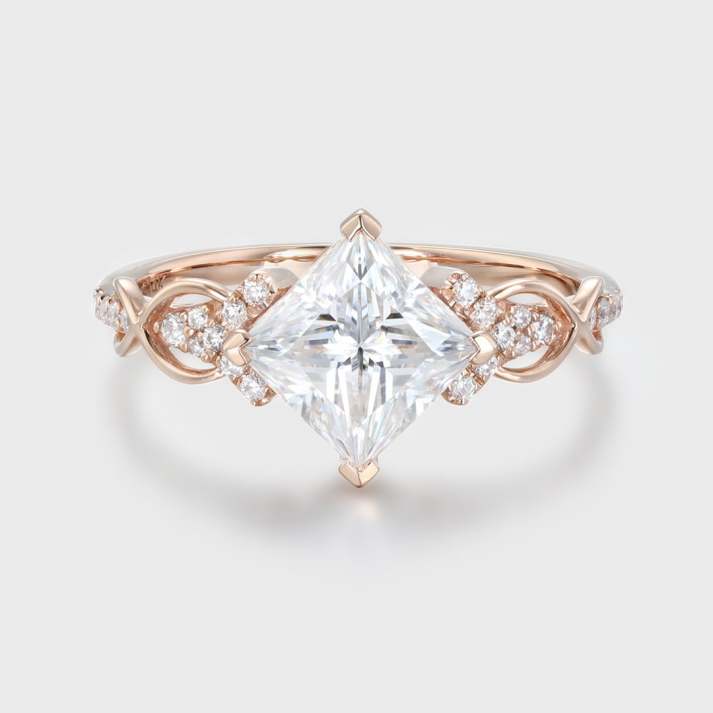
The diamond is also only part of the OVEELA experience. Our lab grown diamond engagement rings include classic and distinctive designs, with customization available on selected styles. Depending on the design, you can personalize details such as diamond shape, metal color, ring size, accent stones, engraving, and other design elements.
For shoppers who want a lab grown diamond ring that combines high diamond quality, accessible pricing, distinctive design, and personalization, OVEELA offers an alternative to choosing between quality and design flexibility.
Yes. Lab grown diamonds are genuine diamonds with essentially the same chemical composition and fundamental physical and optical properties as natural diamonds. Their primary difference is their origin.
That depends on your priorities. They may appeal to buyers who want diamond characteristics while allocating more of their budget to carat size, ring design, or customization. The important step is to compare the actual diamond’s quality, documentation, and price.
There is no single price because the final cost depends on the center diamond, setting, metal, accent stones, craftsmanship, and customization. Comparing complete specifications is more useful than relying on a fixed price-per-carat estimate.
For a significant purchase, an independent grading report can provide useful documentation of the diamond’s characteristics and laboratory-grown origin. Always check that the report corresponds to the stone you are buying.
There is no universally best clarity grade. For many buyers, an eye-clean diamond can provide an attractive balance between appearance and budget. The right choice depends on the diamond’s shape, inclusions, and how they appear to the naked eye.
The best shape depends on your preferred appearance and ring design. Round offers classic brilliance, oval creates an elongated look, emerald gives a more understated step-cut appearance, and radiant combines geometric proportions with brilliant-style faceting.
Yes, customization may include the center diamond, metal color, ring size, accent stones, engraving, and selected design details, depending on the jeweler and specific design. OVEELA offers customization on selected engagement ring designs.